Mites in Guinea Pigs
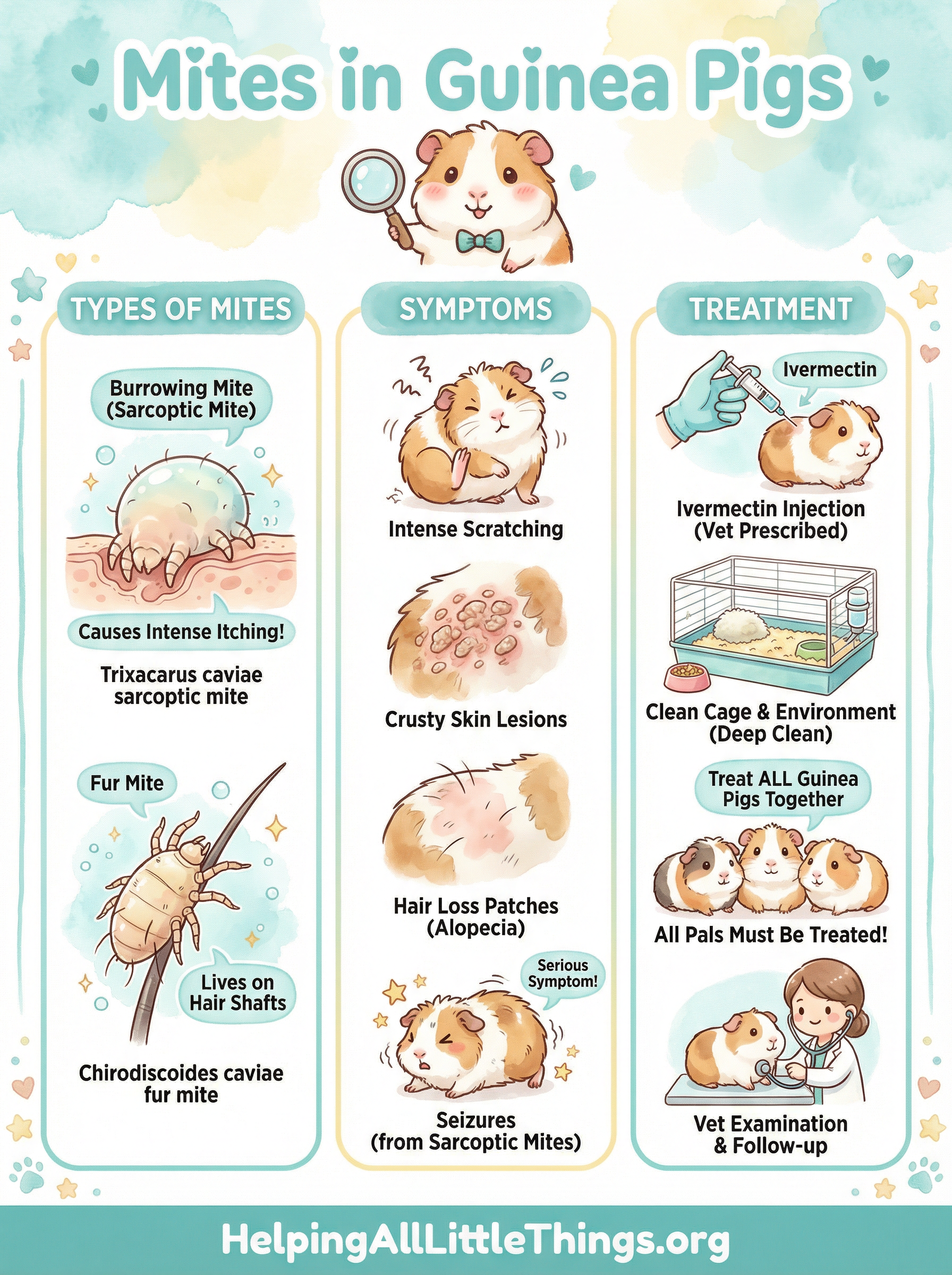

Mites are microscopic arachnids that can infest guinea pigs, causing everything from mild skin irritation to severe, life-threatening disease. Unlike lice, which live on the surface of the fur, some mite species burrow into the skin, causing intense suffering. Mite infestations are one of the most common and most serious external parasite problems in guinea pigs.
Types of Mites in Guinea Pigs
Two main species of mites affect guinea pigs:
Trixacarus caviae — Sarcoptic (Burrowing) Mite
This is the most dangerous mite species affecting guinea pigs. Trixacarus caviae burrows into the skin, causing sarcoptic mange — an intensely itchy, painful condition that can escalate to seizures and death if untreated.1
Trixacarus is zoonotic — it can temporarily infest humans, causing a self-limiting itchy rash. It cannot complete its life cycle on humans, but affected people should see a doctor.
Chirodiscoides caviae — Fur Mite
Chirodiscoides caviae is a fur mite that lives on the hair shafts rather than burrowing into the skin. It is generally less harmful than Trixacarus and may cause mild to no symptoms, though heavy infestations can cause irritation and hair loss.
Symptoms
Symptoms vary significantly depending on the mite species and the severity of infestation:
Sarcoptic mites (Trixacarus caviae):
- Intense, frantic scratching — often severe enough to cause self-injury
- Crusty, thickened skin — particularly around the neck, shoulders, and back
- Hair loss — patchy or widespread alopecia
- Skin wounds from self-trauma
- Seizures — in severe infestations, the intense itching and skin damage can trigger seizure-like episodes
- Rapid weight loss and deterioration
- Death — if untreated, severe sarcoptic mange can be fatal
Fur mites (Chirodiscoides caviae):
- Mild scratching
- Slight hair loss or coat roughness
- Often asymptomatic
A guinea pig that is scratching frantically, has crusty skin lesions, or is having seizure-like episodes requires immediate veterinary attention. Sarcoptic mange can be fatal within days to weeks if untreated.
How Mites Spread
- Direct contact between guinea pigs — the most common route
- Contaminated bedding, accessories, or equipment
- Stress or illness can trigger a latent infestation to become active — many guinea pigs carry low levels of mites without symptoms until their immune system is compromised
- Purchasing from pet stores or breeders where mites are present
Diagnosis
Mites are diagnosed by your veterinarian through:
- Skin scraping — scraping the skin surface and examining it under a microscope; Trixacarus burrows deeply, so multiple deep scrapings may be needed
- Tape impression — for fur mites
- Clinical presentation — the characteristic intense itching and skin lesions of sarcoptic mange are often sufficient for a presumptive diagnosis; treatment may be initiated before confirmation
Treatment
Mite infestations in guinea pigs are treated with antiparasitic medications:
| Treatment | Details |
|---|---|
| Ivermectin | Injectable or topical; the gold standard treatment; given every 2 weeks for 3–4 doses to catch all life cycle stages1 |
| Selamectin (Revolution) | Topical spot-on; effective and easy to apply |
| Doramectin | Injectable; used in some cases |
Treat all guinea pigs in the household simultaneously — even asymptomatic animals may be carriers and will reinfect treated animals.
Environmental decontamination:
- Discard all bedding immediately
- Wash all fabric items at high temperature (60°C/140°F or higher)
- Clean and disinfect the entire enclosure and all accessories
- Mites can survive off the host for a short period, so thorough cleaning is essential
Supportive care may be needed for severely affected animals: pain relief, wound care for skin lesions, and syringe feeding if appetite is poor.
Prevention
- Quarantine all new guinea pigs for at least 2–4 weeks before introduction
- Examine new animals carefully before introduction
- Reduce stress — a healthy immune system keeps latent mite infestations from becoming active
- Maintain good hygiene — regular bedding changes and enclosure cleaning
- Avoid sharing equipment between animals from different households without disinfection
- Handle your guinea pigs regularly — weekly health checks allow you to catch infestations early
If you suspect mites, do not wait to see if the symptoms improve on their own. Sarcoptic mange progresses rapidly and can be fatal. A vet visit and a course of ivermectin is straightforward and highly effective when started early.
For more on external parasites, see our article on Lice in Guinea Pigs.