Lice in Guinea Pigs
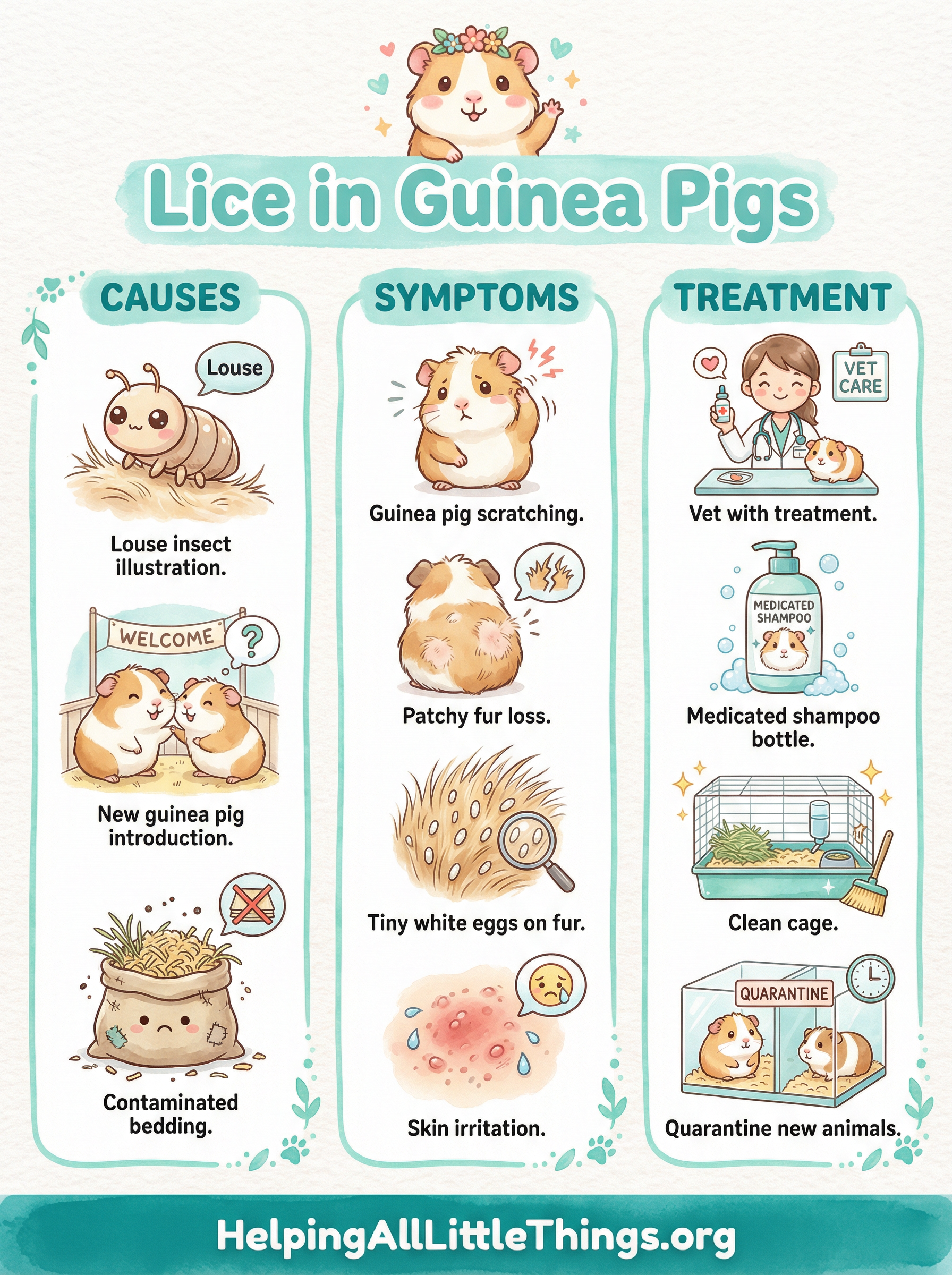

Lice are small, wingless insects that live on the skin and fur of guinea pigs. Unlike mites, which burrow into the skin, lice live on the surface — feeding on skin debris and, in some species, blood. Lice infestations are relatively common in guinea pigs and are highly contagious between animals, but they are species-specific: guinea pig lice cannot infect humans or other pets.
Types of Lice in Guinea Pigs
Two main species of lice affect guinea pigs:
| Species | Type | Characteristics |
|---|---|---|
| Gliricola porcelli | Chewing louse | Slender, elongated body; feeds on skin debris and secretions; most common species |
| Gyropus ovalis | Chewing louse | Oval-shaped body; also feeds on skin debris; less common |
Both species are chewing lice (Mallophaga) — they do not suck blood but can still cause significant irritation and skin damage through their feeding activity and the mechanical irritation of moving through the fur.1
How Lice Spread
Lice spread through direct contact between guinea pigs. They cannot jump or fly, so transmission requires physical contact or sharing of bedding, accessories, or equipment. Key risk factors include:
- Introducing new animals without quarantine
- Overcrowded conditions that increase contact between animals
- Contaminated bedding, accessories, or equipment shared between animals
- Weakened immune system — lice infestations are often heavier in older, ill, or immunocompromised guinea pigs
Symptoms
Lice infestations range from mild to severe. Signs include:
- Scratching and restlessness — particularly around the head, neck, and back
- Fur loss (alopecia) — patchy or diffuse hair loss, often starting at the back end
- Visible lice or eggs (nits) — lice are 1–2 mm long and visible to the naked eye; nits are tiny white oval eggs attached to hair shafts near the skin
- Skin irritation — redness, scaling, or crusting of the skin
- Poor coat condition — dull, rough, or matted fur
- Restlessness and reduced appetite in heavy infestations
- Weight loss in severe or chronic cases
Lice are most easily spotted by parting the fur and examining the skin, particularly along the back, rump, and behind the ears. A magnifying glass can help.
To check for lice, part the fur against the direction of growth and look closely at the skin surface. Lice move quickly and may be hard to spot, but nits (eggs) are firmly attached to hair shafts and easier to find. They look like tiny white or cream-colored ovals.
Diagnosis
Your veterinarian can confirm lice infestation by:
- Direct visual examination — parting the fur and examining the skin with a magnifying glass or otoscope
- Skin scraping — collecting a sample from the skin surface for microscopic examination
- Tape impression — pressing clear tape against the fur and examining it under a microscope
Treatment
Lice in guinea pigs are effectively treated with antiparasitic medications:
| Treatment | Details |
|---|---|
| Ivermectin | Injectable or topical; highly effective; typically given in 2–3 doses 2 weeks apart to catch newly hatched lice1 |
| Selamectin (Revolution) | Topical spot-on; effective and easy to apply |
| Permethrin-based sprays or powders | Some products are labeled for small animals; always confirm safety for guinea pigs before use |
All guinea pigs in the household must be treated simultaneously, even if they show no symptoms, as lice spread easily between animals. Untreated animals will reinfect treated ones.
Environmental treatment is also important:
- Discard all bedding and replace with fresh material
- Wash all fabric items (fleece liners, hammocks) at high temperature
- Clean and disinfect the enclosure, hides, and accessories
- Lice cannot survive long off the host, but eggs can persist for several days
Prevention
- Quarantine all new guinea pigs for at least 2–4 weeks before introducing them to resident animals
- Examine new animals carefully for lice or nits before introduction
- Avoid sharing equipment between animals from different households without thorough disinfection
- Maintain good hygiene — regular bedding changes and enclosure cleaning
- Handle and check your guinea pigs regularly — weekly health checks make it easier to catch infestations early
For more on external parasites, see our article on Mites in Guinea Pigs.