Giardia in Guinea Pigs
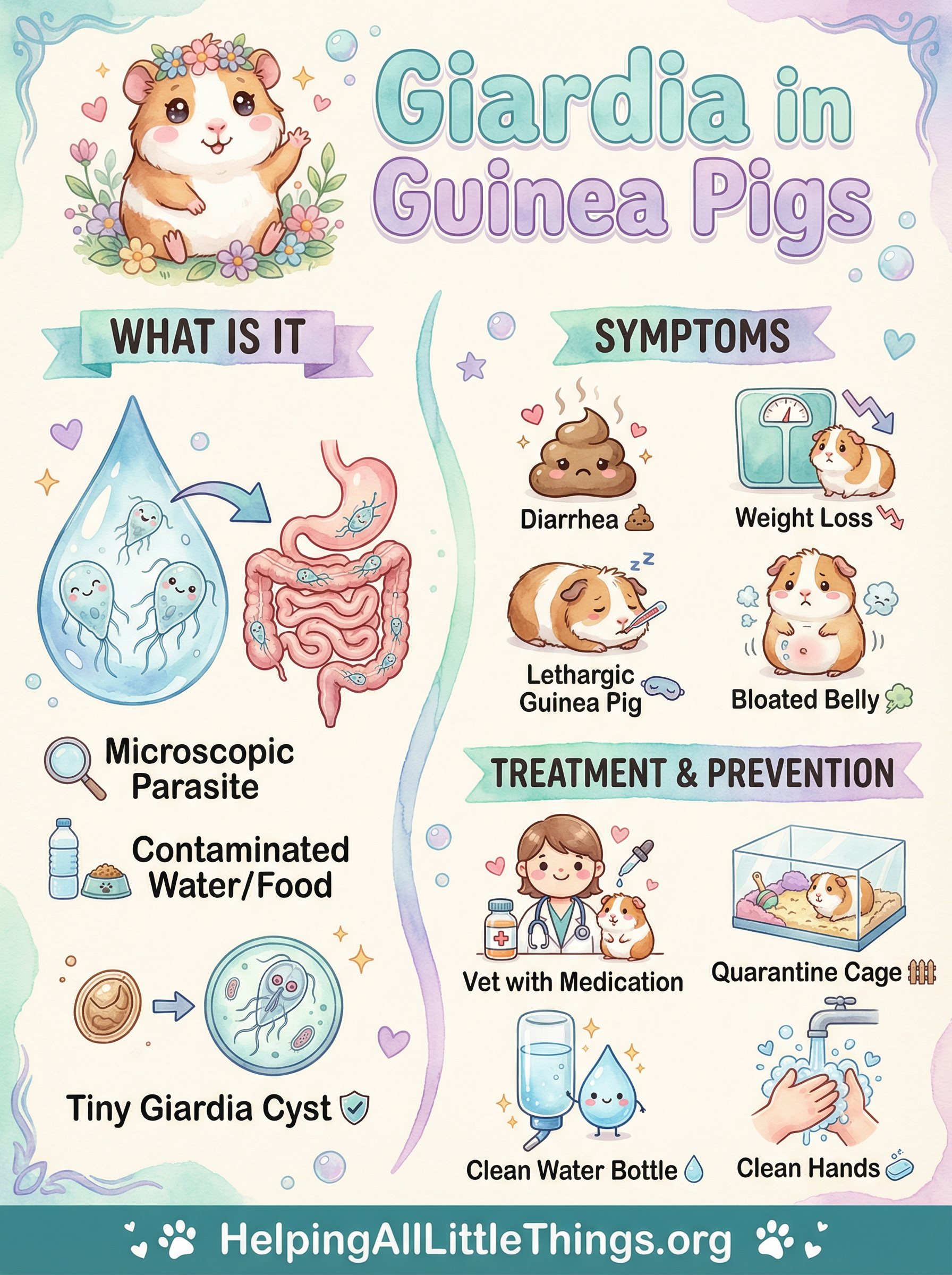

Giardia is a microscopic intestinal parasite that can infect guinea pigs, causing digestive upset and diarrhea. While many infected guinea pigs show no symptoms, others — particularly young, stressed, or immunocompromised animals — can develop significant illness. Good hygiene and careful quarantine practices are the most effective ways to prevent giardia in your herd.
What Is Giardia?
Giardia duodenalis (also called Giardia intestinalis) is a single-celled flagellate parasite that lives in the small intestine. It exists in two forms: the active trophozoite that attaches to the intestinal lining and causes damage, and the hardy cyst form that is shed in feces and can survive in the environment for weeks to months.1
Guinea pigs become infected by ingesting cysts from contaminated water, food, bedding, or surfaces. The parasite disrupts normal intestinal function, reducing nutrient absorption and causing inflammation.
Giardia cysts are extremely resistant to standard disinfectants. Quaternary ammonium compounds and bleach at standard dilutions may not reliably kill them. Steam cleaning or boiling water are the most effective methods for environmental decontamination.
How Giardia Spreads
- Fecal-oral transmission — ingesting cysts from contaminated food, water, or surfaces
- Contaminated water sources — water bottles and bowls can become contaminated if soiled bedding contacts them
- Direct contact with infected animals
- Shared equipment — food bowls, water bottles, and accessories shared between animals without proper disinfection
- Introducing new animals without quarantine
Symptoms
Many guinea pigs with giardia are asymptomatic carriers — they carry the parasite without showing signs of illness. When symptoms do occur, they include:
- Soft, loose, or watery diarrhea — often intermittent
- Mucus in the stool
- Weight loss and poor body condition
- Reduced appetite
- Lethargy and reduced activity
- Bloating or abdominal discomfort
- Dehydration in more severe cases
Young guinea pigs and those under stress (new environment, illness, overcrowding) are most likely to develop clinical disease.
Persistent diarrhea, rapid weight loss, or a guinea pig that is lethargic and not eating requires prompt veterinary attention. Dehydration can develop quickly in small animals.
Diagnosis
Giardia is diagnosed by examining a fresh stool sample:
- Fecal flotation — a standard test that may detect cysts, though sensitivity is variable
- Direct fecal smear — examining fresh feces under a microscope can reveal active trophozoites
- Fecal ELISA or PCR testing — more sensitive tests that detect giardia antigens or DNA; recommended when giardia is strongly suspected but standard tests are negative
Because cyst shedding is intermittent, testing multiple samples collected on different days improves diagnostic accuracy.
Treatment
| Treatment | Details |
|---|---|
| Metronidazole | The most commonly used antiparasitic for giardia in guinea pigs; typically given for 5–7 days1 |
| Fenbendazole | An alternative antiparasitic; sometimes used when metronidazole is not tolerated |
| Supportive care | Fluid therapy for dehydrated animals; syringe feeding if appetite is poor |
| Environmental decontamination | Thorough cleaning of the enclosure; steam cleaning is most effective against cysts |
All guinea pigs in the same household should be evaluated and treated simultaneously to prevent reinfection from asymptomatic carriers.
Prevention
- Quarantine all new guinea pigs for 2–4 weeks before introducing them to resident animals
- Provide fresh, clean water daily — change water bottles and bowls every day
- Keep the enclosure clean — spot clean daily, full clean at least twice weekly
- Wash fresh vegetables thoroughly before feeding
- Disinfect equipment between animals — use steam or boiling water for items that cannot be bleached
- Wash hands thoroughly after handling guinea pigs or cleaning their enclosure
For more on preventing parasites, see our article on Mites in Guinea Pigs.