Fly Strike in Guinea Pigs
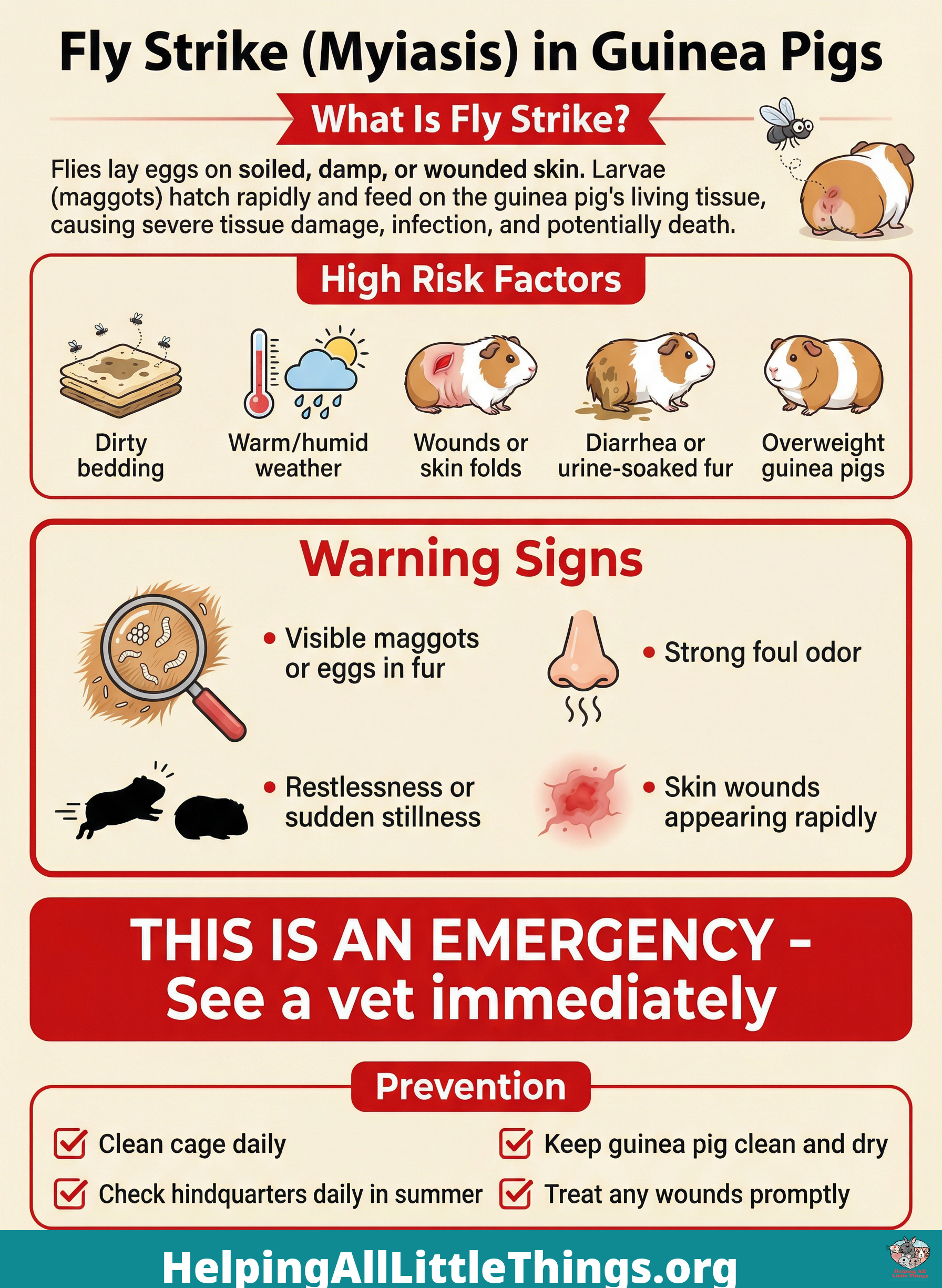

Fly strike, also known as myiasis, is a serious and often fatal condition that affects guinea pigs. It occurs when flies lay their eggs on a guinea pig, and the hatching maggots begin to feed on the animal's living tissue. This is a true veterinary emergency that requires immediate action.
How Does Fly Strike Happen?
Flies, particularly blowflies, are attracted to damp, soiled fur and the scent of urine or feces. They lay their eggs in these areas, and in warm weather, the eggs can hatch into maggots in a matter of hours. The maggots then burrow into the guinea pig's skin, causing severe pain, tissue damage, and infection [1].
High-Risk Factors
Any guinea pig can be at risk, but some are more susceptible:
- Dirty Environment: A soiled cage is a breeding ground for flies.
- Soiled Fur: Guinea pigs with diarrhea, urinary issues, or mobility problems that prevent them from cleaning themselves properly are at high risk.
- Long Hair: Long-haired breeds can more easily trap moisture and feces.
- Obesity: Overweight guinea pigs may have difficulty grooming their hindquarters.
- Wounds: Open sores or wounds attract flies.
- Warm Weather: Fly populations are highest during the summer months.
Warning Signs of Fly Strike
Fly strike progresses rapidly, so daily checks are crucial, especially in summer.
- Visible Eggs or Maggots: You may see small, white eggs (resembling sawdust) or moving maggots in the fur, typically around the rear end.
- Strong, Foul Odor: A smell of decay is a common sign.
- Behavioral Changes: The guinea pig may be restless and agitated, or lethargic and unwilling to move.
- Skin Wounds: As the maggots feed, they create open wounds.
- Shock: In advanced stages, the guinea pig may go into shock, appearing limp and unresponsive.
If you see maggots on your guinea pig, it is a life-threatening emergency. Go to a veterinarian immediately.
Emergency Action and Treatment
Do not attempt to treat advanced fly strike at home by bathing your guinea pig or pulling out all the maggots yourself, as this can cause more pain and send the animal into shock. Your veterinarian will provide critical emergency care:
- Pain Relief: The first step is to provide strong pain medication to stabilize the guinea pig.
- Maggot Removal: The vet will carefully clip the fur and manually remove as many maggots as possible. This is a meticulous process.
- Wound Care: The underlying wounds will be cleaned and treated.
- Medication: The guinea pig will be given medication to kill any remaining maggots, as well as antibiotics to treat secondary bacterial infections.
- Supportive Care: Hospitalization with fluid therapy and hand-feeding is often required to treat shock and support recovery.
Even with prompt treatment, the prognosis is often guarded. The tissue damage and toxic shock caused by the maggots can be too severe to overcome [2].
Prevention is the Only Cure
Fly strike is a horrific condition, but it is almost entirely preventable.
- Cleanliness is Paramount:
- Clean the cage daily, removing all soiled bedding and uneaten fresh food.
- Do a full cage deep-clean at least once a week.
- Daily Health Checks:
- Check your guinea pig's rear end twice a day during warm months. Ensure it is clean and dry.
- If your guinea pig has a dirty bottom, clean it gently with a damp cloth or a shallow bath with guinea pig-safe shampoo.
- Manage Health Issues:
- Address the root cause of a dirty bottom. If your guinea pig has persistent diarrhea or urinary incontinence, see a vet.
- Keep long-haired breeds trimmed, especially around the rear.
- Fly Control:
- Keep your guinea pigs indoors, especially during the hottest parts of the day in summer.
- Use fly screens on windows and doors to keep flies out of your home.
By maintaining a clean environment and being vigilant with daily health checks, you can protect your beloved pet from this devastating condition.
References
[1] RSPCA. (n.d.). Flystrike in guinea pigs. Retrieved from https://www.rspca.org.uk/adviceandwelfare/pets/rodents/guineapigs/health/flystrike
[2] Merck Veterinary Manual. (2023). Myiasis. Retrieved from https://www.merckvetmanual.com/integumentary-system/myiasis/myiasis