Fleas in Guinea Pigs: Causes, Symptoms, Treatment, and Prevention

Fleas are common parasites that can affect various pets, including guinea pigs. While these small, wingless insects are more frequently associated with cats and dogs, a flea infestation can cause significant discomfort and health issues for a guinea pig. Understanding how to safely treat and prevent fleas is crucial for your pet's well-being.

How Do Guinea Pigs Get Fleas?
Guinea pigs typically get fleas from another household pet that has them. The most common flea found on cats and dogs, Ctenocephalides felis, can happily infest a guinea pig [1]. Transmission can also occur from:
- A contaminated environment: Flea eggs and larvae can live in carpets, bedding, and furniture.
- Contact with other infested animals: This could be another guinea pig or even a rabbit.
- Outdoor exposure: While less common for indoor pets, fleas can be picked up from grassy or wooded areas.
Signs of a Flea Infestation
If you suspect your guinea pig has fleas, look for these common signs:
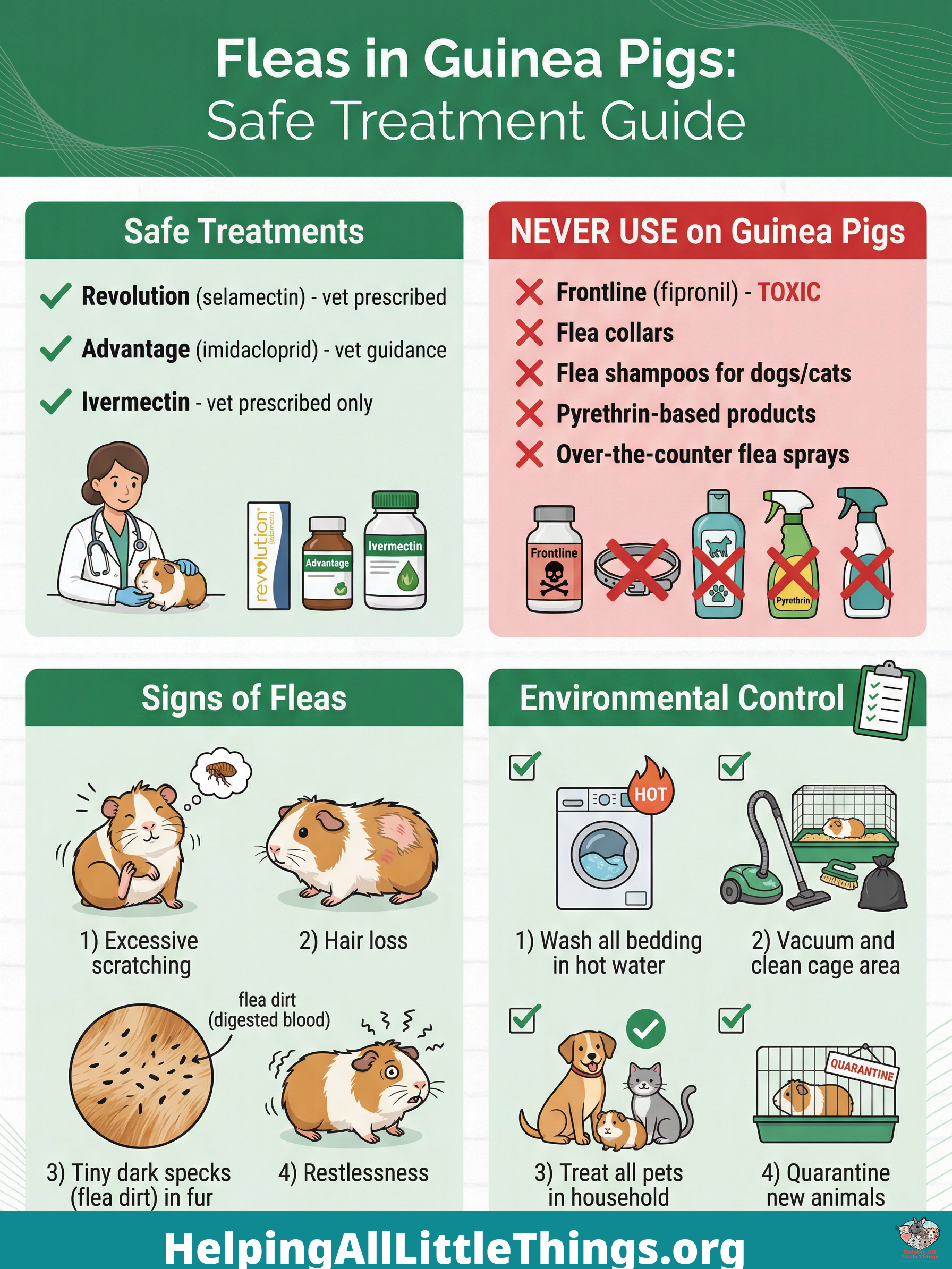
- Intense Itching and Scratching: This is the most obvious symptom. Your guinea pig may seem restless and scratch or bite at its fur constantly.
- Hair Loss: Excessive scratching can lead to bald patches, particularly around the neck, shoulders, and hindquarters.
- Flea Dirt: You may see tiny black specks in the fur. This is flea feces, which is essentially digested blood. If you place these specks on a wet paper towel, they will turn red.
- Visible Fleas: Adult fleas are small, dark brown insects that move quickly through the fur.
- Skin Irritation: The skin may appear red, inflamed, or have small scabs from flea bites and scratching.
Safe and Unsafe Flea Treatments
This is the most critical part of managing fleas in guinea pigs. Many over-the-counter flea products for dogs and cats are highly toxic to guinea pigs and can be fatal.
NEVER USE:
- Frontline (Fipronil): This product is known to cause severe adverse reactions and death in guinea pigs and rabbits [2].
- Flea Collars: These release chemicals that can be toxic if ingested and can cause skin irritation.
- Flea Shampoos for Dogs or Cats: The pesticides in these shampoos are often too harsh for a guinea pig's sensitive skin.
- Pyrethrin-Based Sprays or Dips: These can cause neurological damage.
SAFE TREATMENTS (Under Veterinary Guidance):
The only way to safely treat fleas on a guinea pig is to consult an exotic pet veterinarian. They can prescribe a product that is safe and effective at the correct dosage for your pet's weight. Common safe options include:
- Revolution (Selamectin): A topical, once-a-month treatment that is often prescribed for fleas, mites, and other parasites.
- Advantage (Imidacloprid): Another topical treatment that is effective against fleas.
- Ivermectin: While more commonly used for mites, ivermectin can also be effective against fleas. It can be given as an injection or topically.
Always follow your veterinarian's dosage instructions precisely.
Environmental Control: The Key to Eradication
Treating your guinea pig is only half the battle. To prevent re-infestation, you must treat the environment.
- Treat All Pets: If you have other pets, they must all be treated with a species-appropriate flea product at the same time.
- Wash All Bedding: Wash all of your guinea pig's bedding (fleece, towels, etc.) in hot water to kill fleas and their eggs.
- Clean the Cage Thoroughly: Discard any disposable bedding, and deep-clean the entire cage and all accessories.
- Vacuum Your Home: Vacuum carpets, rugs, and furniture thoroughly and frequently. Dispose of the vacuum bag or empty the canister outside immediately after.
Prevention
- Regularly treat cats and dogs in the household with a preventative flea medication.
- Quarantine new guinea pigs for at least two weeks before introducing them to your existing pets. During this time, check them carefully for any signs of parasites.
- Maintain a clean cage and living environment.
By following these steps and working closely with your veterinarian, you can safely and effectively rid your guinea pig and your home of fleas.
References
[1] VCA Animal Hospitals. (n.d.). Fleas in Guinea Pigs. Retrieved from https://vcahospitals.com/know-your-pet/guinea-pigs-fleas
[2] The Guinea Pig Forum. (n.d.). Toxic Flea And Tick Treatments. Retrieved from https://www.theguineapigforum.co.uk/threads/toxic-flea-and-tick-treatments.115533331343403838381770381/