Ectopic Ovarian Tissue in Guinea Pigs
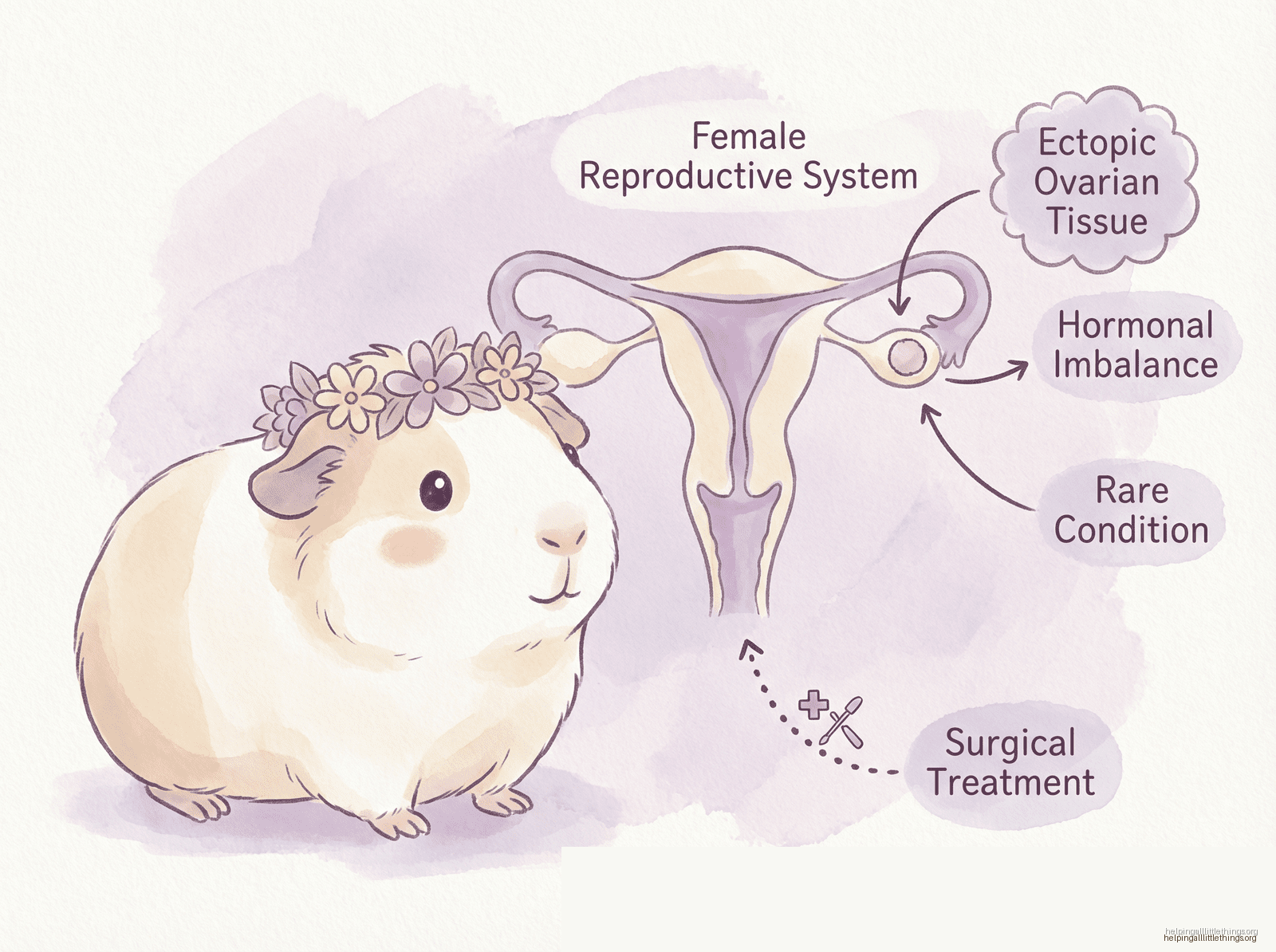

Ectopic ovarian tissue, sometimes related to Ovarian Remnant Syndrome, is a unique and often confusing condition that can affect female guinea pigs. "Ectopic" means "in an abnormal place or position." In this case, it refers to the presence of functional ovarian tissue somewhere in the body other than the ovaries themselves. This can lead to hormonal behaviors and health problems, even in a guinea pig that has been spayed.
What is Ectopic Ovarian Tissue?
Normally, all of a female's ovarian tissue is contained within the two ovaries. During a spay surgery, the ovaries are removed. However, in some cases, a small piece of ovarian tissue may be left behind (Ovarian Remnant Syndrome), or the guinea pig may have been born with a small, extra piece of ovarian tissue located somewhere else in the abdomen, completely separate from the main ovaries. This is ectopic ovarian tissue.
This rogue tissue can be microscopic and impossible to see during a spay surgery. Because it has its own blood supply, it can continue to function just like a normal ovary, producing hormones and even developing cysts.
Signs of Ectopic Ovarian Tissue
The signs are caused by the hormones being produced by the ectopic tissue. The symptoms are often cyclical, coming and going as the tissue goes through a "heat" cycle. The signs are most confusing when they appear in a female who has already been spayed.
- Return of "Sow-in-Heat" Behavior: The guinea pig may start showing signs of being in heat, such as mounting cagemates, loud rumbling or purring, and swaying her hips.
- Aggression: Hormonal swings can lead to irritability and aggression towards cagemates or owners.
- Bilateral Hair Loss: Symmetrical hair loss on the flanks is a common sign of hormonal imbalance in guinea pigs.
- Cyst Development: The ectopic tissue can develop cysts, just like a normal ovary. If these cysts become large, they can cause abdominal swelling and discomfort.
Diagnosis and Treatment
Diagnosing this condition can be difficult.
- History and Clinical Signs: The cyclical nature of the hormonal behavior, especially in a spayed female, is a strong indicator.
- Ultrasound: An abdominal ultrasound may be able to identify a cystic structure, but the ectopic tissue itself is often too small to be seen.
- Hormone Testing: Blood tests can be done to check for high levels of reproductive hormones.
Treatment usually involves surgery.
- Exploratory Surgery: The best course of action is often an exploratory surgery to find and remove the ectopic tissue. This can be challenging, as the tissue can be very small and located anywhere in the abdomen.
- Hormone-Suppressing Injections: In some cases, if surgery is not an option, a veterinarian may try using hormone-injections, such as Lupron, to suppress the hormonal activity of the tissue. This is a way to manage the symptoms, but it is not a cure.
If your spayed female guinea pig suddenly starts acting like she is in heat or develops hormonal hair loss, it is important to discuss the possibility of ectopic ovarian tissue or an ovarian remnant with your veterinarian. While it is a complex condition, it can be managed with proper veterinary care.