Ear Infections in Guinea Pigs
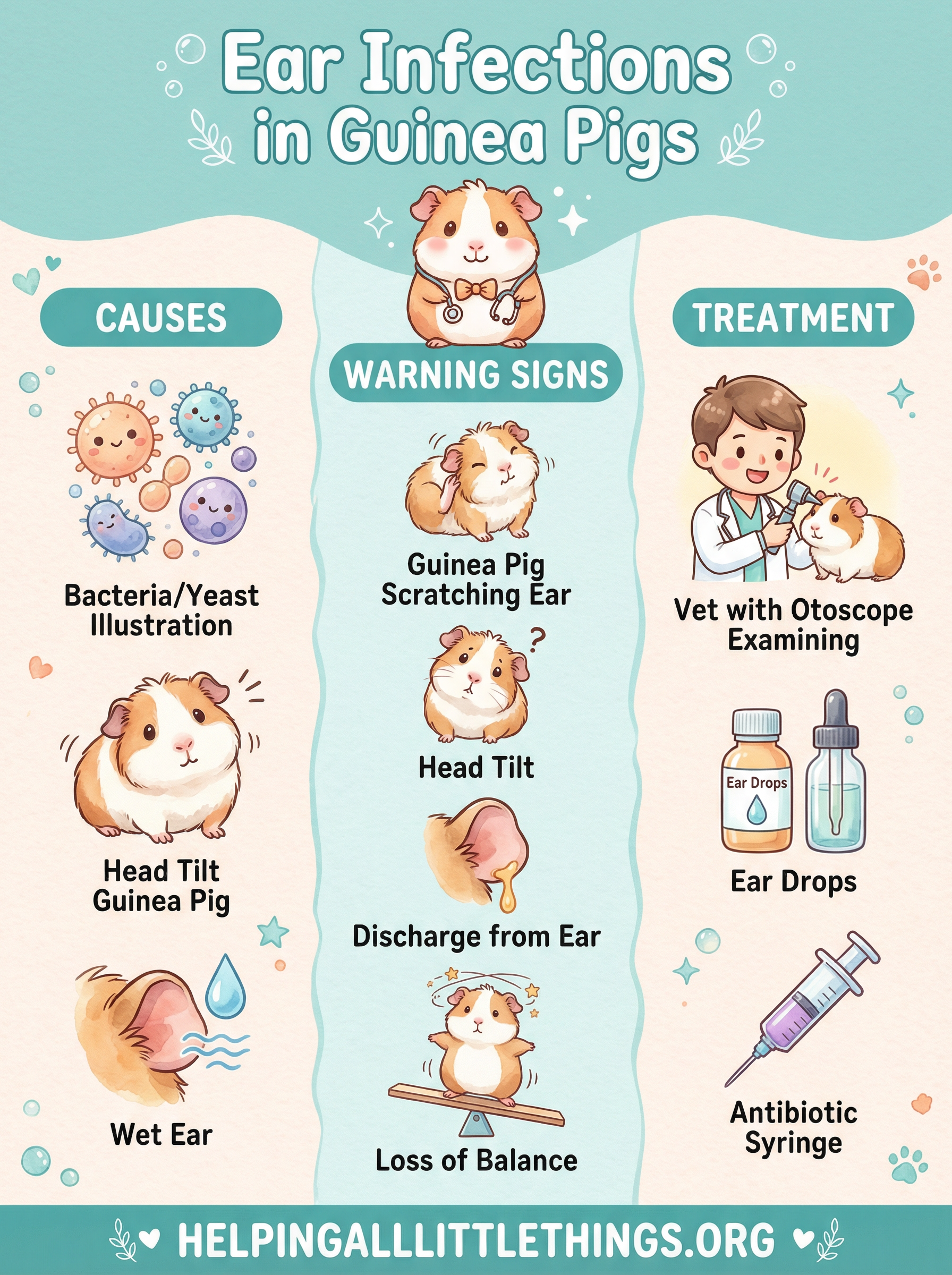

Ear infections are a relatively common health problem in guinea pigs and can range from mild outer ear irritation to serious inner ear infections that affect balance and neurological function. Prompt treatment is important — untreated ear infections can spread to deeper structures, causing permanent damage or life-threatening complications.
Types of Ear Infections
Ear infections in guinea pigs are classified by location:
| Type | Location | Common Causes |
|---|---|---|
| Otitis externa | Outer ear canal | Bacteria, yeast, ear mites, foreign material |
| Otitis media | Middle ear | Bacterial infection spreading from the outer ear or via the Eustachian tube |
| Otitis interna | Inner ear | Extension of middle ear infection; most serious form |
Inner ear infections are the most concerning because the inner ear controls balance. When the inner ear is affected, guinea pigs typically show dramatic neurological symptoms including head tilt and loss of coordination.1
Causes
The most common causes of ear infections in guinea pigs include:
- Bacterial infection — Streptococcus, Staphylococcus, Pasteurella, and Bordetella species are frequently implicated
- Yeast overgrowth — particularly Candida species, often secondary to antibiotic use or immune suppression
- Ear mites — Psoroptes cuniculi (more common in rabbits but can affect guinea pigs) can cause secondary infection
- Foreign material — bedding particles or debris in the ear canal
- Spread from respiratory infection — bacteria can travel from the upper respiratory tract to the middle ear via the Eustachian tube
Warning Signs
The symptoms of an ear infection depend on which part of the ear is affected:
Outer ear (otitis externa):
- Scratching at the ear or shaking the head
- Redness, swelling, or discharge from the ear canal
- Odor from the ear
- Crusting or debris visible in the ear
Middle/inner ear (otitis media/interna):
- Head tilt — the head tilts persistently to one side (the affected side)
- Loss of balance — stumbling, falling, or rolling to one side
- Circling — walking in circles toward the affected side
- Nystagmus — rapid, involuntary eye movements
- Reduced appetite and lethargy
- Facial nerve signs — drooping of the lip or eyelid on the affected side (in severe cases)
A guinea pig with sudden head tilt, loss of balance, or inability to walk normally requires urgent veterinary attention. These symptoms can indicate inner ear infection, E. cuniculi, stroke, or other serious conditions — prompt diagnosis is essential.
Diagnosis
Your veterinarian will examine the ears with an otoscope and assess neurological function. Diagnostic steps may include:
- Otoscopic examination — visualizing the ear canal and eardrum
- Ear swab cytology — identifying bacteria, yeast, or mites under the microscope
- Culture and sensitivity — identifying the specific bacteria and the antibiotics it responds to
- Skull radiographs or CT scan — assessing the middle ear and bulla for fluid, thickening, or bony changes in more severe cases
- Bloodwork — evaluating overall health and immune status
Treatment
Treatment depends on the type and severity of the infection:
| Treatment | Details |
|---|---|
| Topical ear drops | Antibiotic and/or antifungal drops for outer ear infections; applied daily as directed |
| Systemic antibiotics | Required for middle and inner ear infections; commonly trimethoprim-sulfa, enrofloxacin, or chloramphenicol based on culture results1 |
| Anti-inflammatory medication | Meloxicam to reduce inflammation and pain |
| Antifungal treatment | If yeast is identified |
| Supportive care | Syringe feeding if appetite is poor; ensuring the guinea pig can access food and water despite balance issues |
Treatment courses for inner ear infections are typically long — 4 to 8 weeks or more. Many guinea pigs improve significantly with treatment, though a mild residual head tilt may persist permanently in some cases. Quality of life can still be excellent.
Prevention
- Keep ears clean and dry — check ears weekly during grooming; gently remove visible debris with a cotton ball (never insert anything into the ear canal)
- Maintain good enclosure hygiene — dirty, dusty bedding can introduce bacteria and irritants into the ear
- Address respiratory infections promptly — upper respiratory infections can spread to the middle ear
- Quarantine new animals — new guinea pigs may carry bacteria that can cause ear infections in resident animals
- Avoid dusty bedding — fine dust particles can irritate the ear canal
Make ear checks part of your weekly health routine. Gently fold back the ear flap and look for redness, discharge, or odor. Catching an outer ear infection early — before it progresses to the middle or inner ear — makes treatment much simpler and more effective.
For more on neurological symptoms in guinea pigs, see our article on Neurologic Diseases in Guinea Pigs.