E. cuniculi in Guinea Pigs
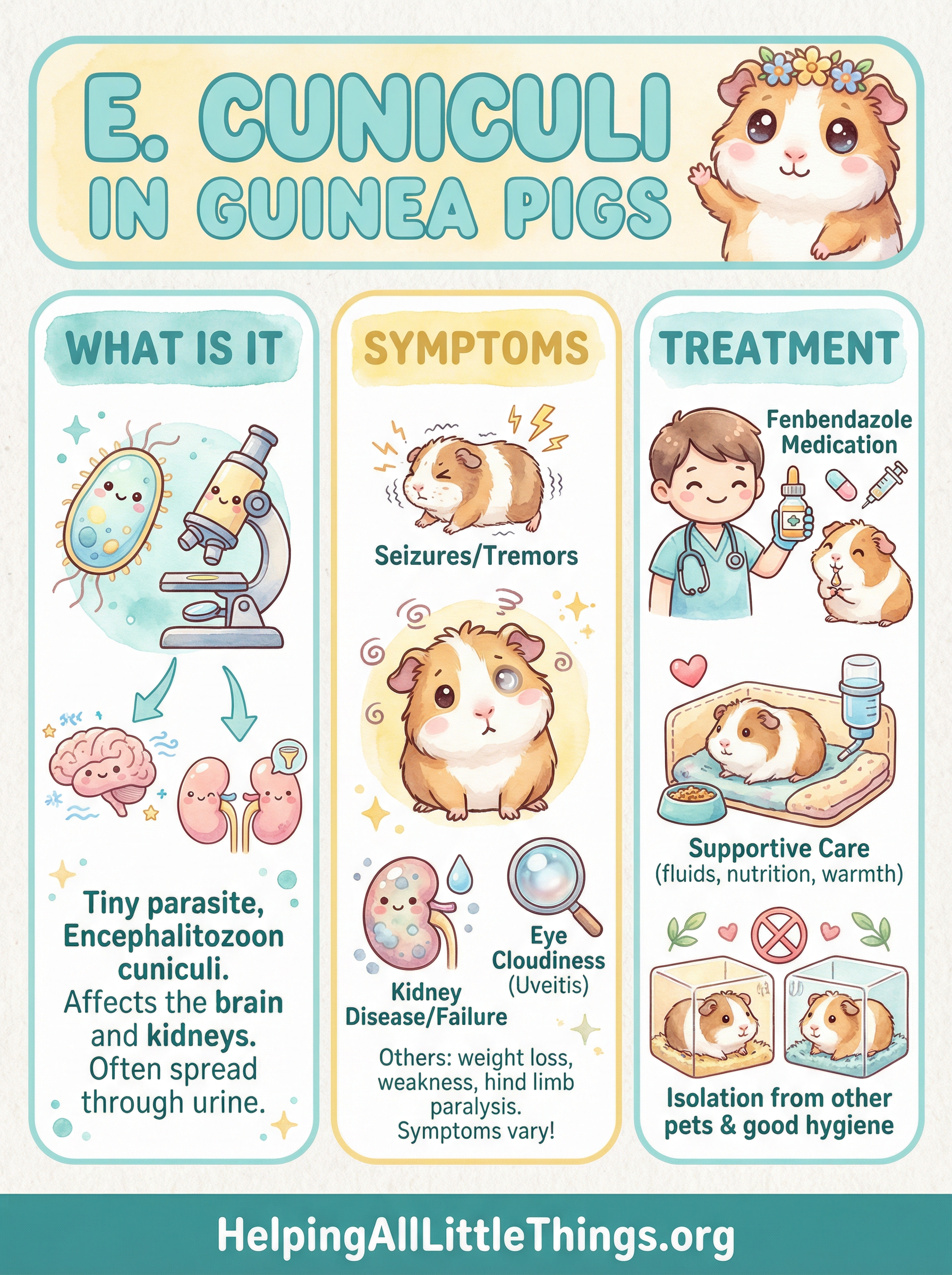

Encephalitozoon cuniculi (commonly abbreviated E. cuniculi) is a microscopic intracellular parasite that can infect guinea pigs, causing damage to the brain, kidneys, and eyes. While it is more commonly associated with rabbits, E. cuniculi can and does affect guinea pigs, and the neurological symptoms it causes can be dramatic and distressing. Early diagnosis and treatment give the best chance of managing the condition effectively.
What Is E. cuniculi?
E. cuniculi is a microsporidian parasite — a type of fungal-related organism — that infects cells in the nervous system, kidneys, and eyes. Once inside a host, it reproduces within cells and eventually causes cell death and inflammation. The parasite is spread primarily through infected urine: guinea pigs become infected by ingesting or inhaling spores shed in the urine of infected animals.1
Rabbits are the most common reservoir of E. cuniculi, and guinea pigs housed with or near rabbits are at elevated risk of exposure.
Symptoms
E. cuniculi can remain dormant for extended periods before symptoms appear. When they do, they typically fall into three categories:
Neurological Symptoms
- Head tilt — one of the most characteristic signs; the head tilts persistently to one side due to brain inflammation
- Loss of balance and coordination — stumbling, circling, or rolling to one side
- Seizures — in more severe cases
- Tremors or muscle weakness — particularly in the limbs
Kidney Disease
- Increased thirst and urination (polydipsia/polyuria)
- Weight loss and poor body condition
- Lethargy
Eye Issues
- Cataracts — white or cloudy spots in the eye, particularly in younger animals
- Uveitis — inflammation inside the eye
- Blindness — in advanced cases
A guinea pig with sudden head tilt, loss of balance, or seizures requires urgent veterinary attention. These symptoms can have multiple causes, and prompt diagnosis is essential to determine the correct treatment.
Diagnosis
Diagnosing E. cuniculi can be challenging because its symptoms overlap with several other conditions (inner ear infection, stroke, trauma). Your vet may use:
- Physical examination — assessing neurological function, eye appearance, and body condition
- Serology (antibody testing) — blood tests can detect antibodies to E. cuniculi, indicating exposure; however, a positive result does not confirm active disease, and a negative result does not rule it out
- Urinalysis — spores may be detected in urine
- Advanced imaging — MRI or CT scanning can evaluate the extent of brain involvement in specialist settings
- Ruling out other causes — ear infection (otitis), stroke, and toxicity must be excluded
Treatment
There is currently no cure for E. cuniculi, but treatment can manage symptoms and slow progression:
| Treatment | Details |
|---|---|
| Fenbendazole | The primary antiparasitic drug used; typically given for 28 days; may need to be repeated1 |
| Albendazole | An alternative antiparasitic; used in some cases |
| Anti-inflammatory drugs | Meloxicam or prednisolone to reduce brain inflammation |
| Supportive care | Fluid therapy, syringe feeding, warmth, and nursing care for severely affected animals |
| Eye management | Cataract surgery may be considered in specialist settings |
Many guinea pigs with neurological E. cuniculi improve significantly with treatment, though some degree of head tilt may persist permanently. Quality of life can still be excellent in these animals.
Prevention
- Keep guinea pigs and rabbits separate — rabbits are the primary reservoir; do not house them together or allow contact
- Quarantine all new animals for at least 4 weeks before introduction; consider testing
- Maintain excellent hygiene — clean cages and remove soiled bedding regularly; spores are shed in urine
- Wash hands after handling any animals or cleaning enclosures
- Source animals from reputable breeders or rescues that practice good biosecurity
If you keep both guinea pigs and rabbits, always handle and clean their enclosures separately, and wash your hands thoroughly between handling each species to reduce the risk of cross-contamination.
For more on introducing new guinea pigs safely, see our guide on The Ideal Guinea Pig Habitat.