Diabetes in Guinea Pigs
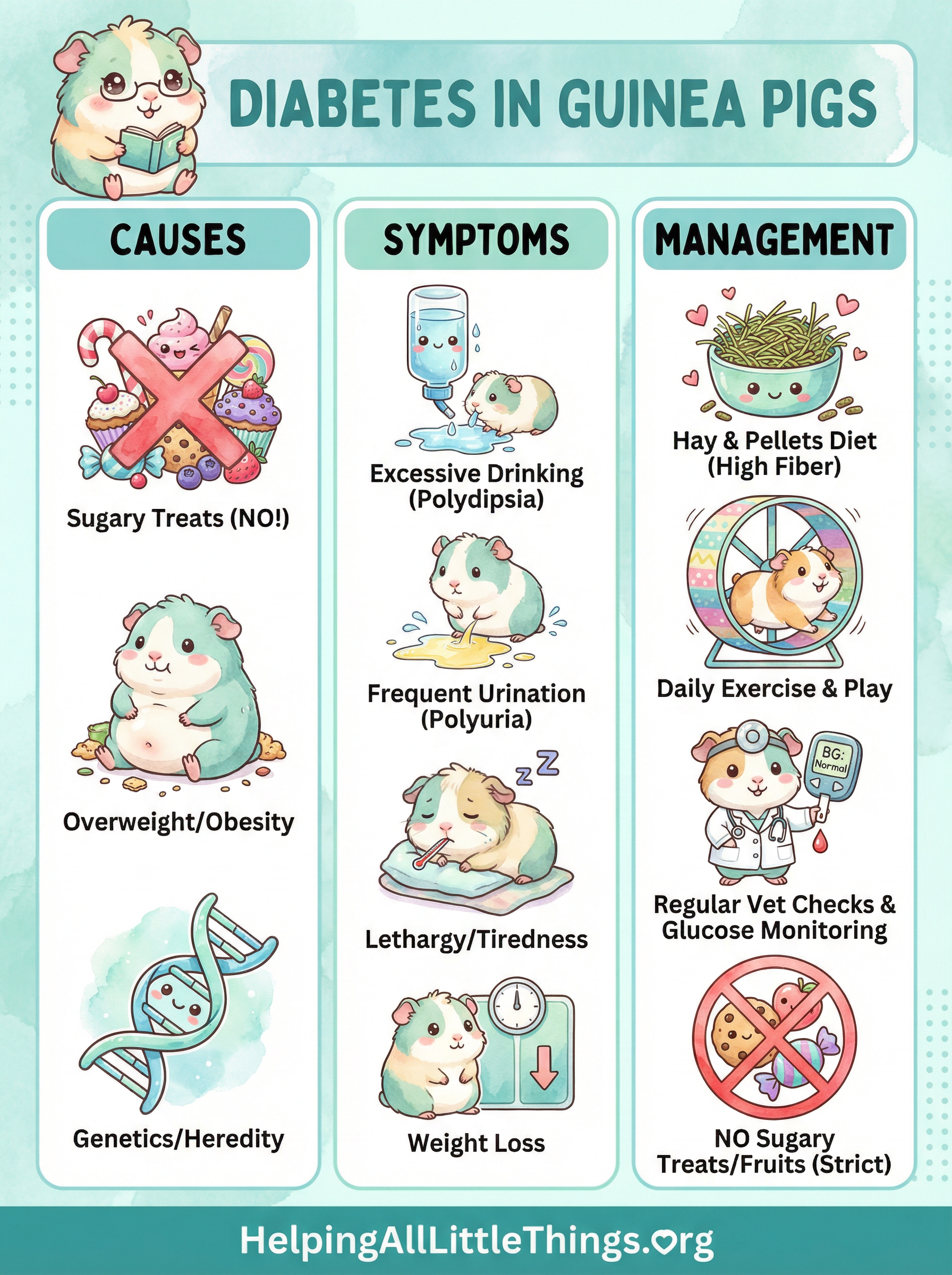

Diabetes mellitus is a metabolic disorder in which the body is unable to properly regulate blood glucose levels. While less common in guinea pigs than in some other small mammals, it does occur and is most often associated with obesity and a high-sugar diet. With early detection and appropriate management, many diabetic guinea pigs can live comfortably.
How Diabetes Develops
In a healthy guinea pig, the pancreas produces insulin, a hormone that allows cells to absorb glucose from the bloodstream for energy. In diabetes, this process breaks down in one of two ways:
- Type 1: The pancreas produces insufficient insulin (less common in guinea pigs)
- Type 2: The body's cells become resistant to insulin, typically associated with obesity and chronic high-sugar diets (more common)
Key risk factors include:
- High-sugar diet — fruits, commercial treat mixes, and foods high in simple carbohydrates are major contributors
- Obesity — excess body fat promotes insulin resistance
- Genetic predisposition — some guinea pigs may be more susceptible
- Age — older guinea pigs are at higher risk
- Chronic stress — can affect hormonal balance and glucose regulation
Symptoms
Diabetes in guinea pigs can be subtle, especially early on. Watch for:
- Excessive thirst (polydipsia) — drinking noticeably more water than usual
- Frequent urination (polyuria) — wet bedding, larger urine patches
- Weight loss despite a normal or increased appetite
- Lethargy and reduced activity
- Cataracts — cloudy or white appearance in the eyes; can develop as a complication of chronic high blood glucose1
- Recurrent infections — diabetes impairs immune function, making guinea pigs more susceptible to skin, urinary, and respiratory infections
Sudden weight loss, extreme lethargy, or a guinea pig that stops eating may indicate a diabetic crisis. Seek veterinary care promptly.
Diagnosis
Diagnosis is made through:
| Test | What It Shows |
|---|---|
| Blood glucose measurement | Elevated fasting blood glucose confirms hyperglycemia |
| Urinalysis | Glucose in the urine (glucosuria) is a key indicator |
| Complete blood count and chemistry panel | Assesses overall health and rules out other causes |
| Weight assessment | Body condition scoring helps evaluate obesity as a contributing factor |
Normal fasting blood glucose in guinea pigs is approximately 60–125 mg/dL; values consistently above 200 mg/dL in a fasted animal are suggestive of diabetes.1
Management
Diabetes in guinea pigs is managed primarily through diet and lifestyle changes rather than insulin therapy, which is rarely used in this species.
Diet
- Eliminate all sugary treats — no fruit, commercial treat mixes, or high-sugar vegetables (carrots, corn, peas should be minimized)
- Maximize hay intake — unlimited timothy hay should form 80% or more of the diet; the fiber slows glucose absorption
- Limit pellets — offer a small measured amount of plain, low-sugar pellets daily (1–2 tablespoons per guinea pig)
- Safe low-sugar vegetables — leafy greens such as romaine lettuce, kale, and cucumber are appropriate; avoid root vegetables
Exercise and Weight Management
- Provide a large enclosure with space to move freely
- Encourage activity with tunnels, hides, and foraging opportunities
- Monitor weight weekly — gradual weight loss in an overweight guinea pig is a positive sign
Veterinary Monitoring
- Regular glucose checks (blood or urine) to track progress
- Periodic wellness exams to monitor for complications (cataracts, infections, kidney disease)
- Adjust management plan as needed based on response
Weighing your guinea pig weekly is one of the best ways to monitor their health. A kitchen scale accurate to 1 gram works well. Keep a log — gradual weight loss in an overweight guinea pig is a good sign; sudden weight loss in any guinea pig warrants a vet visit.
For more on what guinea pigs should and shouldn't eat, see our Nutrition Information guide.