Coccidia in Guinea Pigs
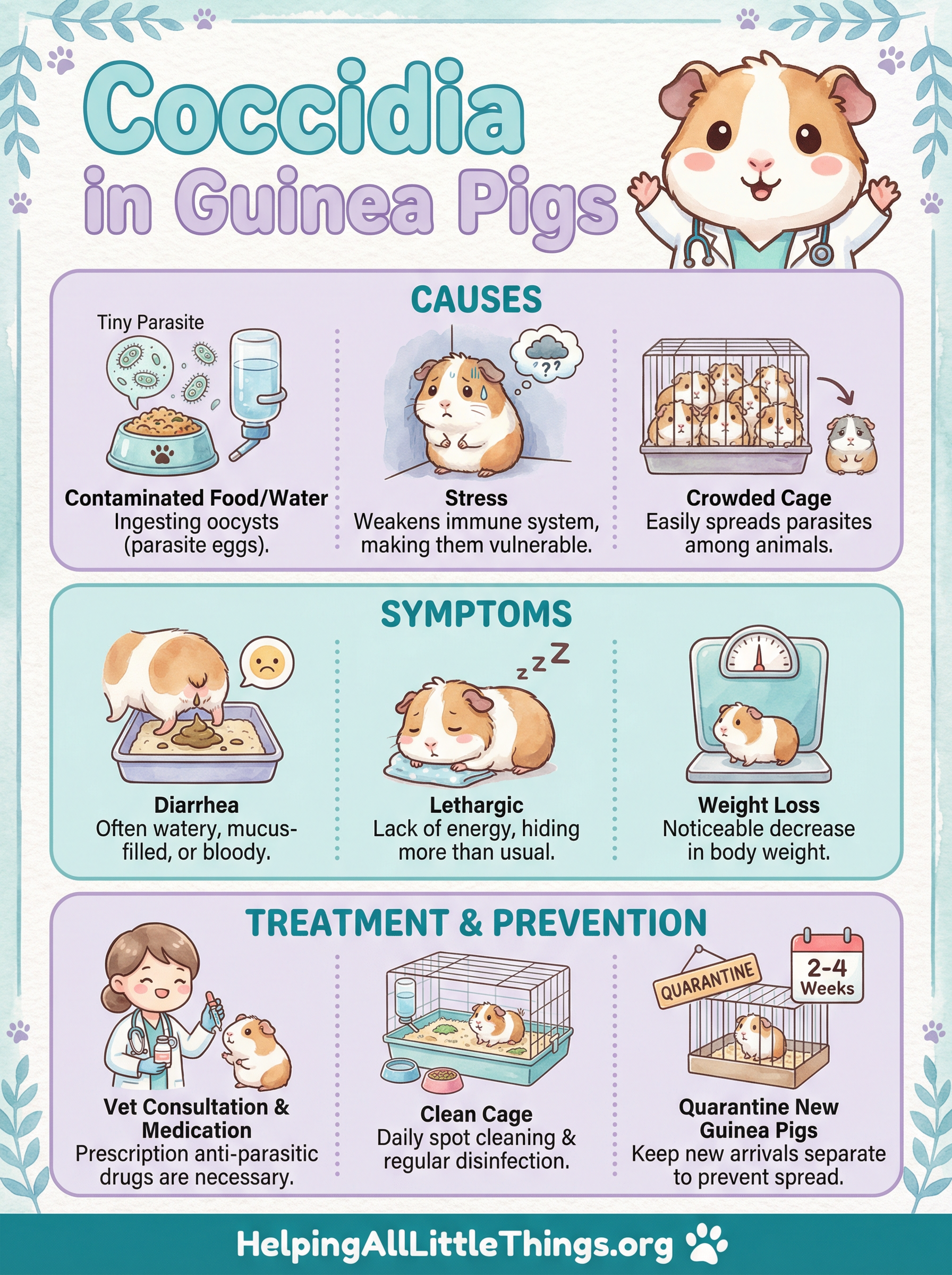

Coccidia are microscopic, single-celled parasites that can infect the intestinal tract of guinea pigs, causing a condition called coccidiosis. While healthy adult guinea pigs may carry coccidia without showing symptoms, young, stressed, or immunocompromised animals can develop serious illness. Understanding how coccidia spreads and how to prevent it is key to keeping your guinea pig healthy.
What Are Coccidia?
Coccidia belong to the genus Eimeria and are host-specific — meaning the species that infect guinea pigs (Eimeria caviae) do not infect humans or most other pets.1 The parasites complete their life cycle in the intestinal lining, where they reproduce and cause cellular damage. Infected animals shed oocysts (parasite eggs) in their feces, which can survive in the environment for weeks to months.
How Coccidia Spreads
Transmission is fecal-oral: guinea pigs become infected by ingesting oocysts from contaminated food, water, bedding, or surfaces. Key risk factors include:
- Crowded or unsanitary living conditions — oocysts accumulate rapidly in dirty enclosures
- Stress — weakens the immune system and allows latent infections to become active
- Young age — juvenile guinea pigs (under 6 months) are most susceptible
- Introducing new animals without quarantine
- Contaminated hay or vegetables that have been in contact with infected feces
Symptoms
Many guinea pigs with coccidia show no symptoms at all. When illness does occur, signs include:
- Diarrhea — often watery, mucus-filled, or bloody in severe cases
- Lethargy and reduced activity
- Weight loss and poor body condition
- Reduced appetite
- Dehydration — sunken eyes, dry skin, reduced skin elasticity
- Hunched posture and fluffed fur
In severe cases, particularly in young guinea pigs, coccidiosis can be fatal without treatment.
Bloody diarrhea, rapid weight loss, or a guinea pig that is hunched and unresponsive requires immediate veterinary attention. Coccidiosis can be fatal in young or immunocompromised animals.
Diagnosis
Diagnosis is made by fecal flotation — a laboratory test in which a stool sample is processed to float and identify oocysts under a microscope. Because oocysts are shed intermittently, a single negative result does not rule out infection. Your vet may recommend testing multiple samples if coccidiosis is suspected.
It is important to note that low numbers of oocysts may be found in healthy guinea pigs without clinical disease — the significance of a positive result must be interpreted alongside the animal's clinical signs.
Treatment
Treatment of coccidiosis in guinea pigs typically involves:
| Treatment | Details |
|---|---|
| Antiparasitic medication | Trimethoprim-sulfa (TMP-SMZ) is the most commonly used drug; treatment courses typically last 5–10 days1 |
| Supportive care | Fluid therapy for dehydrated animals; syringe feeding if appetite is poor |
| Environmental decontamination | Thorough cleaning and disinfection of the enclosure; oocysts are resistant to many common disinfectants — steam cleaning or ammonia-based disinfectants are most effective |
All guinea pigs in the same household should be evaluated, as subclinical carriers can reinfect treated animals.
Prevention
Good hygiene is the most effective prevention:
- Clean and disinfect the enclosure regularly — spot clean daily, full clean at least twice weekly
- Quarantine all new guinea pigs for a minimum of 2–4 weeks before introducing them to resident animals
- Avoid overcrowding — provide adequate space per animal
- Wash fresh vegetables thoroughly before feeding
- Reduce stressors — consistent routine, appropriate companionship, and enrichment support immune health
- Wash hands after handling guinea pigs or cleaning their enclosure
Steam cleaning is one of the most effective ways to kill coccidia oocysts in the environment. If you have had a confirmed case of coccidiosis, steam clean all surfaces, hides, and accessories before reintroducing your guinea pig.
For more on keeping your guinea pig's environment clean and safe, see our guide on The Ideal Guinea Pig Habitat.