Bumblefoot in Guinea Pigs
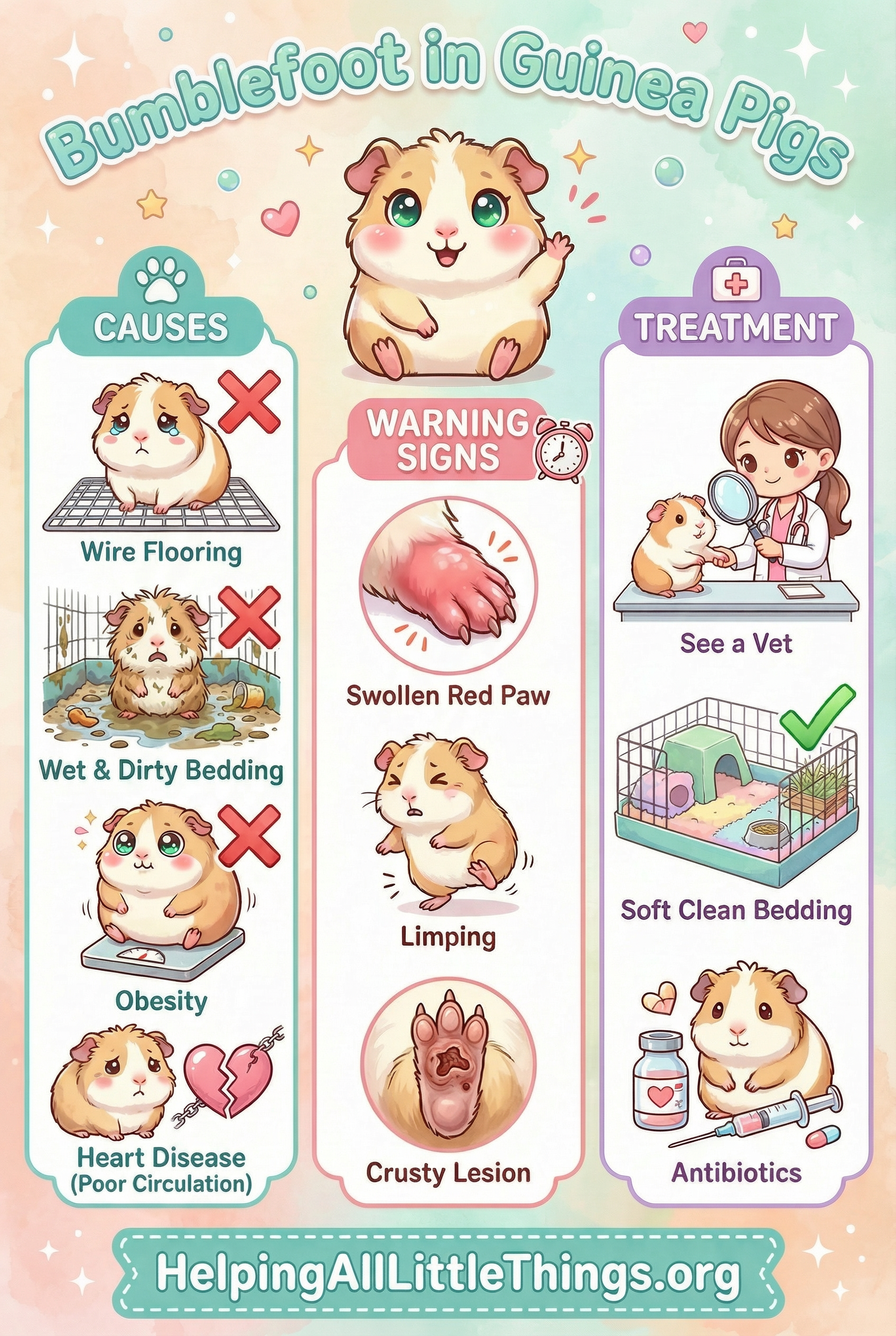

Bumblefoot, medically known as pododermatitis, is a painful inflammatory condition affecting the feet of guinea pigs. It is one of the most common — and most preventable — health problems in pet guinea pigs. Left untreated, it can progress from mild swelling to deep tissue infection, bone involvement, and severe disability. Understanding the causes and acting early makes all the difference.
What Is Bumblefoot?
Bumblefoot is an infection and inflammation of the skin on the underside of the feet, typically beginning as a small sore or callus and progressing to open wounds, abscesses, and in severe cases, infection of the underlying bone (osteomyelitis). The condition is almost always caused by a combination of environmental and husbandry factors rather than a single pathogen.1
Causes and Risk Factors
The most significant risk factors for bumblefoot in guinea pigs are:
Wire or hard flooring is the leading cause. Wire mesh floors allow feet to sink through, creating constant pressure points and abrasions on the delicate skin of the foot pads. Even small amounts of wire exposure can cause significant damage over time.2
Obesity increases the pressure on foot pads, making them more vulnerable to breakdown. Overweight guinea pigs are at substantially higher risk.
Wet or dirty bedding creates a moist environment that softens the skin, making it more susceptible to bacterial invasion. Urine scald is a particularly common contributing factor.
Vitamin C deficiency weakens skin integrity and immune function, reducing the body's ability to resist infection and heal wounds. Guinea pigs cannot synthesize their own Vitamin C and must receive it daily through diet.1
Inactivity reduces circulation to the feet and can lead to pressure sores. Guinea pigs need space to move freely.
Rough or abrasive surfaces — including some types of carpet — can cause friction injuries to the feet.
Underlying heart disease is an increasingly recognized risk factor, particularly in older guinea pigs. A weakened heart compromises blood circulation to the extremities, including the feet. This reduced peripheral perfusion makes the foot pads more susceptible to injury and less able to heal, allowing pododermatitis to develop even in a clean environment with soft bedding. Cold extremities are a known clinical sign of heart failure in guinea pigs, and this poor circulation directly predisposes the feet to infection.3
Warning Signs
Bumblefoot can be subtle in its early stages. Check your guinea pig's feet regularly and watch for:
- Redness or swelling on the underside of one or more feet
- Limping or reluctance to walk — a guinea pig that sits still more than usual may be in pain
- Crusty or scabbed areas on the foot pads
- Open sores or wounds — a sign of more advanced disease
- Discharge or odor from the foot — indicates active infection
- Thickened, callused skin on the foot pads
Bumblefoot can progress rapidly. A small sore can become a deep abscess or bone infection within days if untreated. If you notice any swelling, sores, or limping, see a vet promptly — do not wait.
Diagnosis
Your veterinarian will examine the feet and assess the severity of the condition. Staging helps guide treatment:
| Stage | Description |
|---|---|
| Stage 1 | Redness, mild swelling, no open wound |
| Stage 2 | Swelling with surface erosion or early ulceration |
| Stage 3 | Open wound with deeper tissue involvement |
| Stage 4 | Abscess, tendon, or bone involvement |
X-rays may be recommended to check for bone involvement in advanced cases. A swab culture helps identify the causative bacteria and guide antibiotic choice.
When to Suspect Heart Disease
If your guinea pig develops bumblefoot despite good husbandry — clean, soft bedding, no wire flooring, healthy weight, and adequate Vitamin C — heart disease should be considered as an underlying cause, especially in guinea pigs over 3–4 years old.
Ask your veterinarian to evaluate the heart if you notice any of the following alongside bumblefoot:
- Labored or rapid breathing
- Lethargy or reduced activity
- Weight loss despite normal appetite
- Cold feet or pale/bluish gums
- Fluid buildup in the abdomen
Heart disease is not curable, but it can be managed with medications such as diuretics, ACE inhibitors, and pimobendan, which can improve quality of life and potentially reduce the circulatory compromise contributing to bumblefoot.3
Treatment
Treatment depends on the stage of the condition:
Stage 1–2: Environmental correction is the most important step. Remove wire flooring, improve bedding hygiene, and address any Vitamin C deficiency. Topical treatments (dilute chlorhexidine, silver sulfadiazine cream) may be applied under veterinary guidance. Gentle foot soaks in dilute antiseptic solution can help keep the area clean.
Stage 3–4: Systemic antibiotics are required. Commonly used antibiotics include trimethoprim-sulfa and enrofloxacin, based on culture results. Pain relief (meloxicam) is important for welfare. Bandaging may be used to protect the wound and promote healing. In severe cases, surgical debridement may be necessary.
Supportive care throughout treatment includes:
- Soft, clean, dry bedding changed daily
- Adequate Vitamin C supplementation (30–50 mg/day for healthy adults; higher doses during illness)
- Weight management
- Monitoring for improvement or deterioration
Recovery from advanced bumblefoot can take weeks to months and may not be complete if bone is involved.
Prevention
Bumblefoot is almost entirely preventable with good husbandry:
- Use solid-bottomed enclosures — never wire mesh floors. Fleece liners, paper bedding, or hay are all appropriate.
- Keep bedding clean and dry — spot clean daily and do a full change at least twice weekly
- Provide adequate space — a minimum of 7.5 sq ft for one guinea pig, more for pairs
- Feed fresh Vitamin C daily — bell peppers, leafy greens, and fresh herbs are excellent sources
- Monitor weight — weigh your guinea pig weekly; sudden weight gain or loss is an early warning sign
- Inspect feet weekly — make foot checks part of your regular handling routine
- Schedule regular vet check-ups for older guinea pigs — heart disease screening can catch cardiovascular issues before they lead to secondary complications like bumblefoot
Fleece liners are one of the best flooring options for guinea pigs. They are soft, washable, and allow for easy daily spot cleaning. Pair with an absorbent layer underneath for best results.
For more on setting up a safe guinea pig enclosure, see our guide on The Ideal Guinea Pig Habitat.