Bordetella in Guinea Pigs
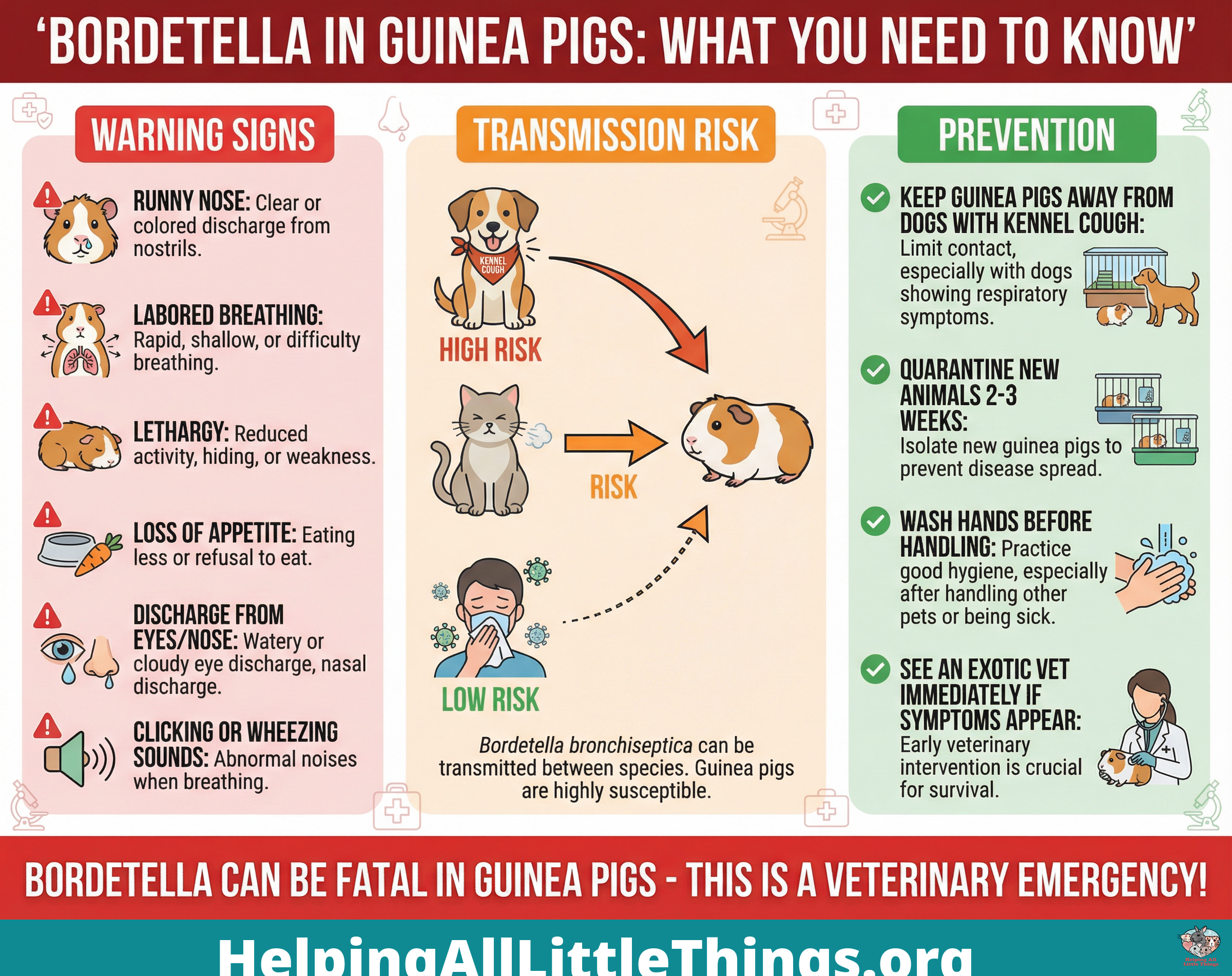

Bordetella bronchiseptica is a bacterium that causes respiratory disease in a variety of animals. While it is most commonly known as a cause of "kennel cough" in dogs, it can be a life-threatening pathogen for guinea pigs. An infection can progress rapidly from mild respiratory signs to severe pneumonia, making it a true veterinary emergency. Understanding the risks, signs, and prevention strategies is crucial for every guinea pig owner.
How is Bordetella Transmitted?
Guinea pigs can contract Bordetella from other animals, which is a primary reason why cross-species contact should be managed carefully.
- From Rabbits: Rabbits can often carry Bordetella bronchiseptica without showing any signs of illness themselves. This makes them asymptomatic carriers that can easily transmit the bacteria to a guinea pig. For this reason, it is not recommended to house rabbits and guinea pigs together [1].
- From Dogs: Dogs with kennel cough can easily transmit the bacteria to guinea pigs through respiratory droplets.
- From Other Guinea Pigs: The bacteria can spread quickly between guinea pigs through direct contact or airborne droplets.
Signs of a Bordetella Infection
A Bordetella infection in guinea pigs often presents as an upper respiratory infection (URI) that can quickly become severe. The signs can include:
- Labored Breathing: Difficulty breathing, rapid breathing, or wheezing.
- Nasal Discharge: A runny nose, which may be clear or colored.
- Loss of Appetite: Refusal to eat or drink is a common sign of serious illness.
- Lethargy: Weakness, hiding, and a lack of energy.
- Discharge from the Eyes: Watery or crusty eyes.
- Coughing or Sneezing.
Any guinea pig showing signs of respiratory distress should be seen by an exotic veterinarian immediately. The disease can be fatal within 24-48 hours if left untreated.
Diagnosis and Treatment
A veterinarian will diagnose a respiratory infection based on a physical examination and clinical signs. A culture of the nasal or eye discharge may be taken to confirm the presence of Bordetella. Treatment must be aggressive and may include:
- Antibiotics: Specific antibiotics that are safe for guinea pigs are used to fight the bacterial infection.
- Supportive Care: This is critical and may involve hospitalization for fluid therapy (to combat dehydration), oxygen therapy (for severe breathing difficulty), and hand-feeding with a critical care formula to provide nutrition.
- Nebulization: In some cases, a veterinarian may recommend nebulizing the guinea pig with saline or medication to help open the airways.
Prevention is Key
Given how serious a Bordetella infection can be, prevention is the best strategy.
- Separate Housing: Never house guinea pigs and rabbits together.
- Avoid Contact with Sick Animals: Keep your guinea pigs away from dogs or other animals showing signs of respiratory illness.
- Quarantine New Animals: Any new guinea pig should be quarantined in a separate room for at least 2-3 weeks to monitor for any signs of illness before being introduced to your existing pets.
- Good Hygiene: Wash your hands thoroughly before and after handling your guinea pigs, especially if you have been in contact with other animals.
- Reduce Stress: A clean, spacious habitat and a proper diet can help reduce stress, which supports a strong immune system.
By taking these preventative measures, you can significantly reduce the risk of your guinea pig contracting this dangerous infection.
References
[1] VCA Animal Hospitals. (n.d.). Guinea Pigs - Housing. Retrieved from https://vcahospitals.com/know-your-pet/guinea-pigs---housing
[2] Merck Veterinary Manual. (2025). Bordetella bronchiseptica Pneumonia in Guinea Pigs. Retrieved from https://www.merckvetmanual.com/all-other-pets/guinea-pigs/bordetella-bronchiseptica-pneumonia-in-guinea-pigs