Bloat in Guinea Pigs
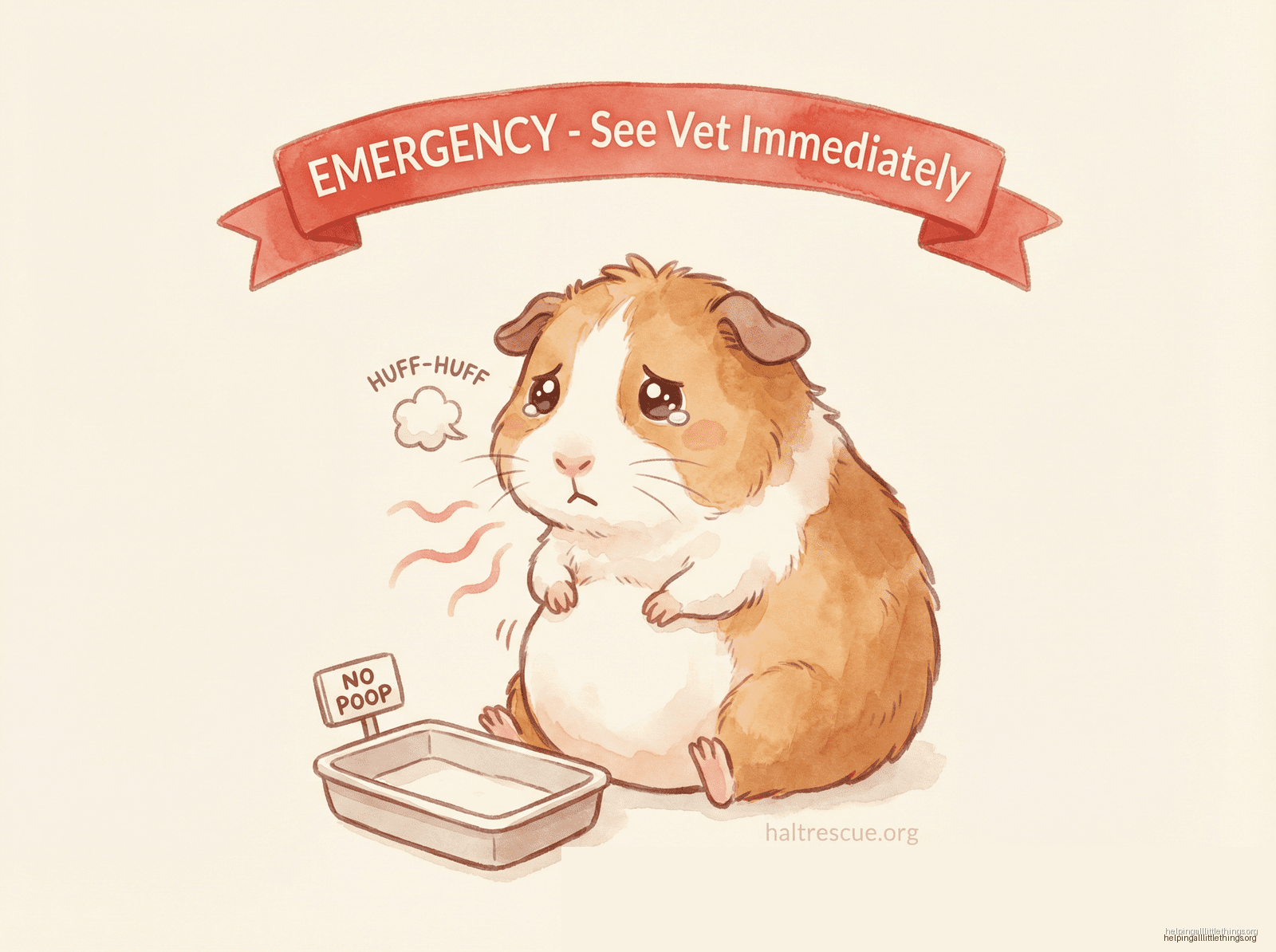

Bloat, also known as Gastric Dilatation and Volvulus (GDV), is a sudden, life-threatening condition that can affect guinea pigs. It occurs when the stomach fills with gas and, in some cases, twists on itself (volvulus), cutting off blood supply to the stomach and other organs. This is a severe medical emergency that requires immediate veterinary intervention. Understanding the signs and acting quickly can be the difference between life and death.
What is Bloat?
There are two types of bloat:
- Gastric Dilatation (Simple Bloat): The stomach becomes severely distended with gas. This is extremely painful and can put pressure on the lungs and major blood vessels, leading to difficulty breathing and circulatory shock.
- Gastric Dilatation and Volvulus (GDV): This is more severe. The gas-filled stomach twists, completely sealing off the entrance and exit. This traps the gas and stomach contents and, most critically, cuts off all blood flow to the stomach tissue, causing it to die rapidly. This condition is excruciatingly painful and quickly leads to toxic shock and death [1].
Signs of Bloat
Bloat happens suddenly and progresses rapidly. The signs are often dramatic and severe:
- Visible Abdominal Swelling: The most obvious sign is a tense, swollen, and hard abdomen. The guinea pig may look like a balloon.
- Extreme Pain: The guinea pig may grind its teeth loudly (bruxism), cry out, or stretch out in an attempt to relieve pressure.
- Labored Breathing: The enlarged stomach presses on the diaphragm, making it difficult for the lungs to expand.
- Restlessness or Inability to Get Comfortable: The guinea pig may repeatedly try to change position.
- Lethargy and Collapse: As the condition worsens, the guinea pig will become weak and unresponsive.
If you see these signs, this is a critical emergency. Go to an exotic animal veterinarian or emergency clinic immediately.
Causes and Risk Factors
The exact cause of bloat is not always clear, but several factors are thought to contribute:
- Diet: A diet high in gas-producing vegetables (like broccoli, cauliflower, and cabbage) or a sudden change in diet can be a trigger.
- Gastrointestinal (GI) Stasis: Any condition that slows down the normal movement of the gut, such as GI stasis, can lead to a buildup of gas [2].
- Genetics and Anatomy: Some guinea pigs may be anatomically predisposed to the condition.
- Stress: Stressful events can impact gut motility and contribute to gas buildup.
Diagnosis and Emergency Treatment
A veterinarian will diagnose bloat based on the severe clinical signs and a physical exam. An X-ray is the definitive way to confirm the diagnosis, as it will show the large, gas-filled stomach.
Treatment must be immediate and aggressive:
- Decompression: The first step is to relieve the gas pressure. A veterinarian may pass a tube into the stomach or use a needle to decompress the stomach directly through the abdominal wall.
- Pain Management: Strong pain medication is essential.
- Fluid Therapy: Intravenous (IV) fluids are given to treat shock.
- Medications: Drugs to stimulate gut motility (prokinetics) and gas-reducing agents like simethicone are used.
- Surgery: If the stomach has twisted (volvulus), emergency surgery is the only option to untwist it and remove any dead tissue. The prognosis for surgical intervention is often poor due to the severity of the condition [3].
Prevention
While not all cases of bloat can be prevented, you can take steps to minimize the risk:
- Introduce New Foods Slowly: When introducing new vegetables, do so one at a time and in small amounts.
- Feed Gas-Producing Veggies in Moderation: Foods like broccoli, cabbage, and cauliflower should be given as occasional treats, not as a daily staple.
- Promote Gut Health: A diet high in fiber from unlimited hay is the best way to maintain healthy gut motility.
- Monitor for GI Stasis: Be vigilant for any signs of decreased appetite or fecal output, as this can be a precursor to more serious issues. Signs of GI stasis include reduced droppings, loss of appetite, and a hunched posture — contact your exotic vet immediately if you observe these.
Recognizing the gravity of bloat and acting without delay is the most important thing you can do to help your guinea pig in this dire situation.
References
[1] DeCubellis, J., & Graham, J. (2013). Gastrointestinal Disease in Guinea Pigs and Rabbits. Veterinary Clinics of North America: Exotic Animal Practice, 16(2), 421–435. https://pmc.ncbi.nlm.nih.gov/articles/PMC7128126/
[2] PetMD. (2023). Bloat in Guinea Pigs. Retrieved from https://www.petmd.com/exotic/conditions/digestive/c_ex_gp_gastric_dilatation
[3] Oglesbee, B. L. (2011). Blackwell's Five-Minute Veterinary Consult: Small Mammal. John Wiley & Sons.