Understanding Guinea Pig Behavior: A Guide for Owners

Guinea pigs are highly vocal, social animals with a rich repertoire of sounds and body language. Learning to read their cues is one of the most rewarding parts of guinea pig ownership — and one of the most important for their welfare. A guinea pig that feels safe and understood will thrive; one whose signals are missed can suffer in silence.
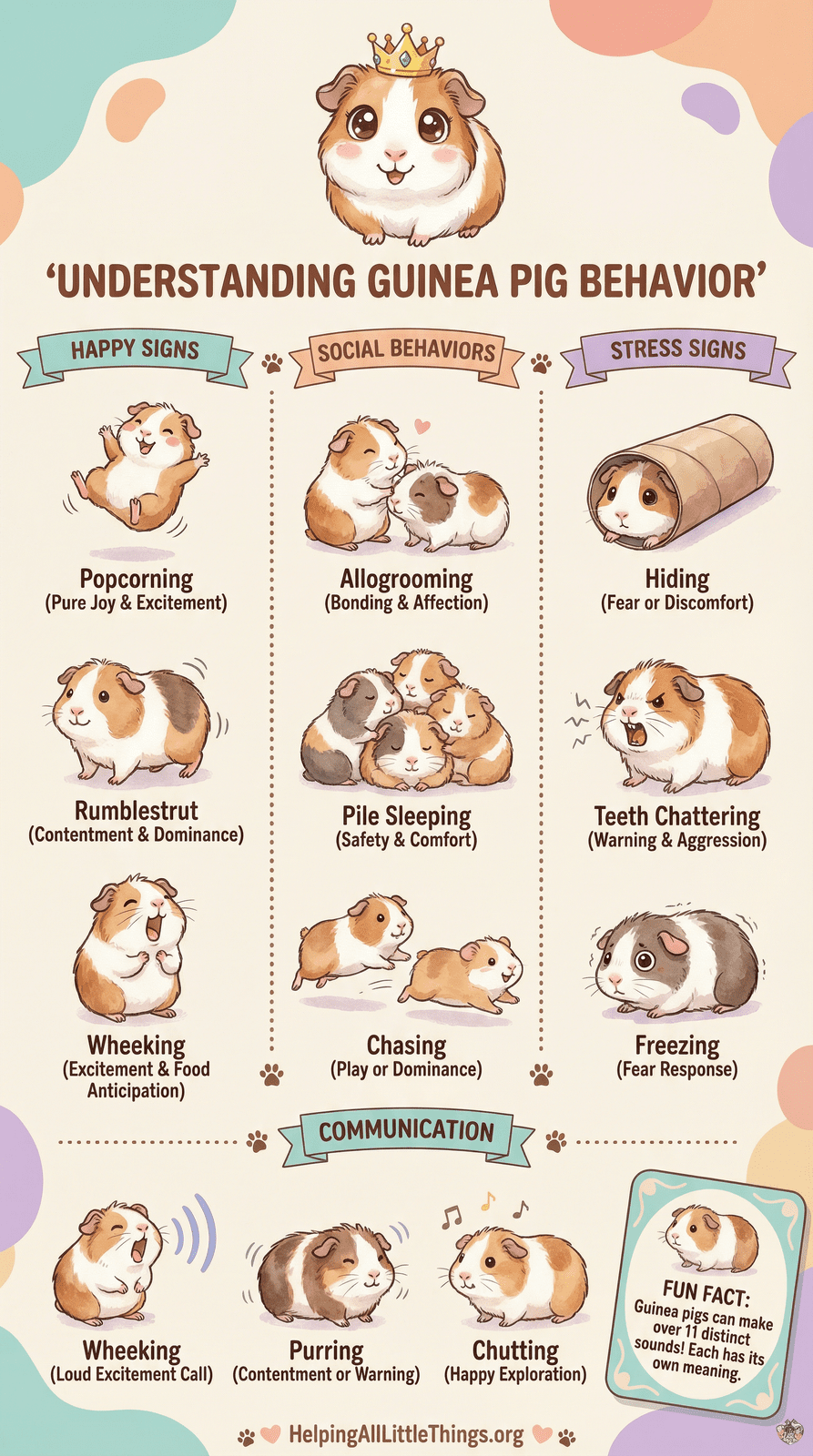

Common Guinea Pig Body Language
| Behavior | Common Meaning(s) | Context & Interpretation |
|---|---|---|
| Popcorning | Pure Joy & Excitement | One of the most delightful guinea pig behaviors: a sudden, spontaneous leap and twist in the air. It is an unmistakable sign of happiness and is most common in young guinea pigs, though adults do it too. [1] |
| Rumblestrut | Contentment, Dominance | A low rumbling purr accompanied by a slow, swaying walk. In a relaxed context it signals contentment; between two guinea pigs it can indicate one asserting dominance. [1] |
| Freezing | Fear, Caution | When a guinea pig stops dead and remains completely still, it is responding to a perceived threat. This is a prey animal's instinct to avoid detection. [1] |
| Teeth Chattering | Warning, Aggression | A rapid chattering of the teeth is a clear warning signal. It means "back off" and should be respected — it can escalate to a bite. [1] |
| Flopped on Side | Deep Relaxation | A guinea pig flopped on its side, eyes closed, is deeply relaxed and trusts its environment completely. New owners sometimes worry this is illness — but a healthy, responsive flop is a great sign. |
| Grooming You | Affection, Acceptance | When a guinea pig licks or gently nibbles your hand or fingers, they are grooming you — a sign of affection and social acceptance. |
| Hiding | Fear, Discomfort, Illness | While guinea pigs naturally love to hide, a sudden increase in hiding behavior, especially combined with loss of appetite, can signal illness or significant stress. |
Common Guinea Pig Vocalizations
Guinea pigs are among the most vocal of all small pets. They have over 11 distinct sounds, each with its own meaning. [1]
| Sound | Common Meaning(s) | Context & Interpretation |
|---|---|---|
| Wheeking | Excitement, Food Anticipation | The iconic guinea pig squeal — a loud, high-pitched "wheek wheek wheek." This is almost always triggered by food-related excitement, such as hearing the fridge open or a bag rustle. [1] |
| Purring (Low) | Contentment | A low, steady rumble when being petted or resting comfortably signals deep contentment. [1] |
| Purring (High, Short) | Annoyance, Warning | A shorter, higher-pitched purr — sometimes described as a "brr" — signals annoyance or mild alarm. [1] |
| Chutting | Happy Exploration | A series of soft, rapid sounds made while exploring. A very positive sign that your guinea pig feels safe and curious. [1] |
| Teeth Chattering | Aggression, Warning | A rapid, loud chattering is a serious warning signal between guinea pigs or toward a human. [1] |
| Shrieking | Pain, Extreme Fear | A loud, sharp shriek signals pain or extreme fear. This should always be investigated immediately. [1] |
| Cooing | Reassurance | A soft, low sound a mother makes to her pups, or that bonded guinea pigs make to each other as reassurance. |
Social Behavior and Group Dynamics
Guinea pigs are highly social animals and should never be kept alone. In a group, you will observe a clear hierarchy established through rumblestruts, mounting, and occasional chasing. Once a stable hierarchy is established, the group should settle into peaceful coexistence with regular mutual grooming and pile sleeping.
A guinea pig kept in isolation will show signs of chronic stress: excessive hiding, repetitive behaviors, loss of appetite, and a generally dull demeanor. Even a guinea pig that seems "fine" alone is not thriving — they are merely surviving.
Signs of a Happy and Healthy Guinea Pig
A happy guinea pig is active during their waking hours, curious about their environment, and eager for food and interaction. They will popcorn, explore, wheek at feeding time, and seek out their cage mates for grooming and cuddles. Their coat should be smooth and clean, their eyes bright, and their droppings regular and well-formed.
Signs of Stress, Fear, or Pain
Because guinea pigs are prey animals, they instinctively hide signs of weakness. By the time a guinea pig looks obviously ill, they are often very sick. Watch for:
- Hunched posture or reluctance to move
- Loss of appetite — this is always serious in guinea pigs
- Teeth grinding (distinct from chattering — a softer, continuous grind)
- Excessive hiding or unusual lethargy
- Dull, half-closed eyes
- Changes in droppings (fewer, smaller, or misshapen)
If you notice any of these signs, contact a guinea pig-savvy veterinarian promptly. Guinea pigs can deteriorate very quickly.
References
[1] Oxbow Animal Health. (2023). Guinea Pig Sounds and Their Meanings. Retrieved from https://oxbowanimalhealth.com/blog/guinea-pig-sounds-and-their-meanings/