Guinea Pig Exercise and Enrichment
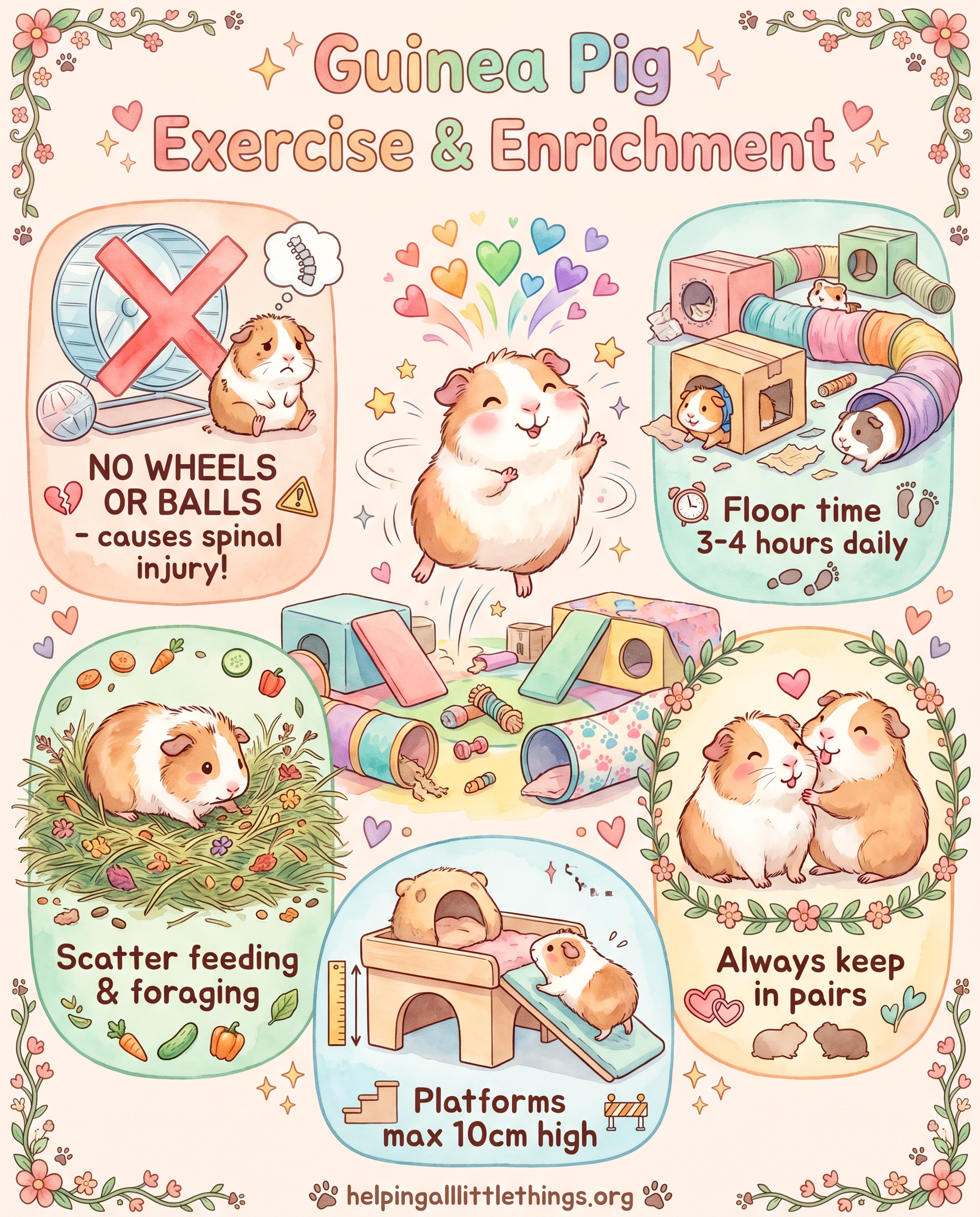
Guinea pigs are active, curious animals that need daily opportunities to move, explore, and express their natural behaviors. In the wild, guinea pigs (Cavia porcellus) travel considerable distances each day foraging for food, and captive guinea pigs retain this need for physical activity and mental stimulation.1 Providing adequate exercise and enrichment is not just a luxury — it is essential for preventing obesity, dental disease, GI stasis, and behavioral problems such as bar-chewing and repetitive pacing.
Guinea pigs must never use exercise wheels or exercise balls. Unlike hamsters and gerbils, guinea pigs have a rigid, inflexible spine that cannot safely curve to accommodate the arc of a wheel. Using a wheel forces the spine into an unnatural position and can cause severe, permanent spinal injuries.2 Exercise balls are equally dangerous: they restrict airflow, cause overheating, and prevent the guinea pig from stopping when they need to, leading to exhaustion, injury, and extreme stress.3
If you see exercise wheels or balls marketed for guinea pigs, disregard them. No wheel or ball is safe for a guinea pig, regardless of size.
How Much Exercise Do Guinea Pigs Need?
Guinea pigs should have access to at least 3–4 hours of floor time per day outside their enclosure, or be housed in a sufficiently large enclosure that allows them to run, explore, and popcorn freely.1 The minimum recommended cage size for two guinea pigs is 7.5 square feet (approximately 70 cm × 100 cm), though larger is always better.4 A cage that is too small is one of the most common causes of obesity and behavioral problems in pet guinea pigs.
Safe Exercise Options
Floor Time (Laptime / Free Roam)
The gold standard for guinea pig exercise is supervised free-roam time in a guinea-pig-proofed room or pen. Set up a playpen or use a room with no electrical cords, toxic plants, or small gaps where a guinea pig could become stuck. Always supervise floor time to prevent accidents and predator encounters (including well-meaning dogs and cats).
During floor time, scatter hay, fresh herbs, and small pieces of vegetables around the area to encourage foraging behavior — this combines physical activity with mental stimulation.5
Obstacle Courses
Arrange cardboard boxes, paper bags, tunnels, and low ramps to create a mini obstacle course. Guinea pigs love to investigate new objects, squeeze through tunnels, and hide in enclosed spaces. Rotate the layout weekly to keep the environment novel and stimulating.5
Foraging Activities
In the wild, guinea pigs spend the majority of their waking hours foraging. Replicate this by:
- Hiding small pieces of vegetables or herbs in hay for them to find
- Stuffing toilet paper tubes with hay and a few leafy greens
- Scattering pellets in hay rather than feeding from a bowl
- Using snuffle mats or foraging boards designed for small animals
Foraging activities slow eating, reduce boredom, and provide significant mental enrichment.5
Tunnels and Hideaways
Guinea pigs are prey animals and feel safest when they have places to hide. Provide multiple tunnels (fleece, cardboard, or plastic), hideaway houses, and cozy huts throughout their enclosure and play area. Having multiple hides reduces stress and encourages movement between them.4
Social Interaction
Guinea pigs are highly social animals and should always be kept in pairs or groups of the same sex (or neutered males with females). A companion is itself a form of enrichment — guinea pigs groom each other, play together, and communicate constantly. A lone guinea pig, no matter how much human interaction they receive, is at higher risk of depression and stress-related illness.1
Enrichment Ideas
| Type | Examples |
|---|---|
| Foraging | Hay stuffed tubes, snuffle mats, scatter feeding, herb pots |
| Exploration | Tunnels, cardboard boxes, paper bags, new objects |
| Chewing | Willow balls, apple sticks, untreated wooden toys, dried herbs |
| Sensory | Different textures of bedding, fresh grass, dried flowers |
| Social | Guinea pig companions, gentle human handling, lap time |
| Climbing | Low ramps and platforms (max 10 cm high to prevent falls) |
Guinea pigs are not natural climbers and can seriously injure themselves falling from heights. Any platforms or ramps in their enclosure should be no higher than 10 cm (4 inches) and should have a ramp with good grip rather than requiring jumping.4
Signs Your Guinea Pig Needs More Enrichment
Watch for these behavioral signs that indicate insufficient exercise or enrichment:
- Bar-chewing or cage-biting — a stereotypy indicating frustration and boredom
- Repetitive pacing along the same path
- Barbering (chewing fur off themselves or cage-mates)
- Lethargy or obesity — often linked to insufficient movement
- Aggression between cage-mates, often caused by insufficient space
If you observe any of these behaviors, increase floor time, expand the enclosure, and add more enrichment activities immediately.5
A Note on Seasonal Exercise
During summer months, be mindful of heat when setting up floor time areas. Guinea pigs are extremely sensitive to temperatures above 26°C (79°F) and can develop heatstroke rapidly.6 Avoid placing play areas in direct sunlight, and always ensure fresh water is available. See our Outdoor Safety guide for guidance on safe outdoor exercise.