Know Your Guinea Pig Breeds
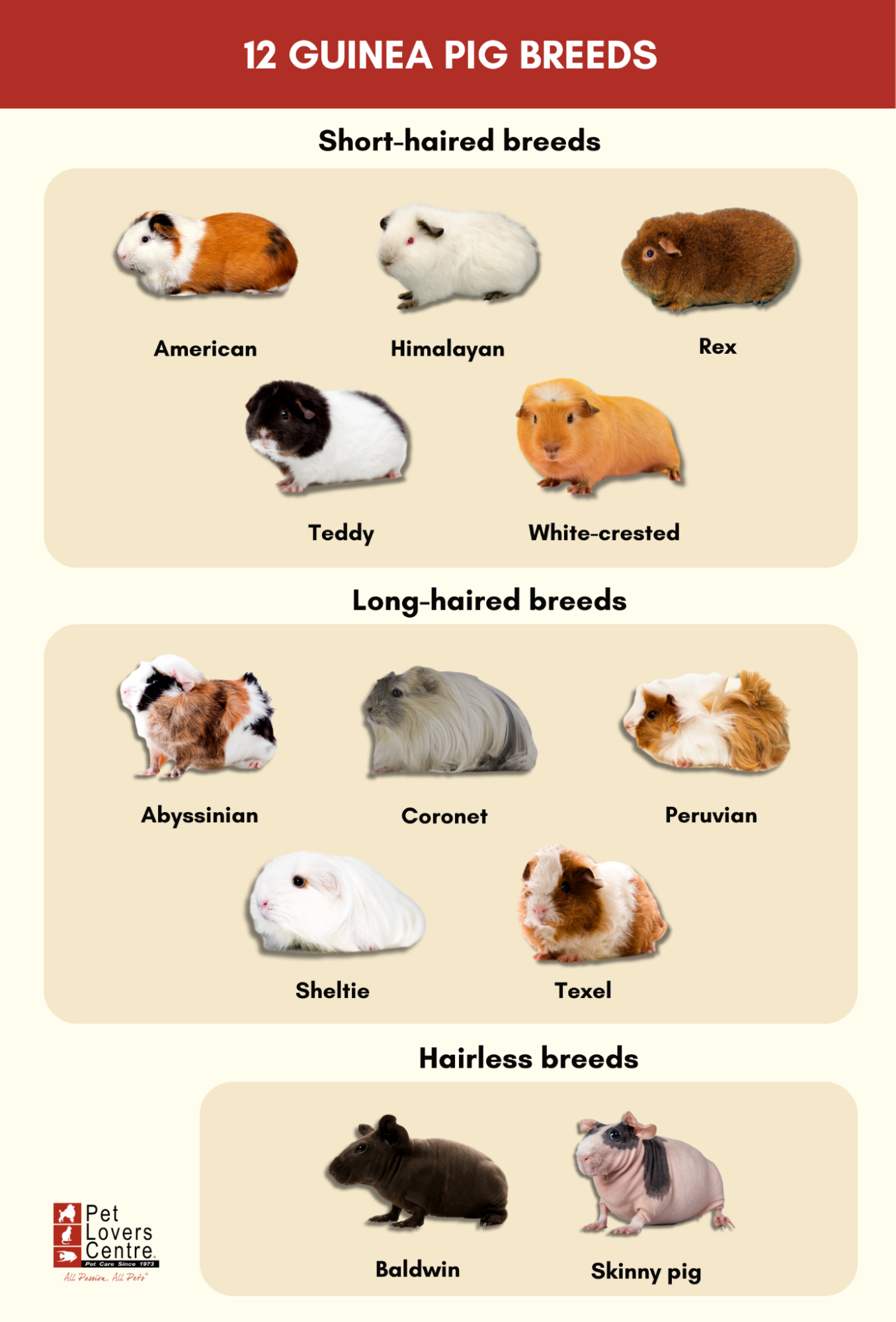

From the sleek and smooth to the curly and long-haired, guinea pigs come in a wonderful variety of breeds, each with its own unique look and grooming needs. While personality is individual, some breeds are known for certain temperaments. The American Cavy Breeders Association (ACBA) officially recognizes 13 breeds, but there are several other popular, non-recognized varieties you might encounter [1].
Understanding the differences, especially in coat type, is key to providing the right care for your cavy companion.
Short-Haired Breeds
These breeds are the most common and are generally easier to care for in terms of grooming.
| Breed | Description | Grooming Needs |
|---|---|---|
| American | The most popular and common breed, known for its short, smooth, glossy coat that lies flat. They come in a wide array of colors and are known for their gentle, easy-going nature. | Low: Weekly brushing is sufficient to remove loose hair. |
| Teddy | Characterized by a dense, wiry, and short coat that stands on end, giving them a "plush toy" appearance. Their fur is resilient and springs back when touched. | Low: Weekly brushing helps to remove debris and loose fur from their dense coat. |
| White Crested | Similar to the American, but with a single, white, smooth rosette (crest) on their forehead. According to show standards, the rest of their body should be a solid color with no other white markings [2]. | Low: Requires the same minimal grooming as the American breed. |
Long-Haired Breeds
These glamorous guinea pigs require significant grooming commitment to keep their coats healthy and free of mats.
| Breed | Description | Grooming Needs |
|---|---|---|
| Peruvian | Famous for their long, straight hair that can grow to be several inches long, often parting down their back. They have two rosettes on their hindquarters that cause the hair to grow forward over their face. | High: Daily brushing is essential to prevent tangles and mats. Many owners keep their hair trimmed for easier maintenance. |
| Silkie (Sheltie) | Silkies have a long, soft, and silky coat that flows back from their head, without a part or rosettes like the Peruvian. Their hair does not cover their face. | High: Daily brushing is required to keep their luxurious coat in good condition. |
| Coronet | Similar to the Silkie with its long, flowing coat, but with a single, pronounced rosette on its forehead. | High: Daily grooming is necessary to prevent matting, especially around the crest. |
Rough-Coated & Curly-Haired Breeds
These breeds are distinguished by their unique hair textures and patterns.
| Breed | Description | Grooming Needs |
|---|---|---|
| Abyssinian | Known for their unique coat, which features multiple rosettes (swirls of hair) all over their body. A show-quality Abyssinian has 8 to 10 rosettes, giving them a perpetually disheveled and spiky look. | Moderate: Weekly brushing is needed to keep their coat clean and free of debris that can get caught in the rosettes. |
| Texel | A cross between a Silkie and a Rex, the Texel has a long, soft, curly coat. They are essentially a curly-haired Silkie, with the hair flowing back from their head. | High: Their long, curly coat is prone to tangling and requires daily, gentle grooming. |
Hairless Breeds
Hairless breeds are unique and require special care to protect their exposed skin.
| Breed | Description | Grooming Needs |
|---|---|---|
| Skinny Pig | Mostly hairless, but they retain some fuzzy hair on their nose, feet, and legs. They are not a natural breed but were developed in a lab. | Specialized: Require a temperature-controlled indoor environment (72-75°F / 22-24°C). Their skin needs occasional moisturizing with a piggy-safe product like coconut oil. See our guide on Skinny Pigs for more. |
| Baldwin | Born with a full coat of fur that falls out over the first few months of life, leaving them completely hairless. This is due to a different recessive gene than the Skinny Pig. | Specialized: Similar to Skinny Pigs, they need a warm environment and skin care to prevent dryness. |
No matter the breed, all guinea pigs need a proper diet, a spacious and clean habitat, and regular veterinary care to thrive. When choosing a guinea pig, consider the grooming commitment you are able to provide.
References
[1] American Cavy Breeders Association (ACBA). (n.d.). Recognized Breeds. Retrieved from https://www.acbaonline.com/standard-of-perfection
[2] Oxbow Animal Health. (n.d.). Oxbow's Complete List of Guinea Pig Breeds. Retrieved from https://oxbowanimalhealth.com/blog/oxbows-complete-list-of-guinea-pig-breeds/