A Guide to Common Skin Issues in Small Pets
The skin is the largest organ of the body and serves as a critical protective barrier. For small pets, skin and fur health are often direct indicators of their overall well-being. A glossy, full coat and clear skin are signs of a healthy animal, while issues like hair loss, redness, or irritation can signal everything from a simple environmental problem to a serious underlying disease.
This guide covers some of the most common dermatological (skin) problems seen across various small companion mammals, with a focus on identification, prevention, and knowing when to seek veterinary care.
Urine Scald (Perineal Dermatitis)
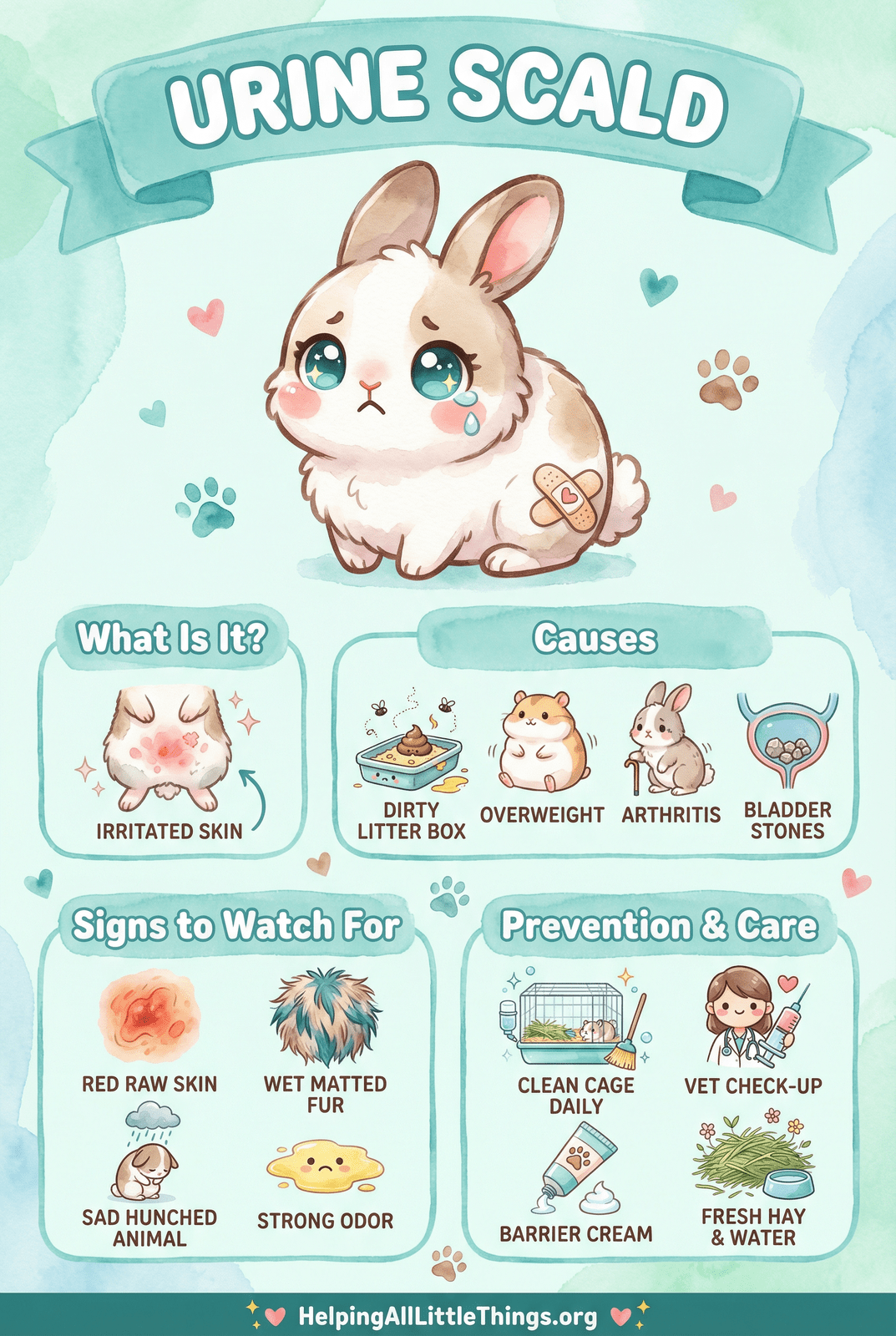

Urine scald is a painful condition that occurs when urine soaks into an animal's fur and is held against the skin, causing chemical burns, inflammation, hair loss, and secondary infections. The skin in the perineal area (around the genitals and anus), on the belly, and down the inner thighs becomes red, raw, and extremely sore.
Primary Causes:
- Mobility Issues: Arthritis, paralysis, nerve damage, or joint pain can prevent a pet from assuming the proper posture to urinate, causing them to soil themselves [1].
- Obesity: Excess weight can create skin folds that trap urine and make it physically difficult for the animal to clean itself or move away from soiled areas.
- Unsanitary Environment: A cage or litter box that is not cleaned frequently enough forces the animal to sit in its own waste.
- Underlying Illness: Conditions like bladder stones, sludge, urinary tract infections (UTIs), or kidney disease can cause incontinence, frequent urination, or straining, all of which can lead to urine scald [2].
Prevention and Management:
- Impeccable Hygiene: Keep the pet's enclosure scrupulously clean and dry. Change bedding and litter daily, or more often if needed. Use absorbent bedding like fleece liners or paper-based bedding.
- Proper Diet & Weight: Feed a species-appropriate diet to prevent obesity and urinary issues. For rabbits and guinea pigs, a diet high in grass hay is essential for both dental and urinary health.
- Veterinary Care: If you suspect urine scald, a vet visit is essential to diagnose and treat the underlying cause. Treatment for the scald itself often involves clipping the wet fur, gently cleaning the area with a prescribed antiseptic, applying a soothing barrier cream (like a diaper rash ointment without zinc oxide), and administering pain relief and antibiotics [1, 3].
Species Spotlight: Rabbits and guinea pigs are particularly susceptible to urine scald due to their anatomy and common health issues like bladder sludge and arthritis [2, 4].
Parasitic Infections
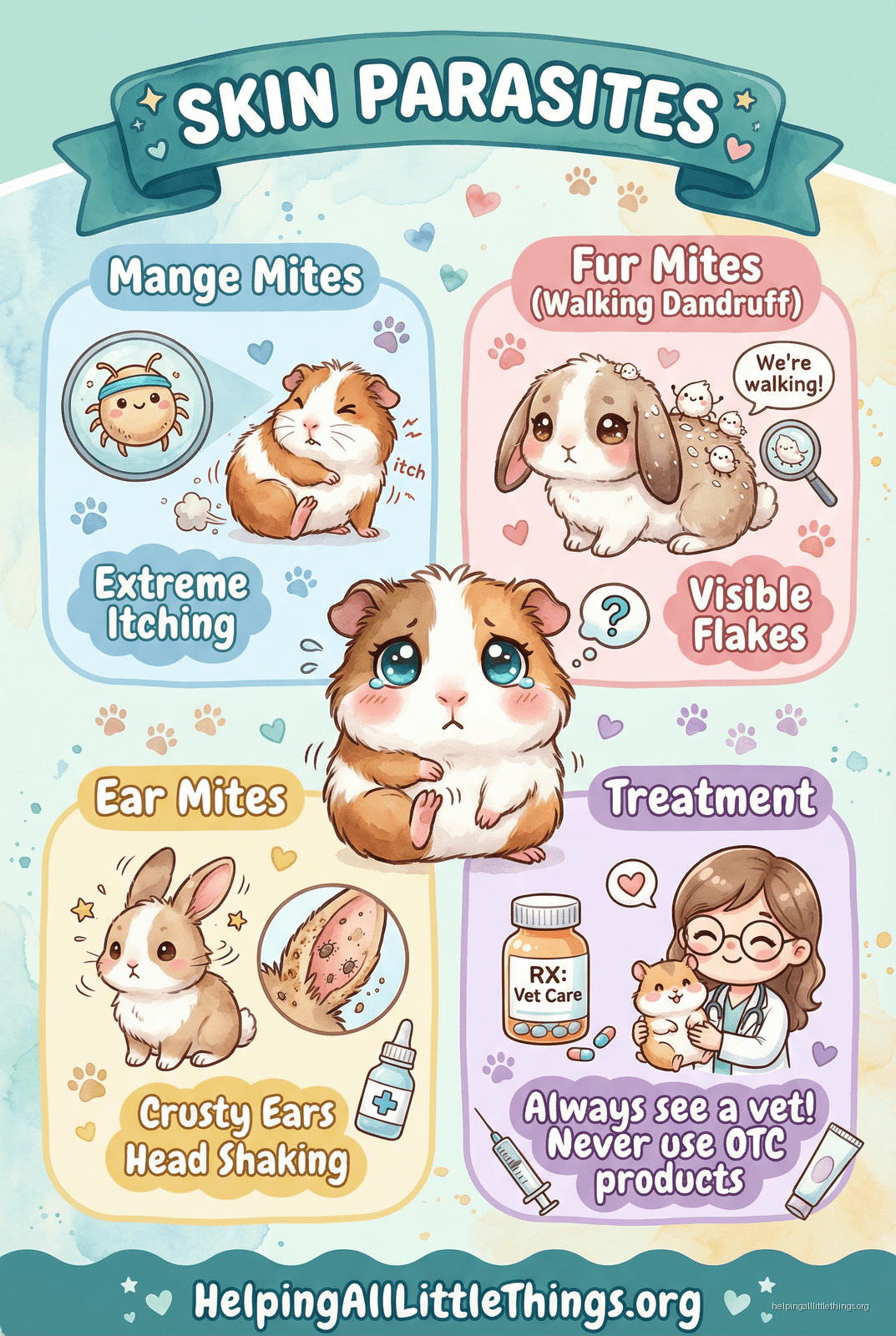

Ectoparasites (parasites that live on the outside of the body) are a frequent cause of intense itching, hair loss, and self-trauma in small pets.
| Parasite Group | Common Name | Key Species Affected | Signs & Symptoms |
|---|---|---|---|
| Mites | Mange Mites | Guinea Pigs (Trixacarus caviae) | Extreme, frantic itching that can resemble a seizure; hair loss, crusting, open sores from scratching [5]. Highly contagious and painful. |
| Fur Mites | Rabbits (Cheyletiella), Guinea Pigs, Rodents | "Walking dandruff," visible white flakes on the fur, mild to moderate itching, patchy hair loss [6]. | |
| Ear Mites | Rabbits (Psoroptes cuniculi) | Intense head shaking, ear scratching, thick, crusty brown debris inside the ear canal [7]. | |
| Hedgehog Mites | Hedgehogs (Caparinia tripilis) | Significant quill loss, dry flaky skin, crusting around the face and ears [8]. | |
| Lice | Biting Lice | Guinea Pigs (Gliricola porcelli) | Less intense itching than mites, visible lice or nits (eggs) on hair shafts, dull coat, some hair loss [5]. |
Diagnosis and Treatment: A veterinarian must diagnose a parasitic infection, usually by examining a skin scraping or fur sample under a microscope. Never attempt to treat suspected mites or lice with over-the-counter products, as they can be ineffective and toxic. A vet will prescribe safe and effective medications like ivermectin or selamectin [6]. All animals in the home must be treated simultaneously, and the environment must be thoroughly cleaned to prevent re-infestation.
Fungal Infections (Dermatophytosis)
Commonly known as ringworm, this condition is caused by a fungus, not a worm. It is highly contagious and can be transmitted between pets and to humans (a zoonotic disease).
- Symptoms: Typically appears as circular, patchy areas of hair loss with scaly, red, or crusty skin at the edges. It most often starts on the head, ears, and paws [9].
- Diagnosis: A veterinarian can diagnose ringworm using a special ultraviolet light (Wood's lamp), microscopic examination of hairs, or a fungal culture.
- Treatment: Treatment involves topical antifungal creams for small lesions or oral antifungal medications for more widespread cases. Environmental decontamination is critical to prevent spreading and reinfection [9].
Species Spotlight: Ringworm is most common in guinea pigs, rabbits, and chinchillas, especially young or stressed individuals [7, 9].
Bacterial Infections & Related Conditions
Pododermatitis (Sore Hocks)
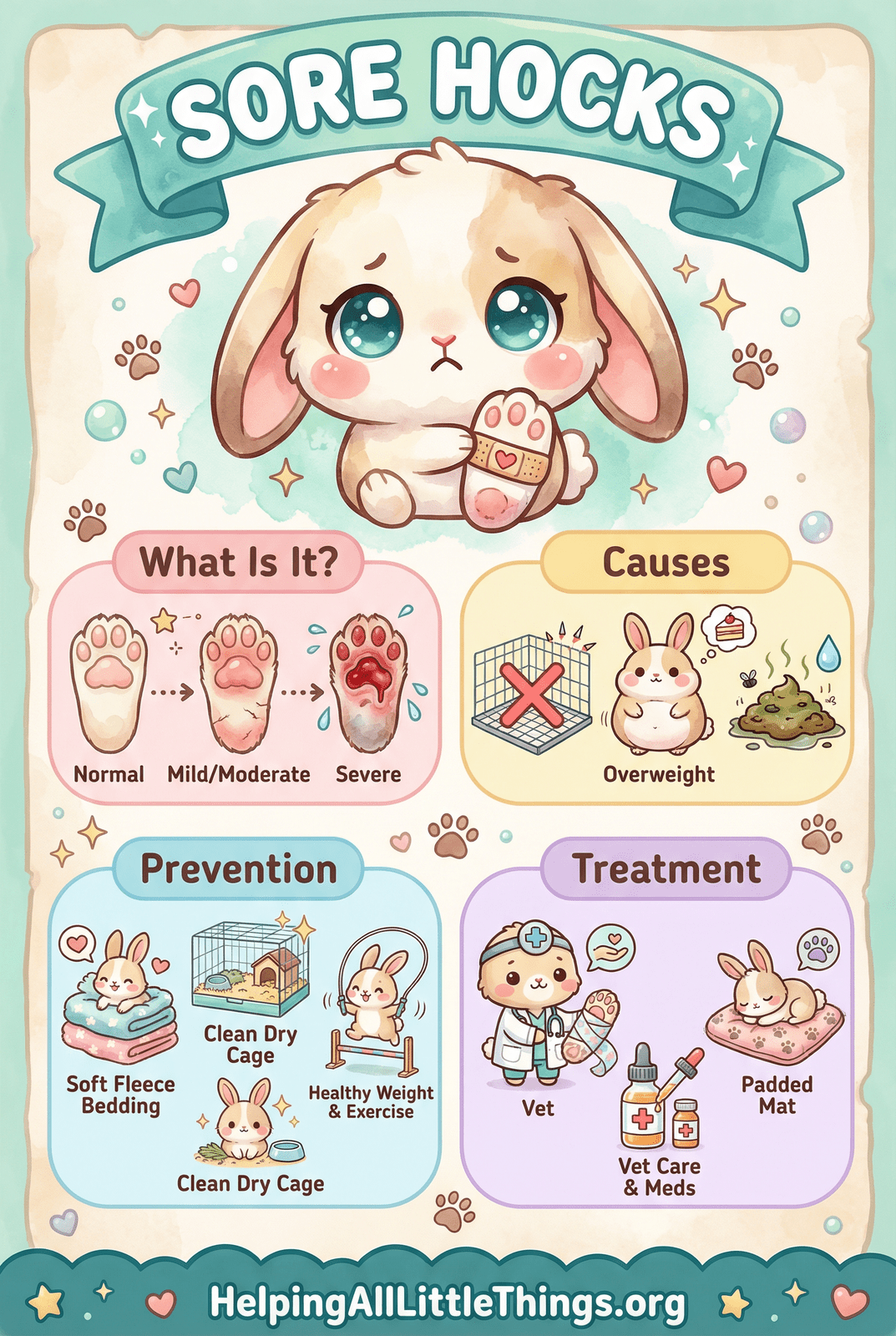

This is a chronic, progressive inflammation of the skin on the bottom of the feet, most common in rabbits and guinea pigs.
- Causes: Constant pressure on the feet from improper flooring (e.g., wire-bottom cages), obesity, poor sanitation, or inactivity [10].
- Stages: It begins as hair loss and redness on the heels (hocks) and can progress to painful ulcers, abscesses, and deep bone infections.
- Prevention is Key: Provide a solid, well-padded surface (e.g., thick layers of soft bedding over a solid floor, fleece liners, grass mats). Keep the enclosure clean and dry, manage your pet's weight, and encourage exercise.
Moist Dermatitis (Pyoderma)
This is a superficial bacterial skin infection that occurs in areas where the skin is persistently damp.
- "Wet Dewlap" in Rabbits: Female rabbits with large dewlaps (skin folds under the chin) can trap water while drinking, leading to chronic moisture and infection [7]. Using a water bottle instead of a bowl can help.
- Skin Fold Dermatitis: Obese animals with deep skin folds are at risk.
- Nasal Dermatitis in Gerbils: Often called "sore nose," this can be caused by irritation from excessive porphyrin secretions (a normal reddish discharge from the eyes and nose) or from burrowing in abrasive bedding [7].
Species-Specific Conditions
- Ferrets - Adrenal Gland Disease: A very common condition in ferrets that causes an overproduction of sex hormones. The most classic sign is progressive, symmetrical hair loss, often starting at the tail and moving up the body [11].
- Chinchillas - Fur Slip: A defense mechanism where a chinchilla releases a patch of fur when handled roughly or stressed. This is not a disease but results in a bald patch that will eventually regrow.
- Rats - Barbering & Ulcerative Dermatitis: Barbering is when a rat (or its cagemate) obsessively chews or plucks its own or another's fur, leaving smooth bald patches. Ulcerative dermatitis involves itchy, scabbed lesions, often on the neck and shoulders, that can be difficult to resolve and are often linked to genetics or allergies [7].
Maintaining your pet's skin and coat health starts with excellent husbandry: a clean and appropriate habitat, a proper diet, and regular observation. If you notice any changes in your pet's skin, fur, or behavior, a prompt visit to an exotic animal veterinarian is always the best course of action.
References
[1] Arizona Exotic Animal Hospital. (n.d.). Urine Scald Dermatitis in Pet Rabbits. Retrieved from https://azeah.com/rabbits/urine-scald-dermatitis-pet-rabbits
[2] Georgia House Rabbit Society. (n.d.). Urine Scald: Symptom of Greater Problems. Retrieved from https://www.houserabbitga.com/rabbit-urine-scald
[3] PDSA. (n.d.). Urine Scald, Dirty Bottoms and How to Clean a Rabbit. Retrieved from https://www.pdsa.org.uk/pet-help-and-advice/pet-health-hub/symptoms/urine-scald-dirty-bottoms-and-how-to-clean-a-rabbit
[4] Guinea Lynx. (n.d.). Urine Scald. Retrieved from https://www.guinealynx.info/urine_scald.html
[5] VCA Animal Hospitals. (n.d.). Mites and Lice in Guinea Pigs. Retrieved from https://vcahospitals.com/know-your-pet/mites-in-guinea-pigs
[6] VCA Animal Hospitals. (n.d.). Cheyletiellosis (Walking Dandruff) in Rabbits. Retrieved from https://vcahospitals.com/know-your-pet/walking-dandruff-cheyletiella-in-rabbits
[7] Sullivan, P. (2024, April). Introduction to Dermatology in the Exotic Animal Patient. MSPCA-Angell. Retrieved from https://www.mspca.org/angell_services/introduction-to-dermatology-in-the-exotic-animal-patient/
[8] VCA Animal Hospitals. (n.d.). Mites in Hedgehogs. Retrieved from https://vcahospitals.com/know-your-pet/mites-in-hedgehogs
[9] VCA Animal Hospitals. (n.d.). Ringworm in Ferrets. Retrieved from https://vcahospitals.com/know-your-pet/ferrets-skin-disease
[10] Oxbow Animal Health. (2023, August 23). Sore Hocks in Rabbits: Causes and Treatment. Retrieved from https://oxbowanimalhealth.com/blog/sore-hocks-in-rabbits-causes-and-treatment/
[11] VCA Animal Hospitals. (n.d.). Skin Diseases in Ferrets. Retrieved from https://vcahospitals.com/know-your-pet/ferrets-skin-disease