Pneumonia in Small Pets
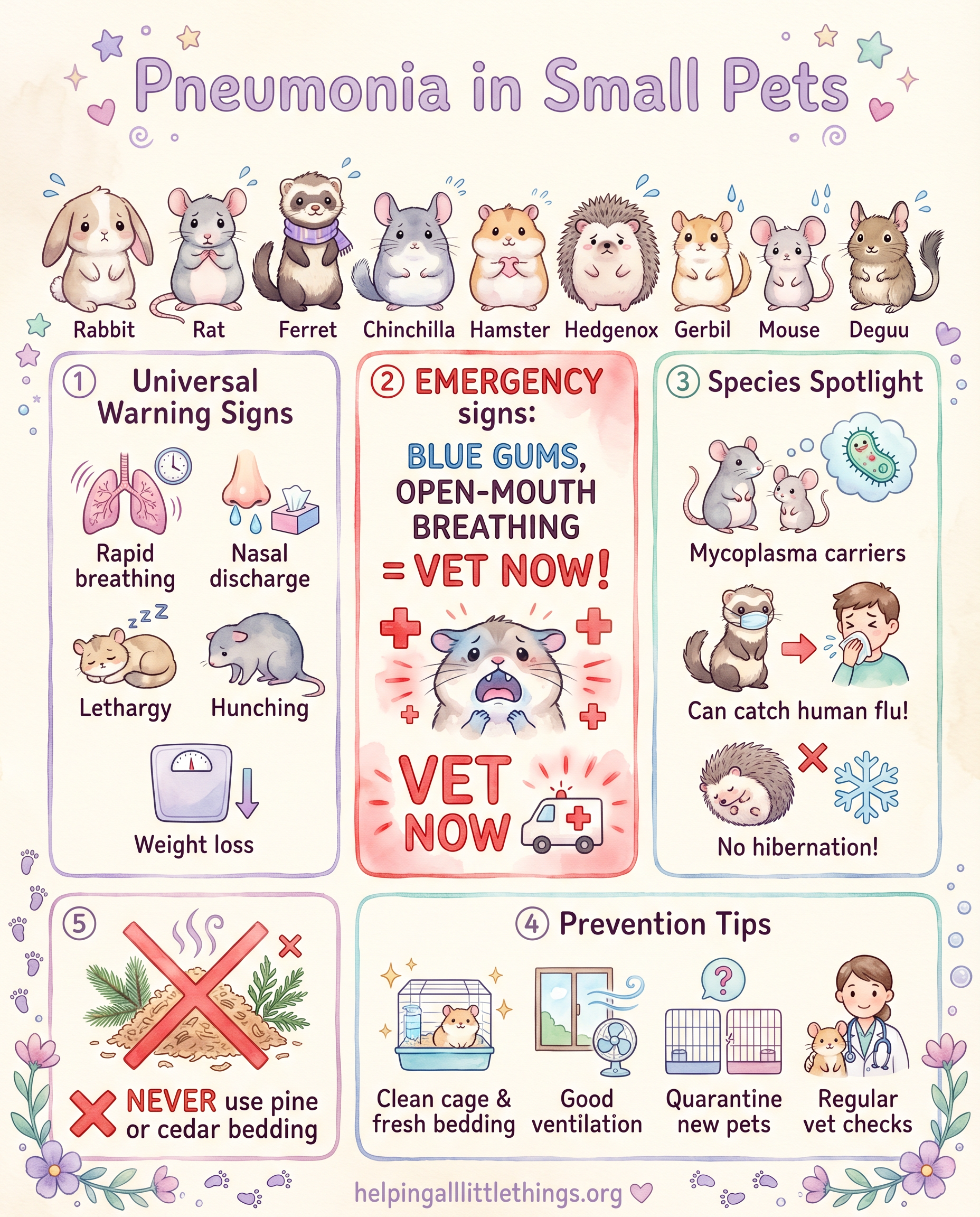

Pneumonia in small mammals can progress from mild symptoms to a life-threatening emergency within hours. Never wait to see if a small pet improves on its own. Contact an exotic veterinarian as soon as you notice any signs of respiratory distress.
Pneumonia — infection and inflammation of the lungs — is a serious condition that can affect virtually every species of small pet. While the specific bacteria, risk factors, and presentations differ between species, the core danger is the same: small mammals are prey animals that instinctively hide illness, meaning that by the time symptoms are visible, the disease is often already advanced.
This article covers pneumonia across the major small pet species kept by HALT fosters and adopters. For a detailed, species-specific deep dive into guinea pig pneumonia — including the critical warning that guinea pigs often do not cough — see our dedicated article: Pneumonia in Guinea Pigs.
How Pneumonia Develops
In most small mammals, pneumonia begins as a bacterial or viral upper respiratory infection (URI) that descends into the lower respiratory tract and lungs. The most common bacterial culprits across species include Bordetella bronchiseptica, Pasteurella multocida, Streptococcus species, and Mycoplasma species. Viral infections, fungal pneumonia, and aspiration pneumonia (inhaling food or liquid into the lungs) are less common but also possible.1 2
Several factors make small pets particularly vulnerable:
- Stress — from overcrowding, a dirty environment, temperature extremes, or the introduction of a new cage-mate — suppresses the immune system and allows opportunistic bacteria to take hold
- Poor ventilation and high ammonia levels from soiled bedding directly irritate the respiratory tract
- Concurrent illness — a pet already fighting one infection is far more susceptible to secondary pneumonia
- Aspiration — syringe-feeding too quickly, or feeding a cold or hypothermic animal, can cause food or liquid to enter the lungs. See our Hand-Feeding Guide for safe technique
Species-Specific Notes
Different species have different primary pathogens, risk factors, and presentations. The table below summarises the key points; detailed information follows.
| Species | Primary Pathogens | Key Risk Factor | Notable Warning Sign |
|---|---|---|---|
| Rabbit | Pasteurella multocida, Bordetella | Carrier state; stress | Snuffles (nasal discharge) may precede pneumonia |
| Rat | Mycoplasma pulmonis, Streptococcus | Nearly all rats carry Mycoplasma | Chronic respiratory disease; rattling breathing |
| Ferret | Influenza A, Aleutian disease, Bordetella | Contact with humans with flu | Open-mouth breathing is an emergency |
| Chinchilla | Bordetella, Streptococcus, Pseudomonas | Stress; poor ventilation | Often presents as sudden death |
| Hamster | Streptococcus pneumoniae, Pasteurella | Drafts; temperature fluctuation | Rapid decline; often fatal if untreated |
| Gerbil | Pasteurella, Streptococcus | Overcrowding | Nasal discharge; labored breathing |
| Hedgehog | Bordetella, Pasteurella | Hibernation attempts (torpor) | Wheezing; labored breathing |
| Mouse | Mycoplasma pulmonis, Sendai virus | Nearly all mice carry Mycoplasma | Chronic; rattling breathing, hunched posture |
| Degu | Bordetella, Streptococcus | Stress; poor husbandry | Nasal discharge; lethargy |
Rabbits
Rabbits are commonly affected by Pasteurella multocida, the bacterium responsible for "snuffles" — a chronic upper respiratory infection characterised by nasal discharge, sneezing, and watery eyes. Snuffles can progress to pneumonia if untreated or if the rabbit is stressed. Many rabbits are asymptomatic carriers of Pasteurella and may only show symptoms when their immune system is compromised.3 Bordetella bronchiseptica is also a significant pathogen in rabbits. Treatment typically involves long courses of antibiotics such as enrofloxacin or azithromycin, guided by culture and sensitivity testing.
Rats
Rats are uniquely affected by Mycoplasma pulmonis, a bacterium that is present in virtually all domestic rats. Mycoplasma causes a chronic, progressive respiratory disease (CRD) that worsens over the rat's lifetime. Symptoms include audible rattling or clicking when breathing, sneezing, and a hunched posture. Pneumonia can develop as a secondary complication. Treatment with doxycycline and/or enrofloxacin can manage the disease and slow progression, but cannot eliminate Mycoplasma entirely.4 Rats with respiratory disease should be kept on paper-based bedding only — even low-dust wood shavings can aggravate sensitive airways.
Ferrets
Ferrets are susceptible to influenza A, which they can catch directly from infected humans. Ferret influenza can progress to secondary bacterial pneumonia. Signs include sneezing, nasal discharge, lethargy, and fever. Ferrets can also develop pneumonia from Bordetella and from Aleutian disease virus. Open-mouth breathing in a ferret is a medical emergency. Treatment depends on the cause and may include antivirals, antibiotics, and supportive care.5
Chinchillas
Chinchillas are highly susceptible to respiratory infections and pneumonia, which can progress with alarming speed. Bordetella, Streptococcus, and Pseudomonas are among the most common pathogens. Stress — including temperature extremes, overcrowding, and poor ventilation — is a major trigger. Chinchillas may show very few symptoms before sudden deterioration, which is why regular veterinary monitoring is important.6
Hamsters, Gerbils, Mice, and Degus
These smaller rodents are susceptible to bacterial pneumonia from Streptococcus, Pasteurella, and Mycoplasma species. Drafts, temperature fluctuations, and overcrowding are common triggers. Mice, like rats, are nearly universal carriers of Mycoplasma pulmonis, and chronic respiratory disease is common in older mice. Signs across these species include nasal discharge, labored breathing, hunched posture, and lethargy. Decline can be rapid — any respiratory symptoms warrant same-day veterinary attention.1 2
Hedgehogs
Hedgehogs can develop pneumonia from Bordetella, Pasteurella, and other bacteria. A particular risk for hedgehogs is attempted hibernation (torpor) — African Pygmy Hedgehogs are not true hibernators, and a cold environment that triggers torpor attempts severely stresses the immune system and can precipitate respiratory infections. Signs include wheezing, labored breathing, nasal discharge, and lethargy.7
General Signs of Pneumonia in Small Pets
While species-specific presentations vary, the following signs are common across all small mammals and should prompt an immediate veterinary visit:
- Rapid, labored, or shallow breathing
- Audible wheezing, rattling, or crackling sounds
- Nasal or ocular discharge
- Lethargy, hunching, or reluctance to move
- Loss of appetite or reduced food/water intake
- Weight loss
- Blue-tinged gums or extremities (cyanosis) — a critical emergency
- Open-mouth breathing — a critical emergency
Diagnosis
Veterinary diagnosis of pneumonia typically involves:1
- Physical examination — auscultation of the lungs for abnormal sounds
- Chest x-ray — the most reliable way to confirm pneumonia; inflamed lungs appear cloudy rather than dark
- Nasal or tracheal swab — for bacterial culture and sensitivity testing to guide antibiotic choice
- Bloodwork — to assess systemic health and the severity of infection
Treatment
Treatment must always be directed by a veterinarian experienced with exotic small mammals. General principles include:1 2
- Antibiotics — selected based on the species, suspected pathogen, and ideally culture results. Treatment courses are typically long (2–4 weeks or more). Many antibiotics safe for other animals are toxic to rodents and rabbits — never use antibiotics not prescribed specifically for your pet's species.
- Supportive care — syringe feeding, subcutaneous fluids, vitamin supplementation, and keeping the animal warm and quiet
- Oxygen therapy and nebulization — for more severe cases
- Isolation — to prevent spread to other animals in the household
Prevention
The best protection against pneumonia is good husbandry and early veterinary attention:1 3
- Keep enclosures clean and well-ventilated; change bedding regularly
- Avoid dusty, aromatic, or scented bedding
- Maintain appropriate temperatures and avoid drafts
- Quarantine all new animals for a minimum of 2–4 weeks before introducing them to existing pets
- Provide a species-appropriate diet to support immune health
- Schedule regular exotic vet check-ups — many respiratory conditions are detectable before they become emergencies
Related Articles
- Pneumonia in Guinea Pigs — detailed species-specific guide including x-ray images
- Respiratory Issues in Guinea Pigs
- Heat Stroke Emergency Guide
- Hand-Feeding a Sick Pet
- Help, I Found a Pet!