Heat Stroke Emergency Guide for Small Pets
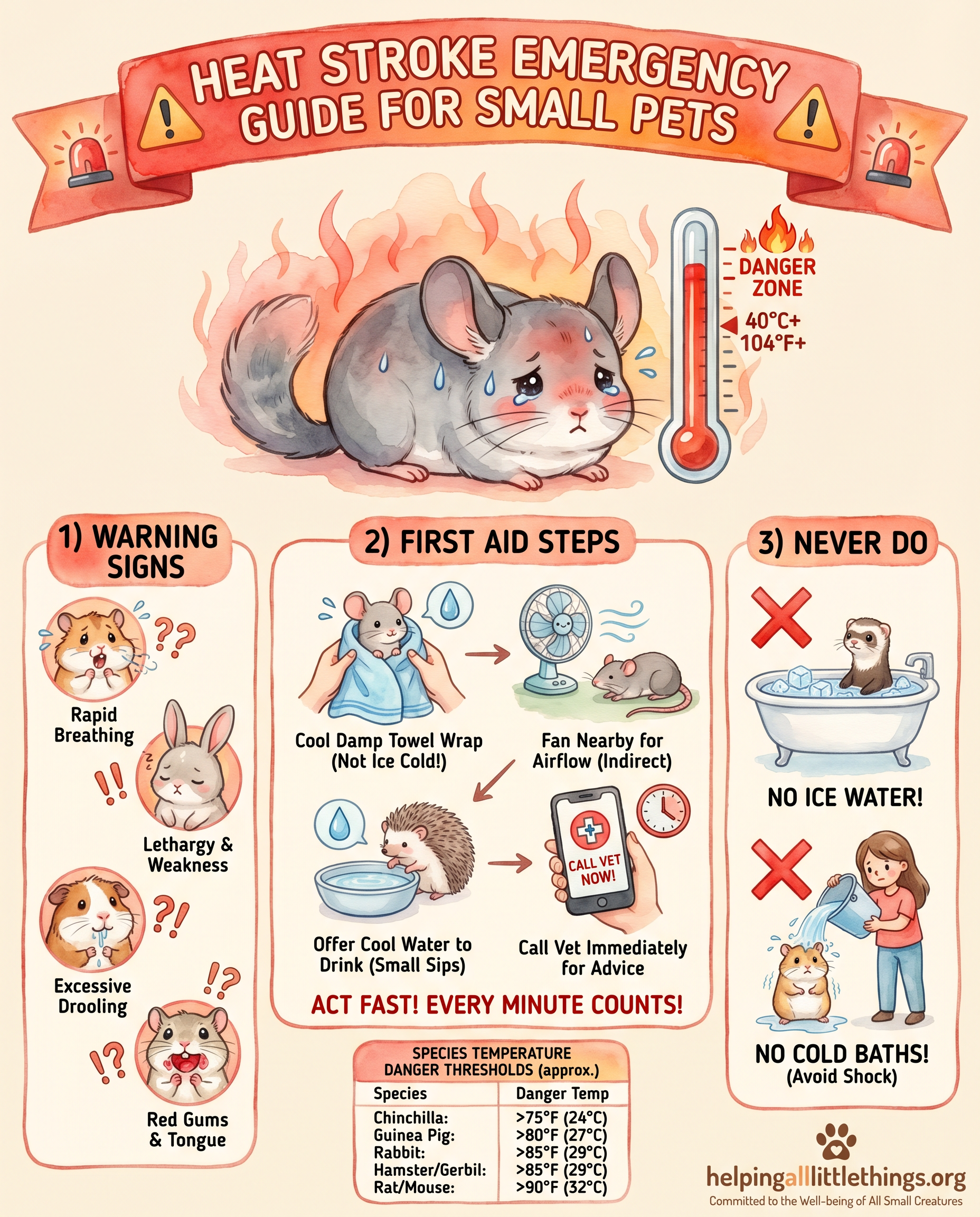

If you suspect your pet has heat stroke, act immediately. Heat stroke can be fatal within minutes. Do not wait for symptoms to worsen before beginning first aid and contacting your veterinarian.
Heat stroke (hyperthermia) occurs when an animal's body temperature rises to a dangerous level and the body's natural cooling mechanisms are overwhelmed. Small mammals are particularly vulnerable because they cannot sweat effectively and have limited ability to regulate their body temperature in hot environments.1 Unlike dogs, they cannot pant efficiently, and unlike humans, they cannot remove clothing or seek shade independently.
Which Species Are Most Vulnerable?
All HALT species are susceptible to heat stroke, but some are at significantly higher risk:
| Species | Critical Temperature | Highest Risk Factors |
|---|---|---|
| Chinchilla | Above 21°C (70°F) | Dense fur, no sweat glands, native to cool Andes mountains |
| Rabbit | Above 28°C (82°F) | Dense fur, limited panting ability |
| Guinea Pig | Above 28°C (82°F) | Dense fur, low body surface area to mass ratio |
| Hamster | Above 26°C (79°F) | Small body size, rapid overheating |
| Ferret | Above 26°C (79°F) | Dense undercoat, high metabolic rate |
| Hedgehog | Above 28°C (82°F) | Spines limit heat dissipation |
| Rat | Above 30°C (86°F) | Tail is primary heat dissipation organ |
| Mouse | Above 30°C (86°F) | Small body mass heats quickly |
| Gerbil | Above 30°C (86°F) | Desert species but still vulnerable in extreme heat |
| Degu | Above 28°C (82°F) | Dense fur, limited cooling ability |
Recognizing Heat Stroke
Early recognition is critical. Know these signs for your species:
Early signs (act immediately):
- Rapid, shallow breathing or open-mouth breathing
- Lethargy, weakness, or reluctance to move
- Drooling or wet fur around the mouth
- Bright red or pale gums
- Seeking cool surfaces (pressing against cage floor or walls)
- Confusion or disorientation
Advanced signs (life-threatening emergency):
- Seizures or muscle tremors
- Collapse or inability to stand
- Unconsciousness
- Blue-tinged gums (cyanosis — oxygen deprivation)
- Bloody diarrhea (indicates organ damage)2
Immediate First Aid
Do not use ice water, ice packs directly on skin, or immerse your pet in cold water. Rapid cooling causes blood vessels to constrict, trapping heat inside the body and can cause fatal cardiac arrhythmias.3
Step 1: Move to a cool environment immediately. Take your pet to the coolest room in the house. Air conditioning is ideal.
Step 2: Begin gradual cooling.
- Dampen their fur with cool (not cold) water — room temperature or slightly below.
- Place them on a cool, damp towel.
- Direct a fan to blow gently across them (not directly at them at full power).
- For rabbits and guinea pigs: gently wet the ears, as the ears are a primary heat exchange surface.
Step 3: Offer water. If your pet is conscious and able to swallow, offer small amounts of cool water. Do not force water into an unconscious animal.
Step 4: Contact your veterinarian immediately. Even if your pet appears to recover, internal organ damage may have occurred. All suspected heat stroke cases require veterinary assessment.4
Prevention
Environment:
- Keep enclosures out of direct sunlight and away from windows
- Ensure adequate ventilation — never use glass tanks in warm weather without excellent airflow
- Use fans to circulate air (never blow directly on the animal)
- Place frozen water bottles wrapped in a cloth near (not inside) the enclosure
- Use ceramic tiles or marble slabs as cool resting surfaces
- Monitor room temperature with a thermometer — not just how it "feels"
During transport:
- Never leave small pets in a parked car, even briefly, even with windows cracked
- Transport in an insulated carrier with a frozen gel pack wrapped in a towel
- Schedule vet appointments for early morning or evening during hot weather
Outdoor time:
- Follow the guidelines in our Taking Your Small Pet Outside Safely article
- Always provide shade and never leave pets unattended in the sun
Species-Specific Notes
Chinchillas are the most heat-sensitive of all HALT species. Their thick fur provides excellent insulation but prevents heat dissipation. Chinchillas should never be kept in rooms above 21°C (70°F) and should never be taken outdoors in warm weather.5
Rabbits dissipate heat primarily through their ears. Gently wetting the ears with cool water is one of the most effective first-aid measures for a heat-stressed rabbit.
Ferrets are particularly prone to heat stroke in summer. Ferrets with adrenal disease (a common condition) are at even higher risk as their hormonal regulation is compromised.
Hamsters may enter a state of torpor in response to heat stress that can be mistaken for death. If your hamster is unresponsive but breathing, begin gradual warming (not cooling) and contact a vet.