Are You Ready for a Pet?
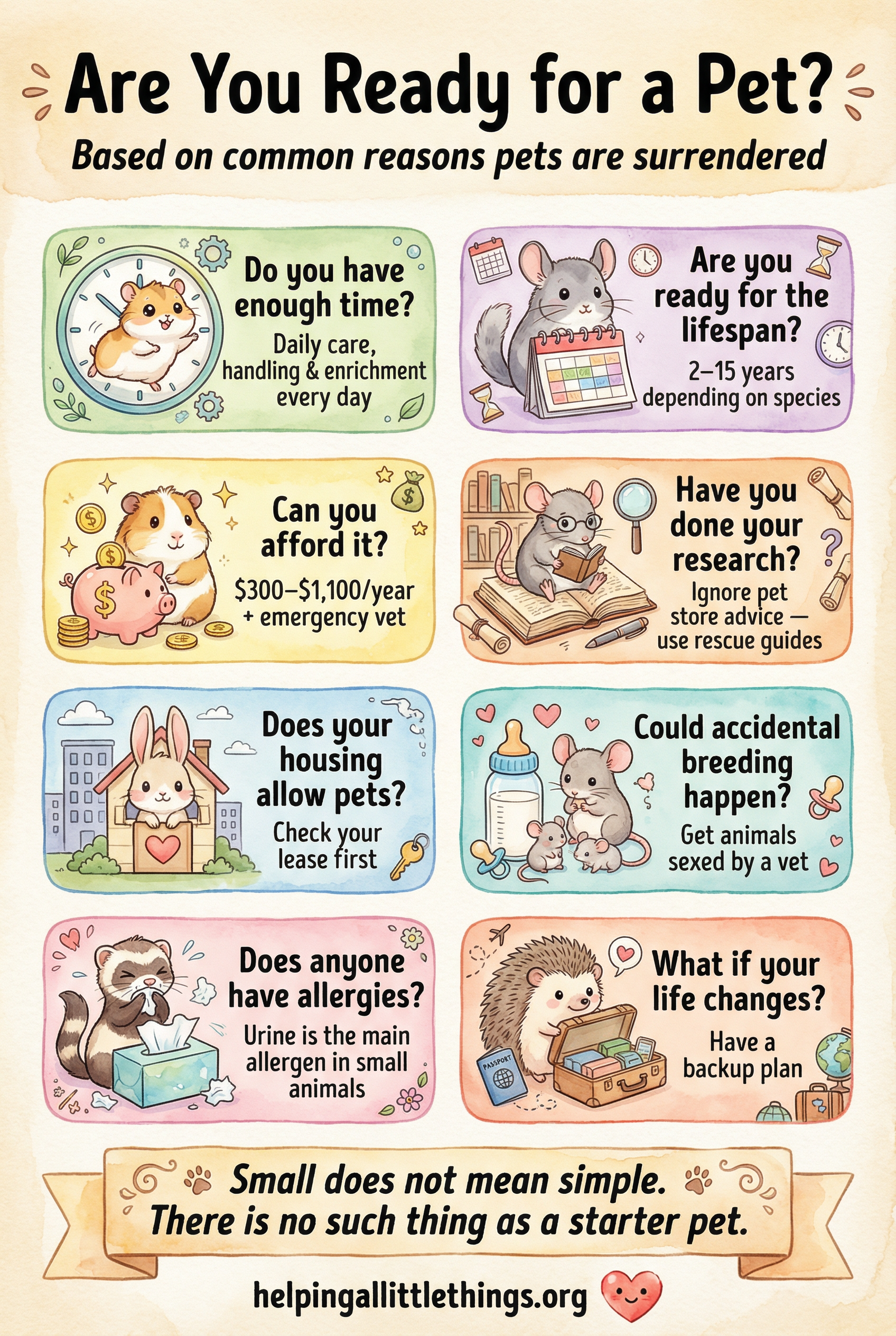

Bringing an animal into your home is one of the most rewarding things you can do — and one of the most serious commitments you can make. Every year, thousands of small animals are surrendered to shelters and rescues not because their owners were bad people, but because they weren't fully prepared for what pet ownership actually involves. The MSPCA reports that the most common reasons small animals are surrendered are loss of interest (especially in children), lack of time, and accidental breeding.1 Nationally, housing issues account for nearly 15% of all pet surrenders.2
This article is not meant to discourage you from getting a pet. It is meant to help you get it right the first time — for your sake, and for the animal's.
The "Starter Pet" Myth
One of the most damaging ideas in pet ownership is the concept of the "starter pet" — the notion that small animals like guinea pigs, hamsters, rabbits, or rats are somehow simpler, lower-stakes practice runs before a "real" pet. This belief is responsible for an enormous amount of animal suffering.
Small does not mean simple. A guinea pig requires daily fresh vegetables, a minimum 4×2-foot C&C cage for a pair, regular veterinary care, and social companionship — ideally from another guinea pig.3 A hamster needs a minimum of 450 square inches of unbroken floor space, a wheel of at least 10 inches, and enrichment that reflects its natural burrowing and foraging behaviors.4 Rabbits are highly intelligent, social animals with complex dietary needs and a lifespan of 8–12 years — longer than many dogs.5
Small animals are also frequently purchased as gifts for children, with the expectation that the child will be the primary caretaker. This almost never works as planned. Children lose interest. The novelty wears off. And the animal — who had no say in any of this — ends up in a cage in the corner, under-stimulated and under-cared-for, until the family surrenders it.1 Parents must be prepared to be the primary caretaker for the entire lifespan of any pet brought into the home.
"Probably the most ideal candidate for owning a small pet is an attentive animal parent — a human being with a level of common sense and logical thinking."6
Questions to Ask Before Getting Any Pet
1. Do I have enough time?
Every pet requires daily care. For small animals, this means fresh food and water every day, spot-cleaning the enclosure, and hands-on interaction and handling to keep the animal socialized and mentally healthy. A hamster that is never handled becomes fearful and difficult to care for. A guinea pig that receives no social interaction becomes stressed and withdrawn.
Think honestly about your schedule. A new job, a new baby, a demanding school year — these are real factors. If your life is already stretched thin, adding a pet's needs to the mix is a setup for failure. Time constraints are one of the top reasons pets are surrendered.2 If your situation is temporary, consider waiting until your schedule stabilizes.
What can be worked on: If you currently have a pet and are struggling with time, structured routines can help. Set a daily care alarm. Involve other household members. Consider whether a pet-sitter or trusted friend can help during particularly busy periods.
2. Can I afford it?
Small animals are frequently marketed as inexpensive pets. The reality is more complicated. Guinea pigs cost between $500 and $800 per year to keep properly, once food, bedding, enclosure supplies, and veterinary care are factored in.7 Rabbits run $600–$1,100 annually.7 Hamsters are lower — around $300–$500 per year — but emergency veterinary care for any small animal can easily cost hundreds to thousands of dollars, and exotic vet visits are typically more expensive than routine dog and cat appointments.8
Before getting any pet, research the cost of a veterinary visit for that species in your area. Find an exotic vet who sees your species of interest before you have an emergency. Know what an emergency visit costs. If you cannot afford unexpected veterinary care, that is important information.
What can be worked on: Pet insurance exists for small animals and can significantly reduce the financial risk of emergency care. Nationwide is currently the only US pet insurer that offers coverage for exotic pets, including small mammals (hamsters, gerbils, ferrets, chinchillas, hedgehogs, rats, mice, sugar gliders), birds, rabbits, reptiles, and amphibians.9 Their Avian & Exotic Pet Plan covers accidents, injuries, and illnesses, with reimbursement of up to 90% of eligible veterinary expenses. Plans carry a $250 annual deductible and a maximum annual benefit of $7,500. An optional wellness add-on is available for approximately $99/year and provides $181 in routine care benefits with no deductible. Premiums vary by species and location but can start as low as $12–$18/month for small mammals. Nationwide can be reached at 844-397-8937 or at petinsurance.com/exotics. Note that some species are ineligible, including venomous or endangered animals and those requiring permits — check their site for the current eligibility list.
Some rescues and low-cost clinics also offer reduced-cost services. Building a small emergency fund specifically for pet care — even $20 a month — makes a meaningful difference over time.
3. Does my housing allow pets?
Housing-related issues are one of the leading causes of pet surrender. A 2024 study found that 27% of housing-related surrenders were specifically due to pet restrictions in rental agreements.10 Moving is one of the most common triggers for surrender across all species.
Before getting a pet, read your lease carefully. If you rent, ask your landlord directly — and get any permission in writing. If you are planning to move in the next year or two, research pet-friendly housing in your target area before committing to an animal. Long-distance moves can be made with pets; it requires planning, but it is absolutely possible.
What can be worked on: If you are already in a housing situation that does not allow pets and you have an animal, reach out to your landlord before surrendering. Many landlords will make exceptions for well-cared-for small animals, especially if you offer a pet deposit. Organizations like HALT can sometimes help connect owners with resources.
4. Does anyone in my household have allergies?
Allergies to small animals are real and can be serious. The allergens in guinea pigs, rats, hamsters, mice, and rabbits are primarily found in urine — not just dander or fur — which means that even people who are not allergic to cats or dogs may react to small animals.11 Symptoms can range from mild (sneezing, itchy eyes) to severe (asthma attacks).
Before getting a pet, spend time with that species at a shelter or rescue. Visit a friend who has the animal. Give it a few weeks, not a few hours — some allergic reactions develop with repeated exposure rather than on first contact. If someone in your household has known respiratory conditions or allergies, consult an allergist before committing.
What can be worked on: Allergies are not always a dealbreaker. Air purifiers with HEPA filters, frequent cage cleaning, washing hands after handling, and keeping the animal in a well-ventilated room can significantly reduce allergen load. Allergy immunotherapy (allergy shots) can also reduce sensitivity over time for some people. However, if symptoms are severe, the kindest choice for both the person and the animal may be to rehome.
5. Am I prepared for the lifespan?
Every pet will eventually require end-of-life care, and many will require significant medical care before that point. Knowing the expected lifespan of your species of interest is essential planning, not morbid overthinking.
| Species | Typical Lifespan |
|---|---|
| Syrian hamster | 2–3 years |
| Dwarf hamster | 1.5–2.5 years |
| Gerbil | 3–5 years |
| Mouse | 1.5–3 years |
| Rat | 2–3 years |
| Guinea pig | 5–9 years |
| Chinchilla | 10–20 years |
| Rabbit | 8–12 years |
| Ferret | 6–10 years |
| Degu | 5–8 years |
A child who receives a guinea pig at age 8 may still have that animal when they leave for college. Who will care for it then? A chinchilla purchased today may still be alive in 2040. These are not hypothetical concerns — they are the reality of long-term commitment to a living being.
6. Have I researched this species specifically?
Every species has unique needs, and many of the most common care mistakes stem from misinformation — often from pet stores, which have a financial incentive to sell animals and supplies rather than to provide accurate care guidance.
Common myths that lead to poor care and eventual surrender:
- "Hamsters are fine in small cages." They are not. Hamsters in undersized enclosures develop stereotypic behaviors (repetitive, compulsive movements) that indicate chronic stress.4
- "Guinea pigs are fine alone." They are not. Guinea pigs are highly social animals that can develop depression and health problems without companionship.3
- "Rabbits are low-maintenance indoor pets." They are not. Rabbits require spaying or neutering, a complex hay-based diet, significant space, and daily interaction.5
- "Small animals don't need vet care." They do. Exotic vets are specialists, and small animals are prey animals that hide illness until they are very sick — meaning that by the time symptoms are obvious, the situation is often urgent.
Before getting any pet, read care guides from reputable sources — rescues, exotic veterinary practices, and species-specific organizations. The HALT resource library covers care guides for every species we work with, and our species-specific readiness guides go into much greater detail.
7. Am I prepared for accidental breeding?
Pet stores frequently sex animals incorrectly. Animals sold as "same sex" pairs are sometimes not. A female guinea pig or rabbit purchased from a pet store may already be pregnant. Rats and mice can become pregnant at 5 weeks of age and have litters of 6–12 pups.
If you are getting more than one animal, have them sexed by an experienced exotic vet or knowledgeable rescue volunteer before housing them together. If you are getting a single animal from a pet store, be aware that it may already be pregnant. Accidental litters are a leading cause of small animal overpopulation and surrender.1
What can be worked on: Spaying and neutering is available for most small animal species, though it carries more risk in smaller animals and should only be performed by an experienced exotic vet. Housing same-sex pairs is the most practical solution for most owners. Never trust pet store sexing alone.
8. What happens if my life changes?
Life is unpredictable. Divorce, job loss, a new baby, a move, a health crisis — any of these can change your capacity to care for a pet. The animals most at risk are those whose owners did not think through contingency plans before acquiring them.
Before getting a pet, identify at least one person in your life who could care for the animal temporarily if needed. Know what your options are if you had to surrender — reputable rescues, species-specific organizations, trusted friends or family. Having a plan does not mean you expect to use it. It means you are taking the commitment seriously.
A Note on Rescue vs. Pet Store
If you have worked through these questions and are ready to get a pet, please consider adopting from a rescue or shelter rather than purchasing from a pet store or breeder. Rescues can tell you the animal's history, temperament, and health status. The animals in our care have been assessed by people who know the species well. Adoption fees are typically much lower than purchase prices, and the animal you adopt is one that genuinely needs a home.
HALT has animals available for adoption across New England and the Northeast. Our adoption page has current listings, and our surrender form is available if you are in a situation where you need to rehome an animal you already have. We never judge — we just want what is best for the animal.