Safe Treats for Small Pets
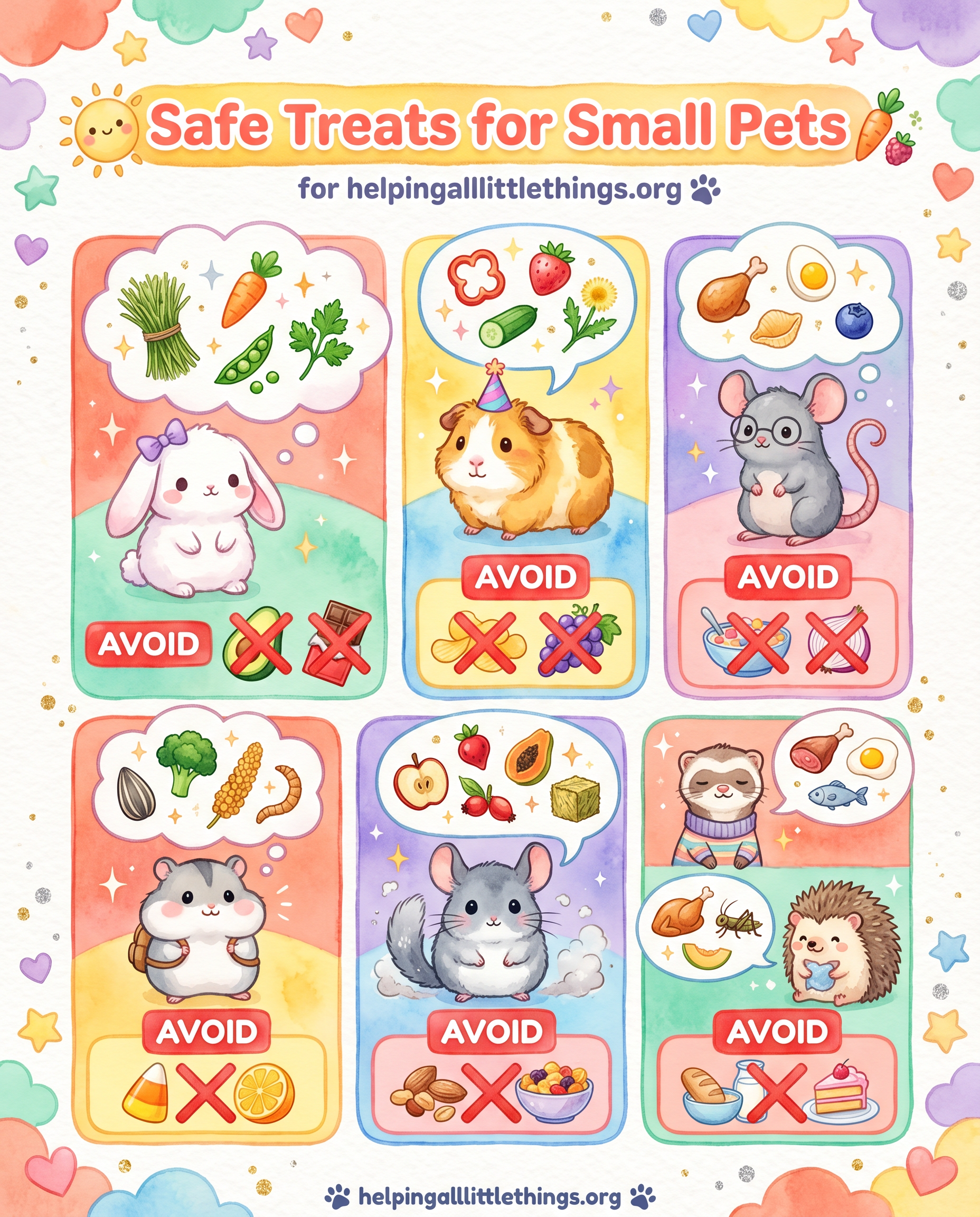
Treats are one of the most enjoyable parts of caring for a small pet. Used thoughtfully, they strengthen the bond between you and your animal, support training and enrichment, and add variety to daily life. Used carelessly, however, the wrong treat — or too much of the right one — can cause serious digestive upset, obesity, diabetes, or even death.
This guide covers the general principles of safe treat-giving and provides a species-by-species reference for all ten HALT species. Because digestive systems vary enormously between species, what is safe for a rat may be toxic for a chinchilla, and what is fine for a ferret may be deadly for a guinea pig. Always check the species-specific section before offering any new food.1
Treats are extras, not staples. For every species on this list, the bulk of the diet should come from species-appropriate hay, pellets, and fresh water. Treats should make up no more than 5–10% of the total daily diet, and many species should receive treats far less often than that.2
General Principles
Start small and go slow. Introduce any new food in a tiny amount — a pea-sized portion is usually enough — and wait 24–48 hours before offering it again. Watch for changes in stool consistency, appetite, or energy. Soft or watery droppings after a new food are a warning sign to stop immediately.1
Avoid sugar and starch. Despite being widely sold in pet shops, yogurt drops, seed sticks, honey-coated snacks, and grain-based "treat bars" are inappropriate for most small herbivores. They disrupt gut flora, contribute to obesity, and can trigger potentially fatal GI problems in rabbits and guinea pigs.2
Fresh is not always better. Many fresh fruits and vegetables are safe in small amounts, but some are high in oxalates, calcium, or sugar and should be limited or avoided entirely. Wash all fresh produce thoroughly before offering it.
Commercial treats are not regulated for nutritional accuracy. Many products marketed for small animals contain inappropriate ingredients. Read labels carefully and prioritize single-ingredient treats (a dried herb, a freeze-dried vegetable, a plain hay cube) over complex processed snacks.
Species-by-Species Treat Guide
The table below provides a quick reference. See the detailed sections beneath it for full lists and important warnings.
| Species | Best Treats | Strictly Avoid | Notes |
|---|---|---|---|
| Rabbits | Leafy greens, herbs, small fruit pieces | Starchy veg, seeds, yogurt drops | Fruit max 1–2 tsp/day |
| Guinea Pigs | Bell pepper, leafy greens, herbs | Onion, garlic, iceberg lettuce, dairy | Must get vitamin C from diet |
| Rats | Cooked egg, small fruit/veg pieces, plain cooked chicken | Chocolate, raw beans, citrus peel, blue cheese | Omnivores; broadest treat range |
| Hamsters | Broccoli, carrot, cucumber, plain cooked chicken | Citrus, onion, garlic, raw potato, almonds | Cheek-pouch friendly small pieces only |
| Gerbils | Pumpkin seeds (sparingly), sunflower seeds (sparingly), carrot, apple | Citrus, onion, garlic, rhubarb | Desert species; keep moisture low |
| Chinchillas | Dried rosehips, plain shredded wheat, small dried herbs | All fresh fruit, most vegetables, dairy, sugar | Extremely sensitive gut; treats very rarely |
| Ferrets | Small pieces of cooked meat/poultry, freeze-dried meat treats | Fruit, vegetables, grains, dairy, sugar | Obligate carnivores; plant matter causes harm |
| Hedgehogs | Mealworms (1–2/day), cooked chicken, blueberry | Grapes, raisins, avocado, citrus, onion | Insectivores; insects are the best treat |
| Mice | Broccoli, carrot, apple (no seeds), cooked egg | Chocolate, onion, garlic, raw beans | Omnivores; small portions only |
| Degus | Dried herbs, plain oats (tiny amount), carrot (tiny) | All sugar, fruit, molasses, honey | Extremely diabetes-prone; near-zero sugar |
Rabbits
Rabbits are strict herbivores with a highly sensitive digestive system dependent on continuous hay consumption and a stable population of gut bacteria. Treats that are high in sugar or starch can disrupt this balance and trigger potentially fatal GI stasis.3
Safe treats (small amounts, 1–2 times per week):
- Leafy greens: romaine lettuce, cilantro, parsley, basil, dill, mint, dandelion greens
- Herbs: lavender, lemon balm, chamomile
- Fruit: a 1–2 teaspoon piece of apple (no seeds), strawberry, blueberry, pear, or watermelon (no rind)
- Hay-based chews and compressed hay cubes
Avoid completely:
- Iceberg lettuce (no nutritional value, causes diarrhoea)
- Starchy vegetables: potato, corn, peas, beans
- Onion, garlic, leeks, chives (toxic)
- Yogurt drops, seed sticks, honey-coated treats
- Avocado, rhubarb, tomato leaves/stems
Guinea Pigs
Guinea pigs are unique among small pets in that they cannot synthesize their own vitamin C and must obtain it from their diet daily. This makes certain fresh vegetables genuinely important rather than merely optional. However, many commercial guinea pig treats are high in sugar and should be avoided.4
Safe treats (a few times per week):
- Bell peppers (any colour — excellent vitamin C source)
- Leafy greens: romaine, green leaf lettuce, cilantro, parsley, basil
- Small amounts of carrot, cucumber, zucchini
- Herbs: dill, mint, dandelion greens
- Occasional small piece of apple, strawberry, or blueberry
Avoid completely:
- Onion, garlic, leeks, chives (toxic)
- Iceberg lettuce (causes diarrhoea)
- Dairy products of any kind
- Yogurt drops, seed sticks, sugary commercial treats
- Avocado, rhubarb, potato, tomato leaves
- Citrus fruit (too acidic for their digestive system)
Rats
Rats are omnivores with the most flexible diet of any species on this list. They can safely eat a wide variety of fruits, vegetables, cooked meats, and grains. That said, several common foods are toxic to rats and must be avoided.5
Safe treats (a few times per week):
- Cooked egg (scrambled or boiled, no seasoning)
- Small pieces of cooked chicken, turkey, or fish
- Fruits: apple (no seeds), banana, blueberry, strawberry, watermelon
- Vegetables: broccoli, peas, carrot, sweet potato (cooked), cucumber
- Plain cooked pasta or rice (small amounts)
- Plain unsalted popcorn
Avoid completely:
- Chocolate and caffeine (toxic)
- Raw dried beans and peanuts (contain toxic lectins)
- Citrus peel (d-limonene is carcinogenic in male rats)5
- Blue cheese and mouldy foods
- Avocado, onion, garlic
- Raw sweet potato, raw artichokes
Hamsters
Hamsters are omnivores that naturally forage for seeds, grains, insects, and occasional plant matter. They have cheek pouches that can trap sticky or sharp foods, so treats should always be small, dry, and non-sticky.6
Safe treats (2–3 times per week, tiny portions):
- Vegetables: broccoli, carrot, cucumber, courgette, sweet pepper
- Fruits: apple (no seeds), blueberry, strawberry (very small amounts — high sugar)
- Cooked plain chicken or egg (small piece)
- Plain cooked whole grain pasta
- Dried mealworms (1–2 at a time)
Avoid completely:
- Citrus fruit (too acidic)
- Onion, garlic, leeks (toxic)
- Raw potato, tomato leaves, rhubarb
- Almonds (contain cyanogenic compounds)
- Sticky foods (peanut butter, honey, toffee) — can get stuck in cheek pouches
- Sugary commercial treats and yogurt drops
Gerbils
Gerbils are desert animals adapted to a dry, low-moisture diet of seeds, grains, and occasional plant matter. They are prone to epilepsy, and some foods — particularly citrus — can trigger seizures.7
Safe treats (2–3 times per week, very small amounts):
- Seeds: pumpkin seeds, sunflower seeds (sparingly — high fat)
- Vegetables: carrot, broccoli, sweet pepper, cucumber
- Fruits: apple (no seeds), pear (tiny piece — high sugar)
- Plain unsalted pumpkin seeds
- Dried mealworms (1–2 at a time)
Avoid completely:
- Citrus fruit (can trigger seizures)
- Onion, garlic, leeks (toxic)
- Rhubarb, grapes, raisins
- Sticky or moist foods (can cause wet tail in young gerbils)
- Sugary commercial treats
Chinchillas
Chinchillas have the most sensitive digestive system of any species on this list. Their gut is designed for extremely dry, high-fibre, low-sugar forage. Even small amounts of fresh fruit or moist vegetables can cause life-threatening diarrhoea or bloat. Treats should be rare — no more than once or twice a week — and should be dry.8
Safe treats (once or twice a week, tiny amounts):
- Dried rosehips (whole or crushed — excellent vitamin C source)
- Plain unsweetened shredded wheat (one small piece)
- Dried chamomile flowers or rose petals
- A small pinch of plain rolled oats
- Dried herbs: dandelion, nettle, plantain
Avoid completely:
- All fresh fruit (too much sugar and moisture)
- Most fresh vegetables (too moist)
- Yogurt drops, seed sticks, honey treats
- Nuts and seeds (too high in fat)
- Raisins, dried fruit (high sugar)
- Dairy products
Ferrets
Ferrets are obligate carnivores. Their digestive tract is short and designed exclusively for animal protein and fat. Plant matter — including fruit, vegetables, and grains — cannot be properly digested by ferrets and can cause intestinal blockages, insulinoma (a pancreatic tumour linked to high-carbohydrate diets), and other serious health problems.9
Safe treats:
- Small pieces of cooked chicken, turkey, duck, or rabbit
- Freeze-dried raw meat treats (single-ingredient)
- Cooked egg (small amount)
- Cooked fish (plain, no seasoning)
Avoid completely:
- All fruit and vegetables (ferrets cannot digest plant matter)
- Grains, bread, crackers, cereal
- Dairy products
- Sugary treats of any kind (strongly linked to insulinoma)
- Raisins and grapes (toxic)
- Onion and garlic (toxic)
Hedgehogs
Hedgehogs are insectivores that also eat some plant matter in the wild. Their primary treat should be insects, which provide the protein and enrichment they are naturally adapted to seek out. Obesity is a serious concern in captive hedgehogs, so treats should be limited.10
Safe treats (a few times per week):
- Live, freeze-dried, or canned mealworms (1–2 per day maximum)
- Crickets and waxworms (occasional)
- Cooked plain chicken, turkey, or fish (small piece)
- Blueberries, strawberries, melon (very small amount)
- Cooked sweet potato (tiny piece)
Avoid completely:
- Grapes and raisins (toxic)
- Avocado (toxic)
- Citrus fruit (too acidic)
- Onion, garlic (toxic)
- Dairy products (hedgehogs are lactose intolerant)
- Nuts and seeds (choking hazard, too high in fat)
- Sugary or processed human foods
Mice
Mice are omnivores with dietary needs similar to rats, though they are smaller and require proportionally tinier portions. They enjoy variety and can safely eat a wide range of fresh foods in small amounts.11
Safe treats (a few times per week, very small pieces):
- Vegetables: broccoli, carrot, peas, cucumber, courgette
- Fruits: apple (no seeds), blueberry, strawberry
- Cooked egg or plain cooked chicken (tiny piece)
- Plain unsalted popcorn or cooked whole grain pasta
- Dried mealworms (1–2)
Avoid completely:
- Chocolate and caffeine (toxic)
- Onion and garlic (toxic)
- Raw beans (toxic lectins)
- Citrus peel
- Sticky or sugary foods
Degus
Degus are perhaps the most sugar-sensitive small pet in existence. They are physiologically similar to humans in their inability to process glucose efficiently, making them a natural model for Type 2 diabetes research. Even a small amount of sugar — including the natural sugars in most fruit — can trigger diabetes in degus.12
Safe treats (once or twice a week, tiny amounts):
- Dried herbs: dandelion, nettle, plantain, chamomile
- Plain rolled oats (a pinch)
- Small piece of carrot or broccoli (no more than a thumbnail-sized piece)
- Dried rosehips
Avoid completely:
- All fruit (even "low sugar" fruit)
- Honey, molasses, and any sweetened food
- Yogurt drops, seed sticks, commercial "small animal treats"
- Raisins and dried fruit
- Sugary root vegetables in large amounts (carrot should be very limited)
A Note on Commercial Treats
Many treats sold in pet shops — including products from well-known brands — are not appropriate for the species pictured on the packaging. Yogurt drops, honey sticks, seed bars, and grain-based biscuits are widely marketed for rabbits, guinea pigs, and chinchillas despite being nutritionally harmful to all three. When in doubt, choose single-ingredient treats: a dried herb, a freeze-dried vegetable, a plain hay cube, or a piece of fresh leafy green. If you are unsure whether a food is safe, consult your exotic animal veterinarian before offering it.2