Case Study: Toothless — Broken Incisor and Jaw Abscess
Animal: Toothless (guinea pig, sanctuary resident)
Date: April 15, 2026
Veterinarian: Dr. Dana
Outcome: Full recovery expected
This case study documents a real health event in one of HALT Rescue's sanctuary animals. It is shared to help guinea pig owners recognize similar warning signs and understand what to expect from treatment.
Background
Toothless arrived at HALT Rescue in April 2026 after being pulled from a shelter. He was underweight and not eating well. In his intake photo, a small white spot was visible on his chin — something that would turn out to be far more serious than it appeared.
Presenting Signs
- Visible white spot on chin (initially thought to be a wound or scab)
- Underweight
- Reduced appetite
- Soft stool (improving with Recovery food)
Diagnosis
At his first appointment with Dr. Dana, the white spot on Toothless's chin was identified as a piece of incisor that had broken through the jaw, creating an abscess on the chin. This is a serious condition: the tooth fragment was sideways inside the tissue, and the abscess indicated active infection.
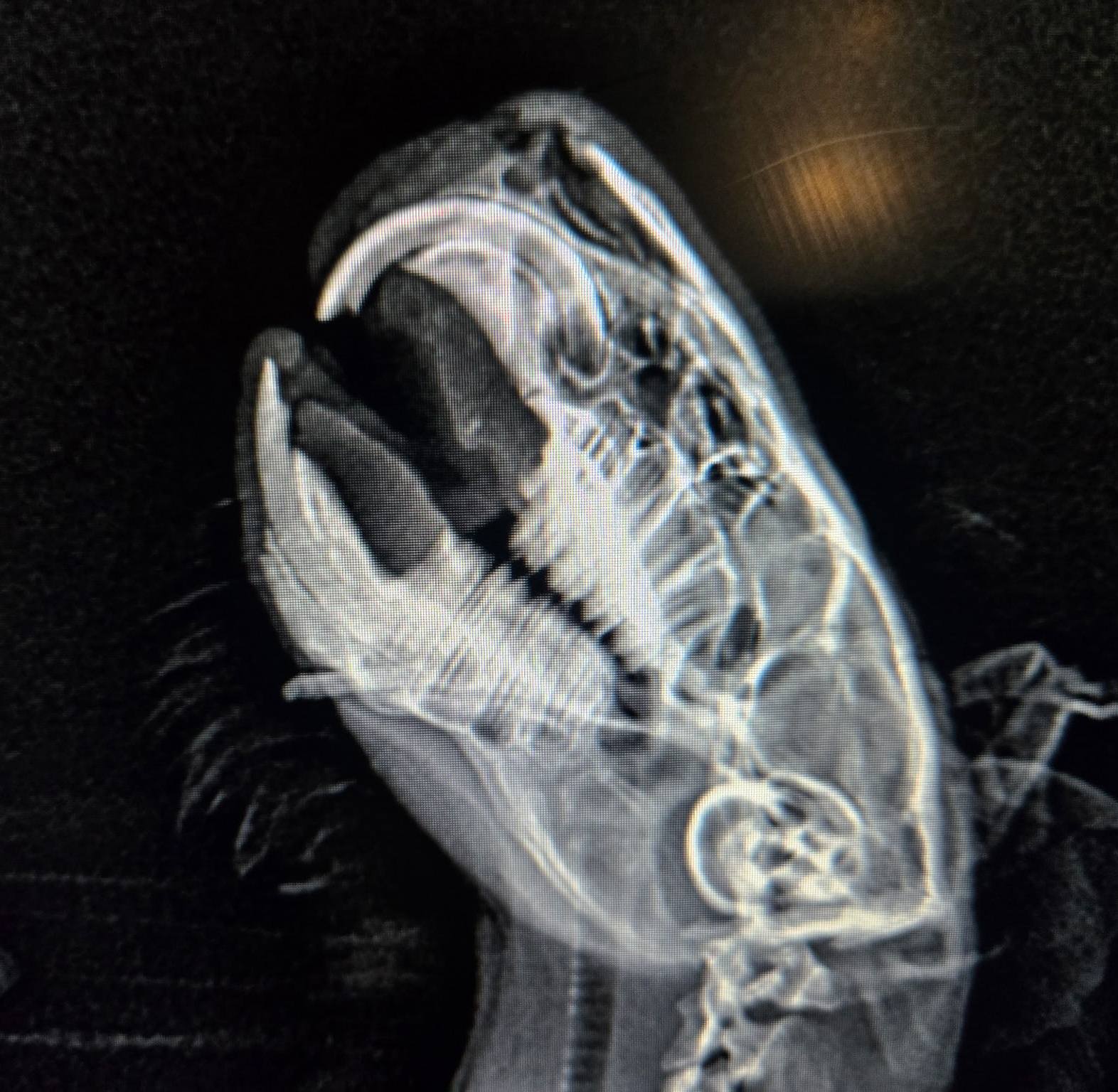 Dental radiograph showing the incisor fragment displaced sideways through the jaw.
What Happened
A guinea pig's incisors grow continuously throughout their life. When an incisor breaks or grows abnormally, it can shift direction and, in severe cases, penetrate the jaw tissue. This creates a pathway for bacteria, leading to abscess formation.
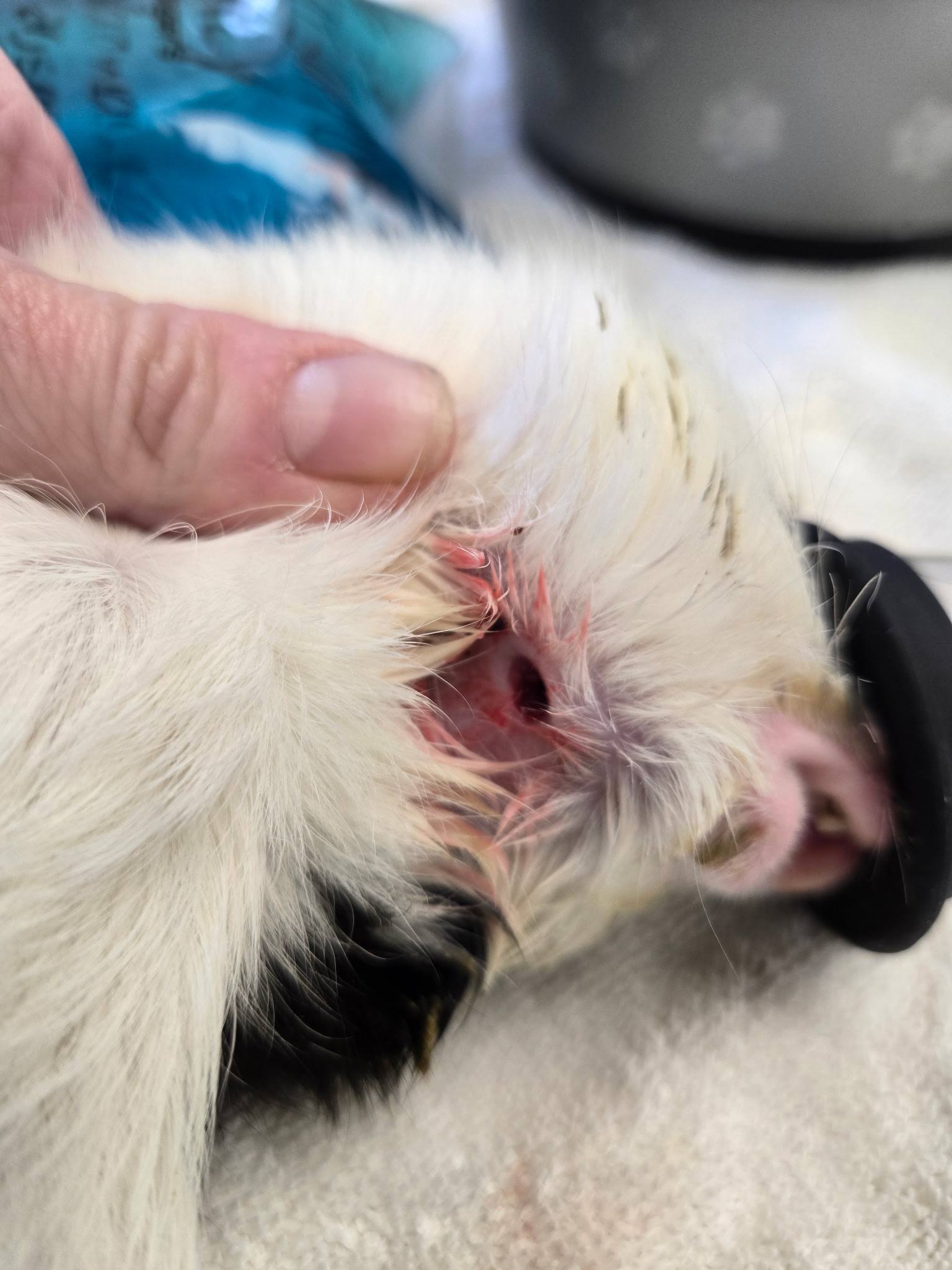 The abscess on Toothless's chin, visible before Dr. Dana began the procedure.
Treatment
Dr. Dana performed the following:
- Abscess debridement — the abscess was cleaned out
- Tooth extraction under anesthesia — the sideways tooth fragment was removed
- Antibiotics — Toothless was placed on a course of heavy-duty antibiotics to clear the infection
- Recovery feeding — he was started on Critical Care / Recovery food to support weight gain
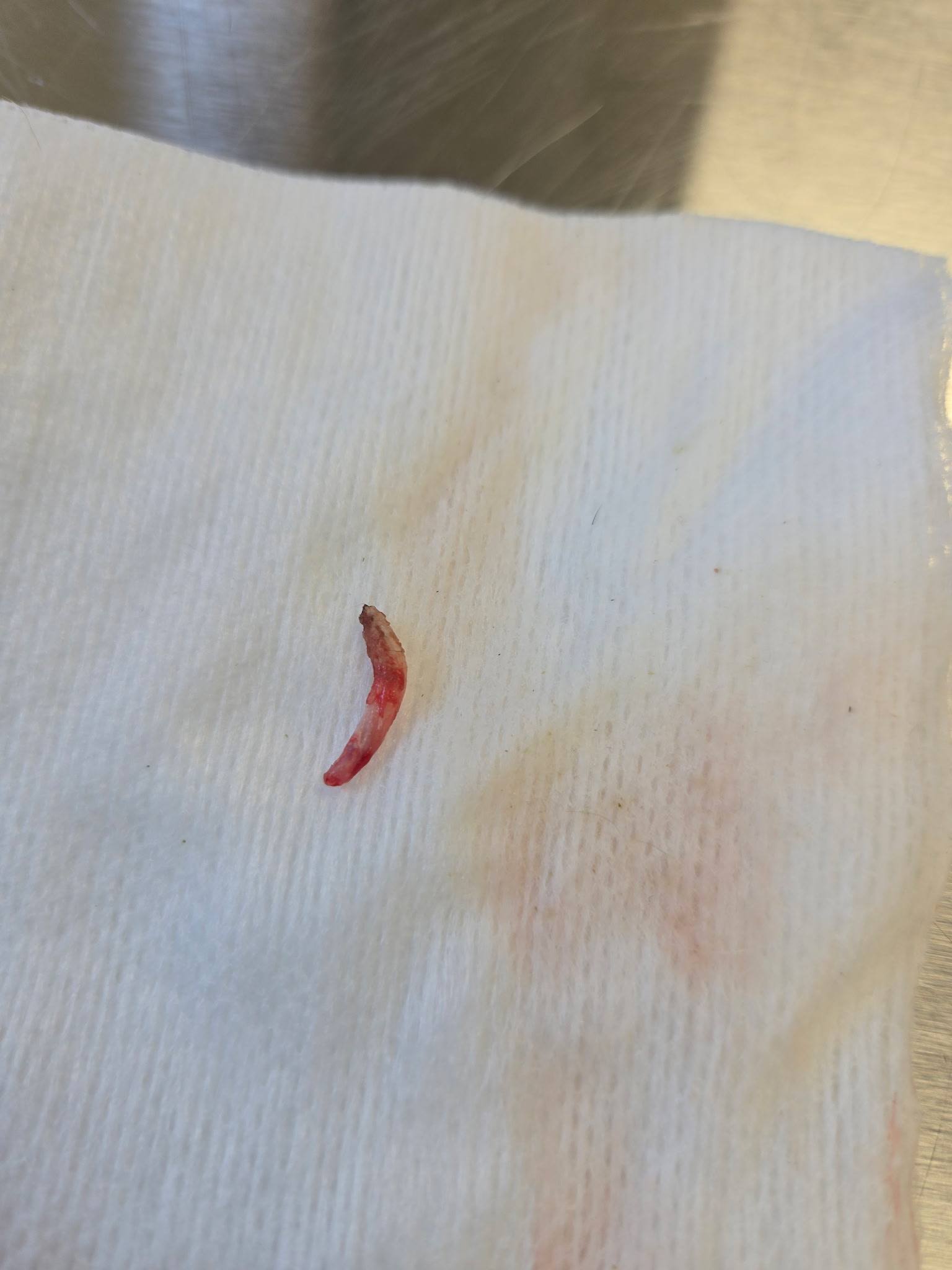 The extracted incisor fragment — tiny, but the source of all the trouble.
The surgery went smoothly. Toothless woke up happy and hungry.
Recovery
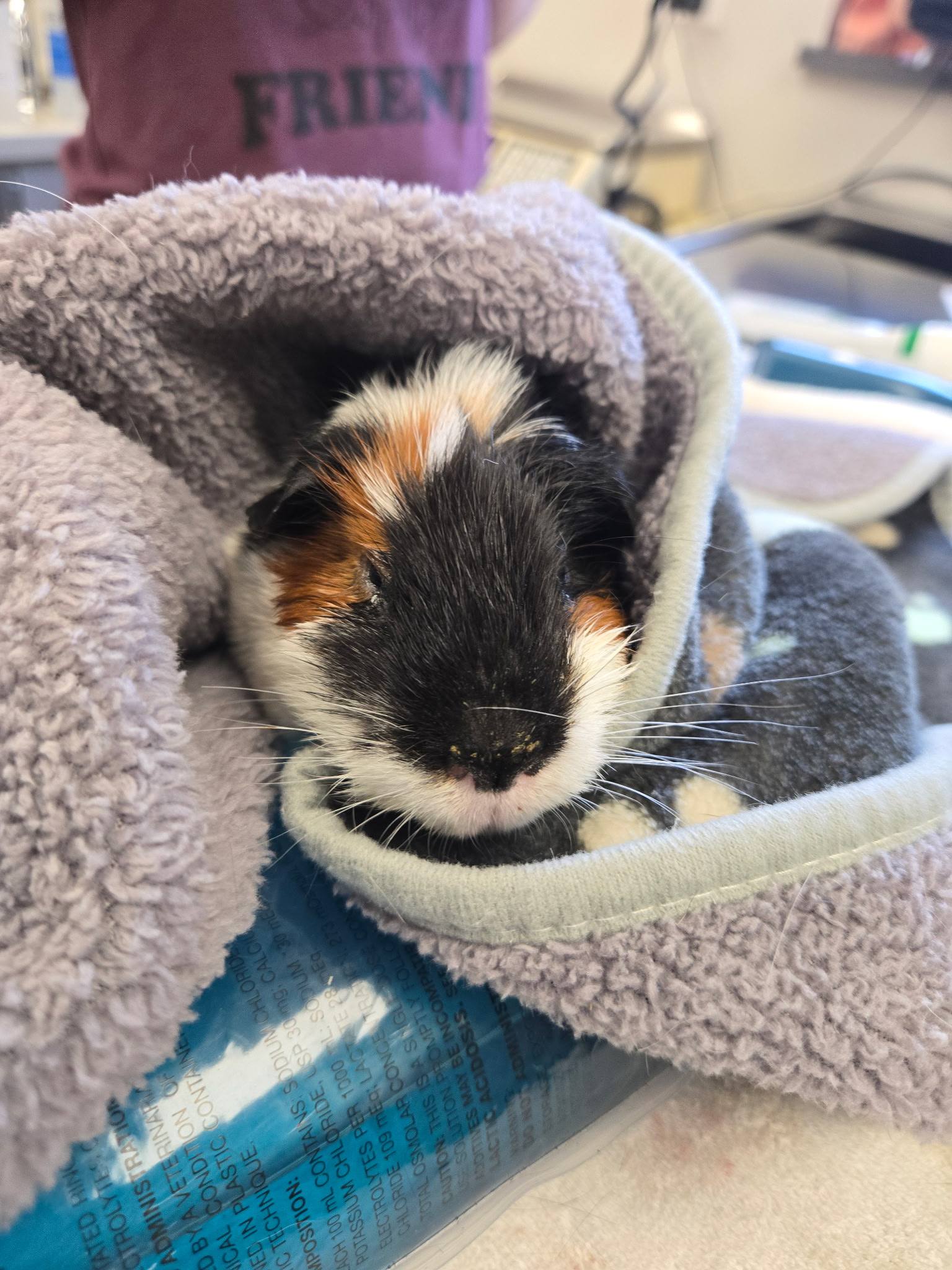 Toothless post-surgery, wrapped up and doing well.
Toothless was eating Recovery food within minutes of waking up from anesthesia — a critically important milestone. Guinea pigs (and rabbits) have extremely sensitive gastrointestinal systems that must keep moving at all times. Unlike dogs or cats, they cannot safely fast before or after procedures; even a short period without food can trigger GI stasis, a life-threatening slowdown of the digestive tract. Getting Toothless eating immediately after surgery was one of the best possible outcomes.
Within days he was eating by the bowlful and producing well-formed, healthy poops — confirming his gut was fully back on track.
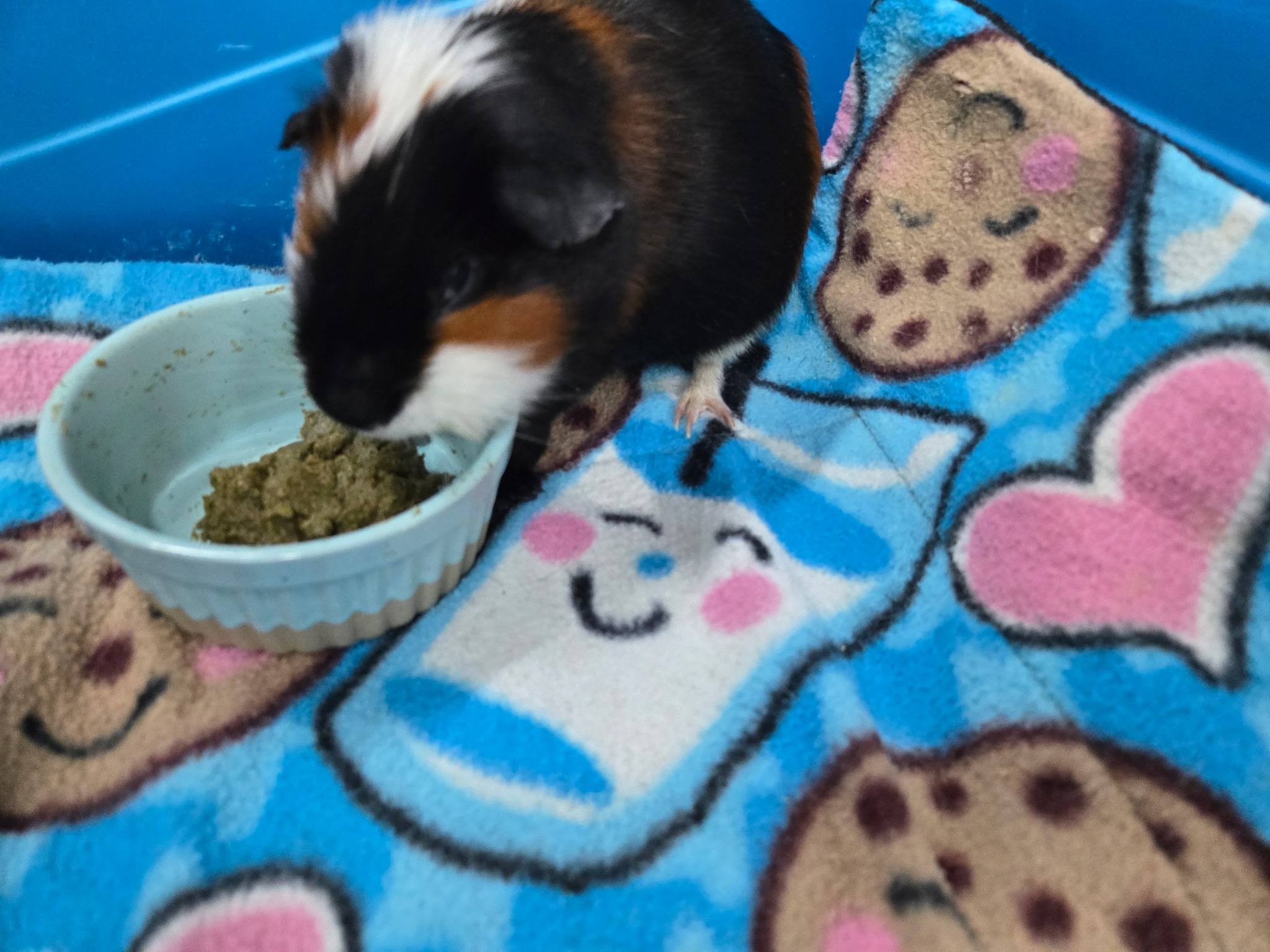 Toothless eating enthusiastically after surgery — a very good sign.
He will require:
- Periodic incisor monitoring and trimming
- Regular weight checks
- A hay-heavy diet to encourage natural tooth wear
His prognosis is excellent.
What to Watch For
If your guinea pig shows any of the following signs, seek veterinary care promptly:
- Drooling or wet chin
- Reluctance to eat or dropping food
- Visible lump or swelling on the chin or jaw
- Weight loss
- Reduced or absent fecal output
- Grinding teeth (bruxism)
Dental disease in guinea pigs can progress quickly. Early intervention significantly improves outcomes.