Dangerous Treats and Toys for Rats
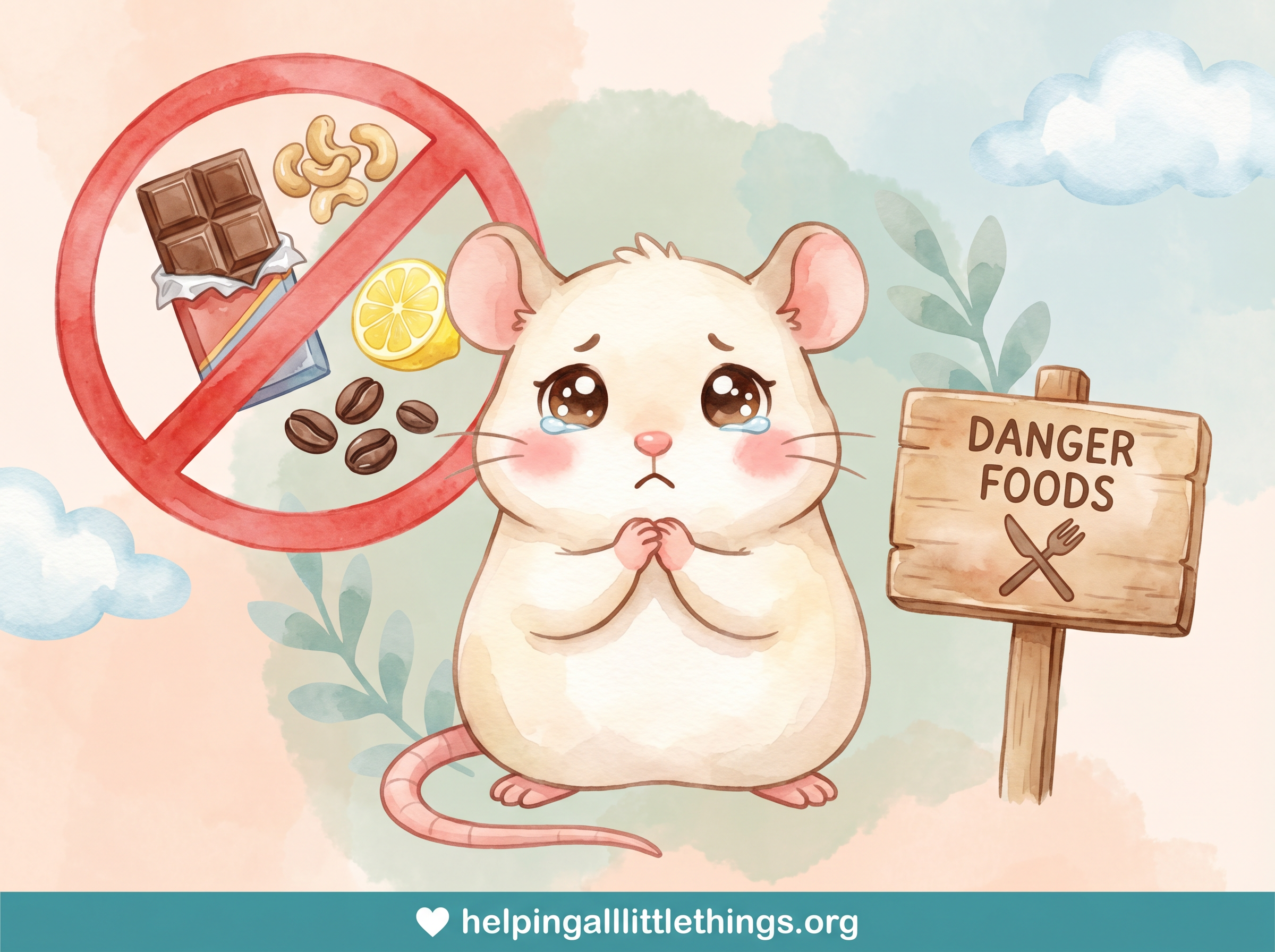

Rats are intelligent, curious omnivores that thrive on a varied diet and an enriching environment. However, their intelligence and curiosity can also get them into trouble. While they have a more robust digestive system than many small pets, many common human foods are still unhealthy or toxic. Likewise, not all toys are created equal, and some can pose significant safety risks.
Dangerous Treats
A rat's main diet should consist of a high-quality lab block or food mix. Treats should be given in moderation, and many common foods should be avoided entirely.
Absolutely to Avoid:
- Toxic Foods: Chocolate, caffeine, and alcohol are highly toxic and should never be given.
- Sugary, Salty, or Fatty Junk Food: Processed human foods like candy, chips, and fried food are very unhealthy for rats, leading to obesity and other health problems.
- Green Potato Skins and Eyes: These contain solanine, a toxic compound.
- Raw Beans and Onions: These can cause digestive upset and other health issues.
- Citrus Fruits: D-limonene, a compound found in citrus peels, has been linked to kidney cancer in male rats. While the fruit itself is less of a concern, it's often recommended to avoid citrus for males.
- Sticky Foods: Foods like peanut butter can be a choking hazard. If you offer it, spread it very thinly on a surface rather than giving a lump.
| Unsafe Treat Category | Why It's Dangerous |
|---|---|
| Junk Food/Chocolate | Toxic and unhealthy; can cause obesity and illness. |
| Green Potatoes | Contains solanine, which is toxic. |
| Raw Beans/Onions | Can cause digestive upset and other health problems. |
| Citrus (for males) | Linked to kidney problems in male rats. |
| Sticky Foods | Can be a choking hazard. |
Dangerous Toys and Accessories
Rats are powerful chewers and climbers, so their environment must be both stimulating and safe.
-
Unsafe Woods: Cedar and non-kiln-dried pine shavings release toxic phenols that cause chronic respiratory damage. These should never be used as bedding or chew toys. Stick to safe woods like aspen, apple, or kiln-dried pine.
-
Fabric with Long Threads: Rats love to snuggle in hammocks and fabric pouches, but items made from materials like terry cloth are dangerous. A rat can get a nail or toe caught in the long loops, leading to a serious injury. If they chew and ingest the long threads, it can cause an internal blockage. Opt for solid fabrics like fleece.
-
Wire-Mesh Wheels and Floors: Running on wire mesh can lead to sprains, broken toes, and a painful foot infection called bumblefoot. Wheels should be a solid surface and large enough (12+ inches for adult rats) to allow them to run with a straight back. Any wire shelving in a cage should be covered with a solid material like fleece or plastic.
-
Small, Flimsy Plastic Toys: Rats will chew through thin plastic. While they are less likely to get a blockage than a ferret, it's still a risk. Ensure any plastic toys are made from a hard, durable material that can withstand their chewing.
-
Ropes with Loose Fibers: Natural fiber ropes like sisal can be great for climbing, but they should be monitored. If a rat chews and ingests too much of the fiber, it can cause a blockage. Ropes should be replaced if they become heavily frayed.
What are safe toys and enrichment?
- Cardboard: Boxes, tubes, and other cardboard items are perfect for shredding, chewing, and hiding.
- Climbing Toys: Ladders, ropes, and branches made from safe woods create a stimulating, multi-level environment.
- Foraging Toys: Hiding treats inside puzzle toys or scattered in their bedding encourages natural foraging behavior.
- Dig Box: A box filled with safe substrate like coconut fiber or sterile soil allows them to engage in natural digging behaviors.
By providing a healthy diet and a thoughtfully curated, safe environment, you can protect your intelligent companions from common household dangers.