A Guide to Respiratory Infections (URIs) in Rats
Respiratory illness is one of the most common health issues affecting pet rats. Nearly all domestic rats are carriers of Mycoplasma pulmonis, the primary bacterium responsible for these infections [1]. While this sounds alarming, understanding the signs, seeking prompt veterinary care, and providing a healthy environment can make all the difference in managing this condition.
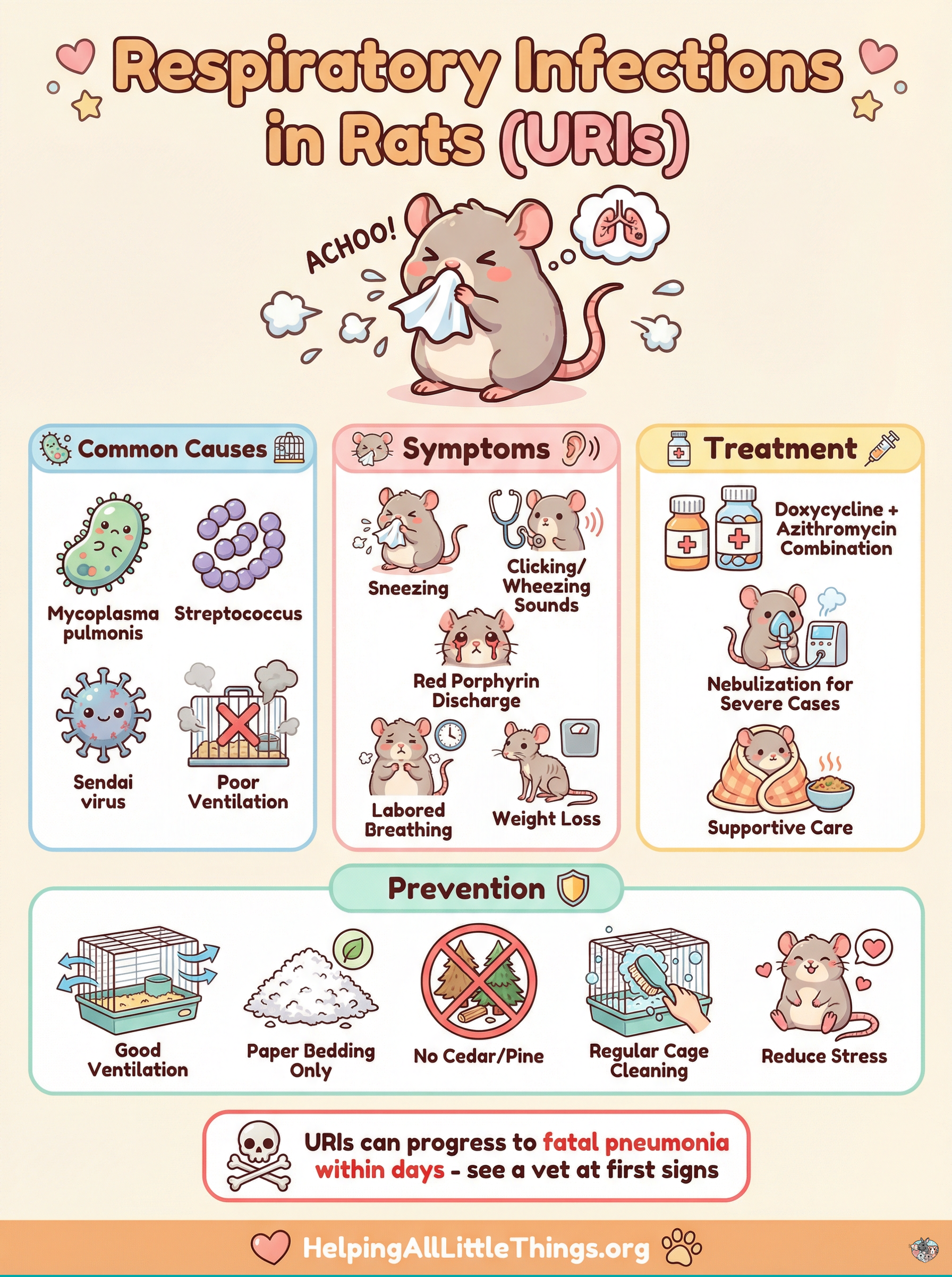

What is an Upper Respiratory Infection (URI)?
A URI is an infection of the upper airways, including the nose and sinuses. In rats, these are most often caused by a flare-up of the ever-present Mycoplasma pulmonis bacteria. If left untreated, a URI can progress into the lower respiratory tract, leading to serious conditions like pneumonia [2].
Recognizing the Signs of a URI
Early detection is key to a successful outcome. Be vigilant for these common signs:
- Porphyrin Staining: Excessive reddish-brown discharge around the eyes and nose (often mistaken for blood) is a common sign of stress and illness [1].
- Sneezing and Sniffling: While an occasional sneeze is normal, persistent sneezing is a red flag.
- Abnormal Sounds: Listen for any wheezing, rattling, or clicking sounds when your rat breathes.
- Labored Breathing: Watch for open-mouth breathing or the sides of their body sucking in with each breath. This is an emergency.
- Lethargy and Appetite Loss: A sick rat will often be less active and lose interest in food.
When to See a Veterinarian
At the first sign of a respiratory infection, it is crucial to see a veterinarian. Do not wait for the symptoms to become severe. Early intervention with antibiotics is the most effective way to manage the infection and prevent it from progressing to life-threatening pneumonia [2].
Never use pet store antibiotics. These are often ineffective and can delay proper treatment [2].
Treatment and Management
Your veterinarian will likely prescribe a course of antibiotics, often a combination of drugs like Enrofloxacin and Doxycycline, to fight the bacterial infection. It is vital to complete the full course of medication, even if your rat seems to be feeling better.
In addition to medication, supportive care at home can help your rat recover:
- Clean Environment: Keep the cage impeccably clean to minimize ammonia buildup, which irritates the respiratory tract [2].
- Good Ventilation: Ensure the cage is in a well-ventilated area, but free from drafts.
- Steam Therapy: Taking the rat into a steamy bathroom for 10-15 minutes can help loosen congestion.
- Proper Nutrition: Ensure your rat is eating and drinking. You may need to offer soft, tempting foods to encourage their appetite.
Prevention is the Best Medicine
While you can't eliminate the risk of a URI, you can take steps to minimize flare-ups:
- Use Dust-Free Bedding: Avoid dusty litters and cedar or pine shavings [2].
- Maintain a Clean Cage: Regular cleaning is essential to control ammonia levels.
- Reduce Stress: Provide a stable, enriching environment and handle introductions to new rats carefully.
- Proper Diet: A balanced diet supports a strong immune system.
By understanding the signs and acting quickly, you can effectively manage respiratory infections and give your rat the best possible quality of life.
References
[1] Diseases in Rodents — VCA Animal Hospitals, Unknown
[2] Disorders and Diseases of Rats — Merck Veterinary Manual, Unknown
[3] Rat Health & Welfare Tips — RSPCA, Unknown
[4] Respiratory & Heart Disease in Rats — The Rat Fan Club, 2017