External Parasites in Pet Rats
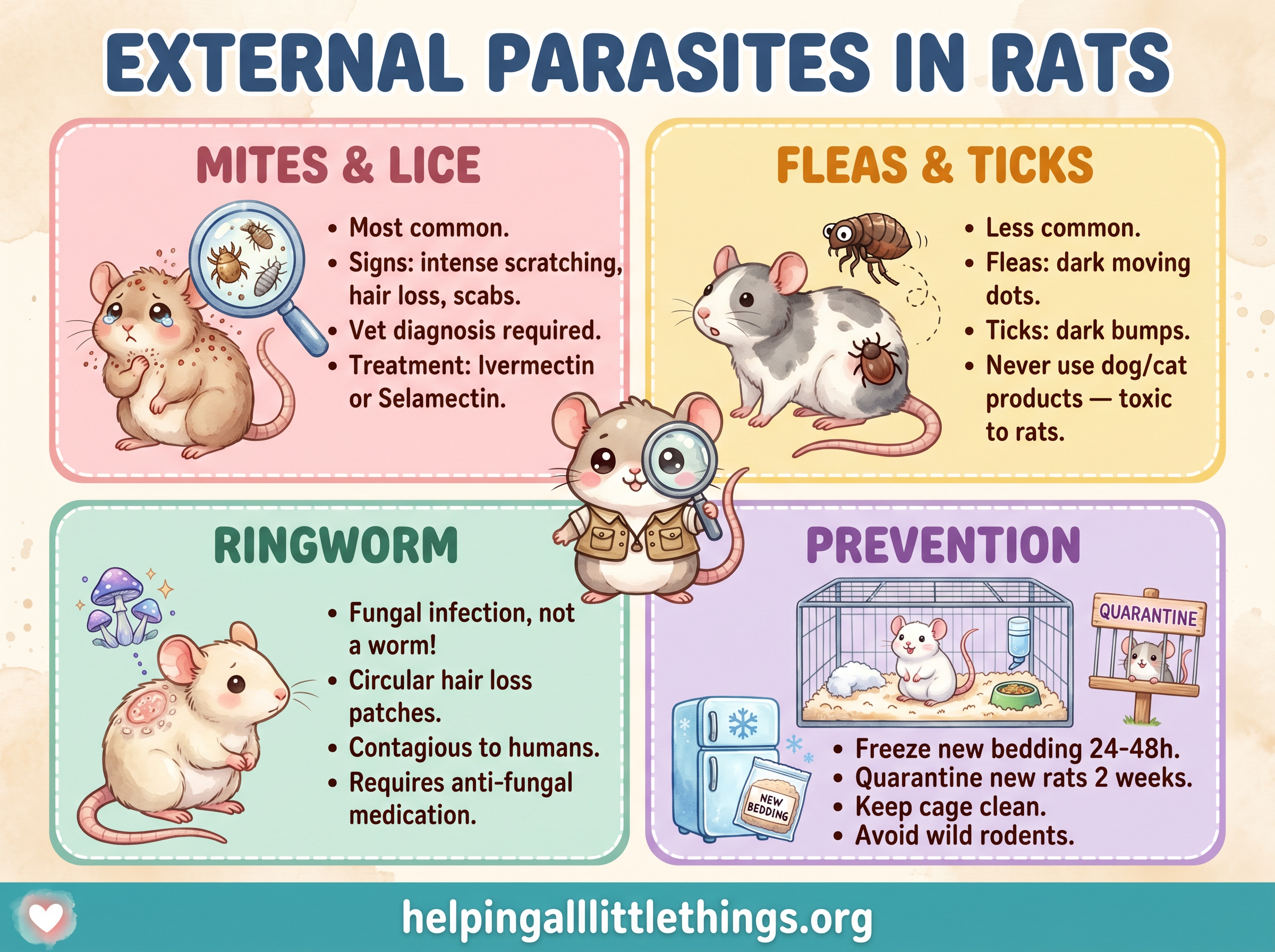

External parasites are a relatively common health concern in pet rats and can affect even well-cared-for animals. Most infestations are highly treatable when caught early. This guide covers external parasites (mites, lice, fleas, ticks) and fungal infections (ringworm) — organisms that live on or in the skin and fur. For information on internal worms such as pinworms and tapeworms, see the Worms in Pet Rats (Internal Parasites) article.
Preventing Parasites
While you cannot completely eliminate the risk of parasites, several practical steps significantly reduce it:
- Freeze new bedding: Place new bags of bedding or nesting material in the freezer for 24–48 hours before use. This kills any mite eggs or other parasites that may be present.
- Avoid outdoor soil and grass: Keep rats off outdoor ground, which can expose them to parasites, predators, and diseases like Leptospirosis.
- Quarantine new rats: Isolate any new rat for at least two weeks before introducing them to your existing group. Monitor for scratching, hair loss, or other signs of infestation.
- Prevent wild rodent access: Keep food stored securely and maintain a clean home environment to deter wild mice or rats, which can introduce parasites.
- Source responsibly: Get your rats from a breeder or rescue that practices good parasite control.
External Parasites (Ectoparasites)
External parasites live on the skin and fur and are the most common type seen in pet rats.
Mites
Mites are microscopic and not visible to the naked eye, but their effects are very noticeable. The most common species affecting pet rats are Radfordia ensifera (fur mites) and Notoedres muris (mange mites) [1]. An infestation can flare up when a rat's immune system is suppressed by stress or other illness.
Signs of mite infestation:
- Fine, dandruff-like debris in the coat
- Excessive scratching, especially around the neck, shoulders, and face
- Hair loss, particularly at the nape of the neck
- Skin redness, crusting, or scabbing
- In severe cases, red bumps or sores on the tail, feet, or genitals
Treatment: Ivermectin (oral or topical) is the most effective treatment for mites. Selamectin (Revolution) applied topically is also highly effective and is often preferred as it is easier to administer [2]. Always consult your veterinarian for the correct dosage for your rat's weight.
Lice
Rat lice (Polyplax spinulosa) are species-specific — they cannot infest humans or other pets. They are visible to the naked eye as small, tan, brown, or reddish dots moving through the fur. Their eggs (nits) appear as silvery-white specks attached to hair shafts [3].
Signs of lice:
- Visible moving dots in the fur
- Silvery nits attached to hair
- Scratching and restlessness
Treatment: Oral or topical Ivermectin is the standard treatment. Selamectin (Revolution) also effectively eliminates lice [3].
Fleas and Ticks
Fleas are less common in rats but can occur, especially in households with dogs or cats. Ticks are rare but possible if a rat has had outdoor exposure. Both appear as dark, fast-moving spots (fleas) or dark bumps attached to the skin (ticks).
Treatment: Consult a veterinarian. Many flea and tick products designed for cats and dogs are toxic to small rodents — never use them on rats without veterinary guidance.
Fungal Infections
Ringworm
Despite its name, ringworm is not a worm — it is a contagious fungal infection of the skin (Dermatophytosis). It can be transmitted between rats, and also between rats and humans.
Signs:
- Circular patches of hair loss with flaky or crusty skin
- Patches most commonly appear on the face, ears, or tail base
Treatment: Ringworm requires a veterinary diagnosis and treatment with anti-fungal medications. Because it is contagious to people, wash your hands thoroughly after handling an affected rat and avoid contact with the lesions.
When to Contact a Veterinarian Immediately
Contact your vet right away if your rat shows:
- Severe hair loss or open wounds from scratching
- Significant weight loss alongside other symptoms
- Lethargy or loss of appetite
- Any signs of a secondary skin infection (swelling, pus, foul odor)
Managing an Active Infestation
Treating the Cage
When treating your rats for external parasites, the cage and all accessories must also be treated simultaneously, or re-infestation will occur.
- Remove all rats and place them in a temporary, clean enclosure.
- Discard all bedding, nesting material, and cardboard items.
- Wash all cage surfaces, hammocks, and accessories with hot water and a pet-safe disinfectant.
- Allow everything to dry completely before returning the rats.
- Repeat the cage cleaning after each treatment dose.
Preventing Spread to Other Pets
Rat lice and mites are species-specific and cannot infest humans, dogs, or cats. However, if you have multiple rat groups, keep them separated during treatment and wash your hands thoroughly between handling different groups.
Never use flea and tick products for dogs or cats on your rats. These are toxic and can be fatal. If you suspect your rat has parasites, a veterinary visit is the only safe and effective course of action.
Treatment Summary
| Parasite | Recommended Treatment | Notes |
|---|---|---|
| Mites | Ivermectin or Selamectin (Revolution) | Treat cage simultaneously |
| Lice | Ivermectin or Selamectin (Revolution) | Treat all rats in the group |
| Fleas | Vet consultation required | Many products are toxic to rats |
| Ticks | Manual removal + vet consultation | Do not use dog/cat tick products |
| Ringworm | Veterinary anti-fungal medication | Contagious to humans |
For internal worms (pinworms, tapeworms), see the Worms in Pet Rats article.
References
[1] Ectoparasites — Rat Guide — Rat Guide, 2024
[2] Disorders and Diseases of Rats — Merck Veterinary Manual
[3] What to Do If Your Pet Rat Has Lice — The Spruce Pets
[4] Successful therapeutic management of notoedric mange in rats — PMC/NIH, 2012