Mycoplasma in Rats: An Essential Guide


If you're a rat owner, you've likely heard the term "myco." Mycoplasma pulmonis is a species of bacteria that is the primary cause of chronic respiratory disease (CRD) in pet rats. It's a pervasive issue, with most domestic rats carrying the bacteria, often from birth [1]. While many rats live their lives with a silent, low-level infection, understanding this complex disease is key to managing your pets' health.
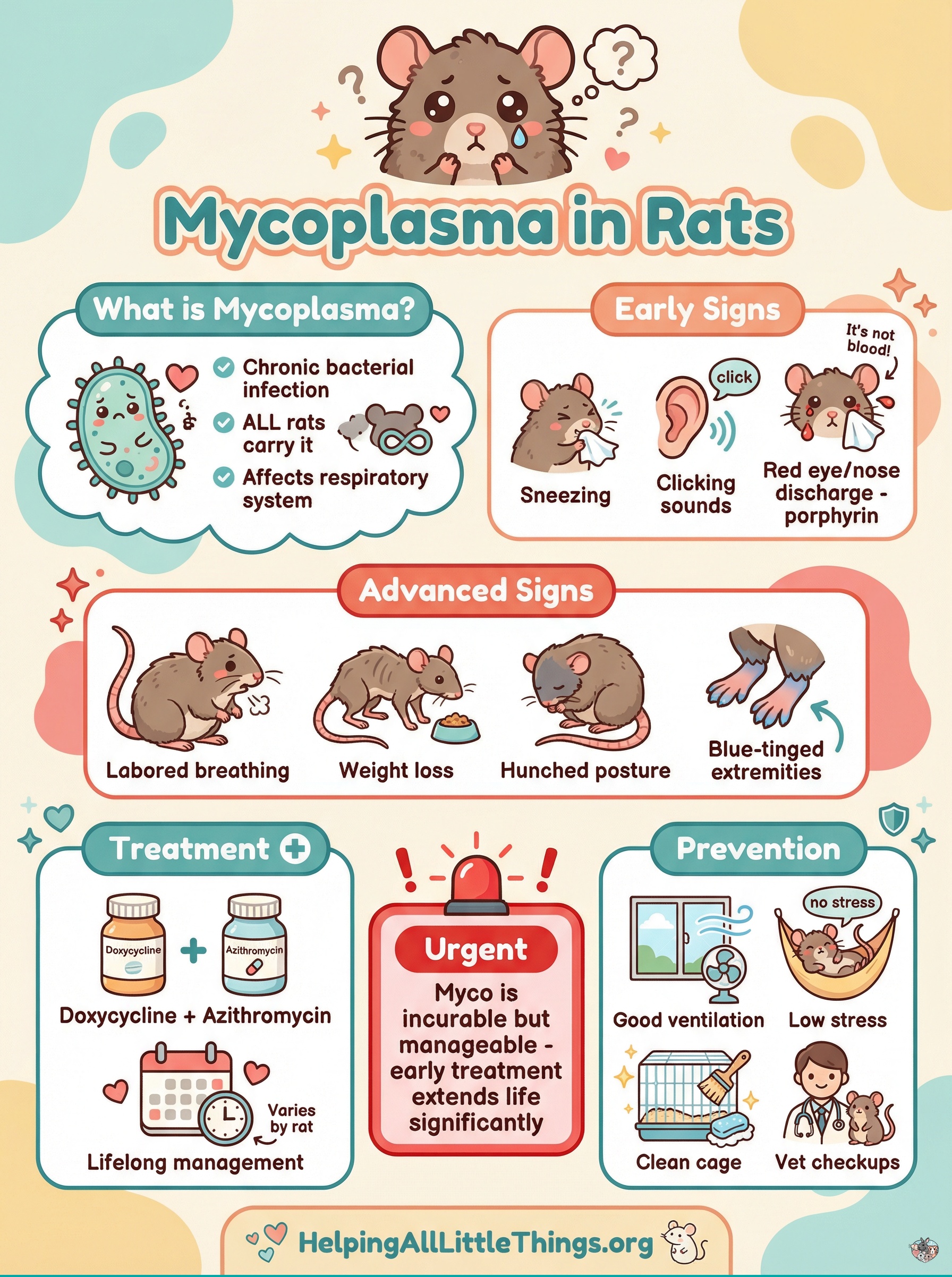

What is Mycoplasma Pulmonis?
M. pulmonis is a unique bacterium that lacks a cell wall. This makes it resistant to certain antibiotics (like penicillin) and allows it to live in close contact with the rat's respiratory tissues, making it extremely difficult for the immune system to clear completely [2]. For most rats, it becomes a lifelong, chronic infection.
Why and When Do Symptoms Flare Up?
Many rats carry M. pulmonis without showing any signs of illness. The bacteria often remains dormant until the rat's immune system is compromised. Symptomatic flare-ups are often triggered by:
- Stress: Introducing new rats, moving to a new environment, or other stressors can weaken the immune response.
- Poor Husbandry: High levels of ammonia from soiled bedding can irritate the respiratory tract and trigger a flare-up [2].
- Other Illnesses: Concurrent infections with other viruses or bacteria can give M. pulmonis an opportunity to multiply [2].
- Genetics & Age: Some rats are genetically more susceptible, and the immune system naturally weakens with age.
Signs and Symptoms of a Myco Flare-Up
When M. pulmonis becomes active, it causes inflammation and damage to the respiratory tract. This condition is often called Murine Respiratory Mycoplasmosis. Symptoms can range from mild to severe:
- Porphyrin Staining: Reddish-brown discharge around the eyes and nose, often mistaken for blood. This is a sign of stress or illness.
- Sneezing and Sniffling: Often the first signs of a respiratory issue.
- Labored Breathing: Wheezing, gasping, or clicking sounds when breathing.
- Hunched Posture & Ruffled Fur: General signs of a rat feeling unwell.
- Head Tilt: If the infection spreads to the middle ear, it can cause loss of balance and a persistent head tilt [1].
Treatment and Management
There is no cure for mycoplasmosis; treatment focuses on managing the symptoms and controlling the bacterial infection during a flare-up. A veterinarian will typically prescribe a course of antibiotics.
- Antibiotics: A combination of Enrofloxacin and Doxycycline is a common and effective treatment [2]. It's crucial to complete the full course as prescribed by your vet.
- Supportive Care: For severe cases, bronchodilators (to open airways) and anti-inflammatories may be used. Nebulizing with a saline solution can also help soothe inflamed respiratory passages [2].
- Environmental Control: Maintaining a clean, well-ventilated cage with low ammonia levels is critical to prevent relapses.
For rats with frequent flare-ups, a veterinarian may recommend a long-term, low-dose antibiotic regimen to help manage the chronic infection [2].
Signs to watch for: clicking or rattling sounds when breathing, increased respiratory rate, labored breathing, hunched posture, weight loss, and discharge from the eyes or nose. If you notice any of these, contact your exotic vet promptly — early intervention can significantly slow disease progression.
The Reality of Living with Myco
Because the disease is so widespread, it's a reality that most rat owners will have to manage. Rats with well-managed CRD can still live happy lives, but their lifespan may be shortened [1]. Proactive care, a clean environment, a high-quality diet, and a strong relationship with a rat-savvy vet are your best tools for giving your myco-positive rats the best quality of life possible.
References
[1] Diseases in Rodents — VCA Animal Hospitals, Unknown Year
[2] Mice and Rats as Pets — Merck Veterinary Manual, 2024
[3] Mycoplasma / Mycoplasmosis — RatGuide, 2023