Leptospirosis in Rats
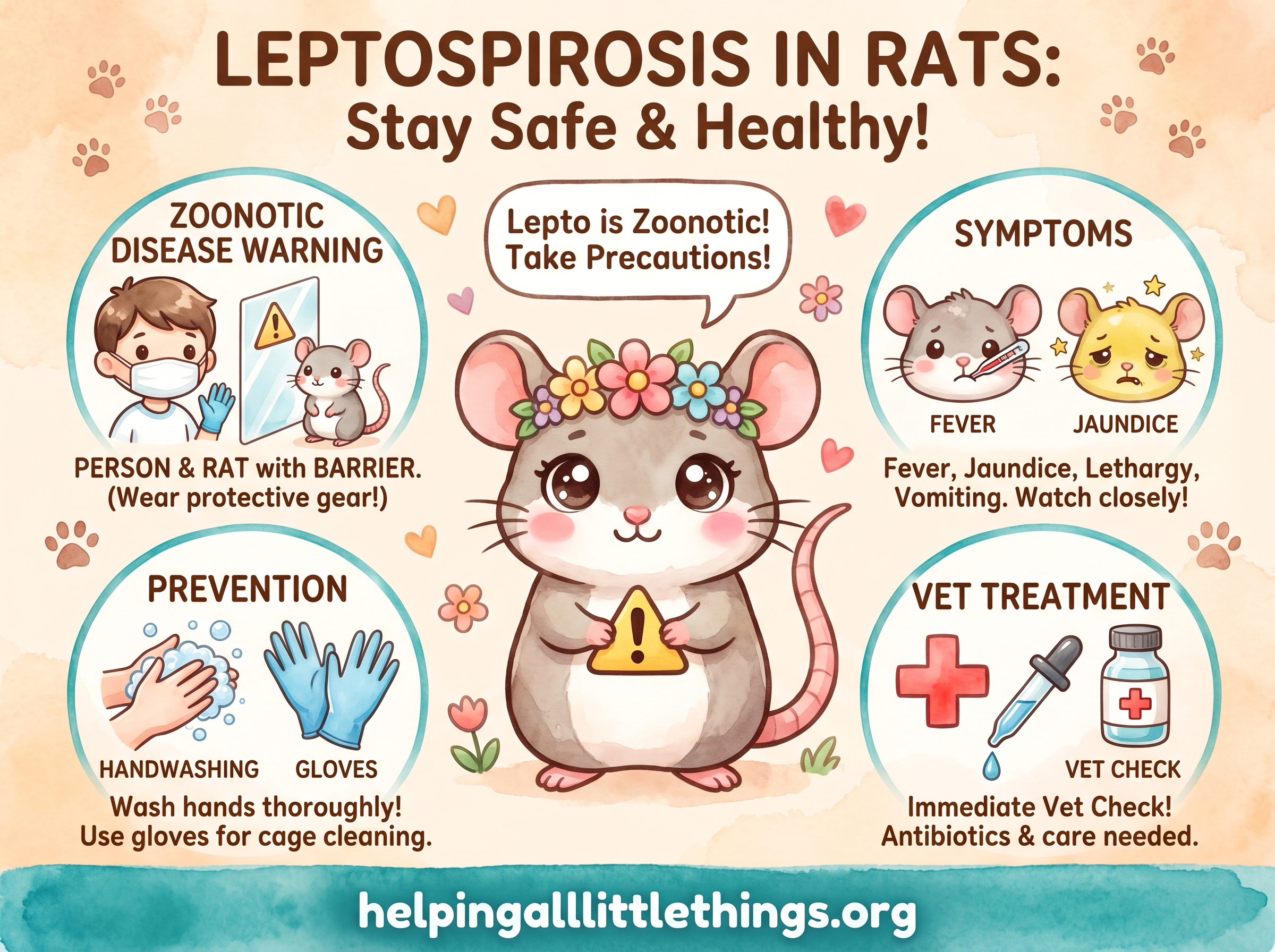

Leptospirosis is a bacterial disease that can affect many animals, including rats and humans. It is caused by spiral-shaped bacteria of the genus Leptospira. What makes this disease particularly important for pet rat owners to understand is that it is a zoonotic disease, meaning it can be transmitted from animals to people.
While the risk of contracting leptospirosis from a well-cared-for pet rat is very low, it is not zero. Understanding the disease and practicing good hygiene is essential.
Transmission: The Role of Urine
The Leptospira bacteria are primarily spread through the urine of an infected animal. The bacteria thrive in water and moist environments. Transmission can occur through:
- Direct Contact: Contact with the urine or other body fluids (except saliva) of an infected animal.
- Indirect Contact: Contact with water, soil, or bedding that has been contaminated with the urine of an infected animal.
The bacteria can enter the body through cuts or abrasions in the skin, or through the mucous membranes of the eyes, nose, or mouth.
Signs of Leptospirosis
In Rats:
One of the biggest challenges with leptospirosis is that infected rats often show no signs of illness. They can be asymptomatic carriers, appearing perfectly healthy while shedding the bacteria in their urine. When signs do occur, they are often non-specific, such as lethargy, loss of appetite, and fever. In severe cases, it can cause kidney and liver failure.
In Humans:
If a person becomes infected, the signs can range from mild, flu-like symptoms to a severe, life-threatening illness. Symptoms can include:
- Fever and chills
- Headache and muscle aches
- Vomiting and diarrhea
- Jaundice (yellowing of the skin and eyes)
- Kidney or liver failure
Any flu-like illness that occurs after potential exposure should be discussed with a doctor.
Risk and Prevention
It is important to put the risk into perspective. The vast majority of pet rats, especially those bred by reputable breeders and kept indoors, are very unlikely to be infected with leptospirosis. The risk is highest with wild rats or rats that have been housed in poor conditions with exposure to wild rodents.
However, because rats can be asymptomatic carriers, it is crucial to practice good hygiene at all times.
- Hand Washing: This is the most important preventative measure. Always wash your hands thoroughly with soap and water after handling your rats or cleaning their cage.
- Cage Cleaning: Clean the cage regularly to prevent the buildup of urine. Disinfect the cage with a pet-safe disinfectant.
- Avoid Contact with Wild Rodents: Ensure your pet rats and their supplies do not come into contact with wild rats or their droppings.
- Supervise Children: Make sure children wash their hands properly after playing with the rats.
- No Kissing: Avoid kissing your rats or letting them have contact with your mouth.
Diagnosis and Treatment
If leptospirosis is suspected in a rat or a person, a doctor or veterinarian will perform blood and urine tests to confirm the diagnosis. The disease is treatable with antibiotics, and the earlier the treatment is started, the better the outcome.
By being aware of this disease and practicing diligent hygiene, you can keep both your pet rats and your family safe.