Kidney and Urinary Disorders in Rats
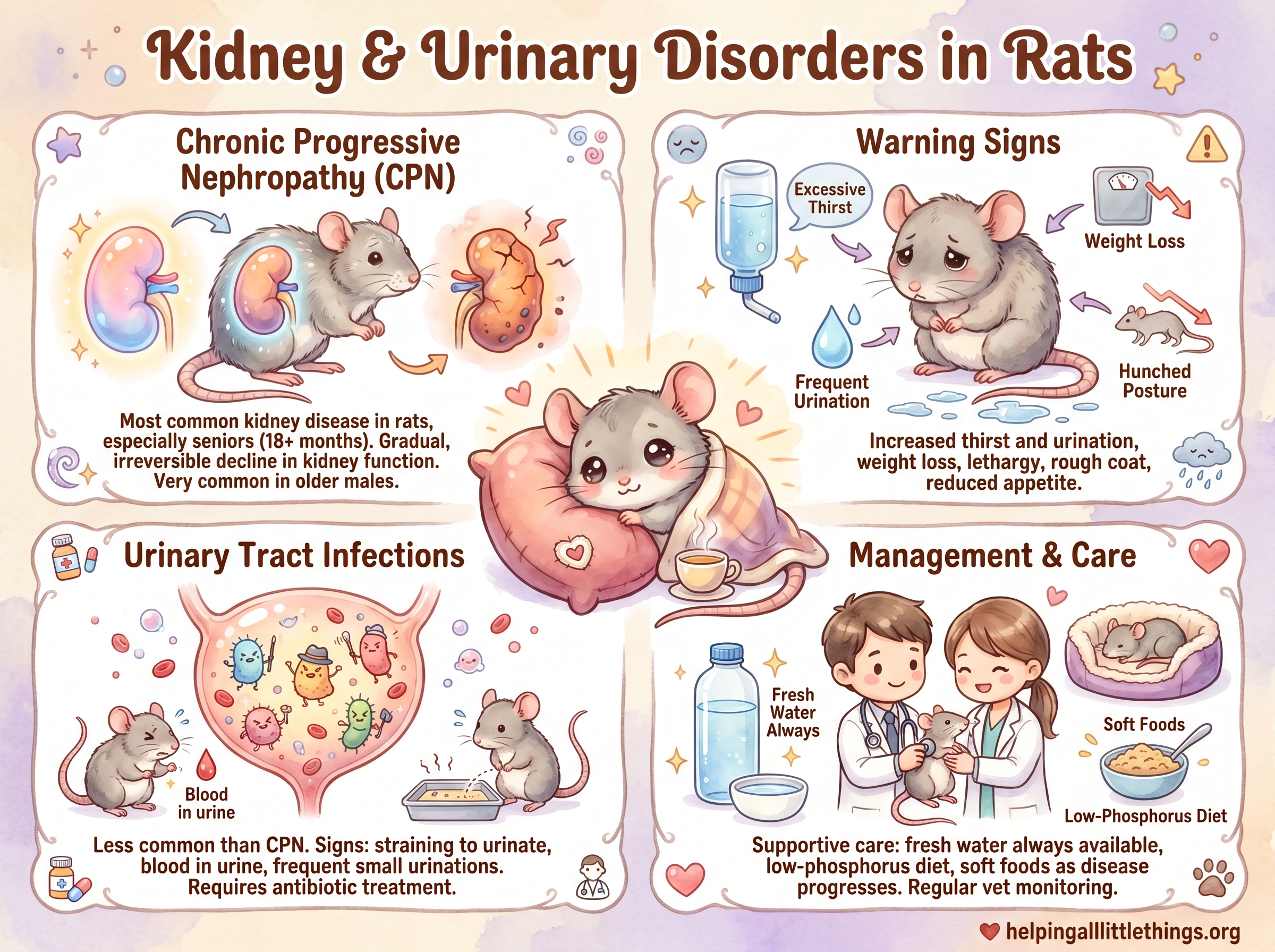

Kidney disease is a very common health problem in rats, particularly as they enter their senior years (typically over 18 months of age). The most prevalent condition is Chronic Progressive Nephropathy (CPN), a degenerative disease that leads to a gradual and irreversible decline in kidney function. Urinary tract infections can also occur but are less common.
Chronic Progressive Nephropathy (CPN)
CPN is a leading cause of illness and death in aging rats. It is a complex disease where the functional units of the kidney (the nephrons) slowly scar and die off.
- Cause: The exact cause is not fully understood, but it is known to be influenced by several factors:
- Age: It is primarily a disease of old age.
- Genetics: There is a strong genetic predisposition, with some lines of rats being more susceptible than others.
- Diet: A diet that is excessively high in protein has been shown to accelerate the progression of the disease.
- Sex: The disease is typically more severe and progresses more rapidly in males than in females.
- Function: The kidneys are vital for filtering waste products from the blood. As CPN progresses, the kidneys lose their ability to filter these toxins, leading to their buildup in the bloodstream and causing the rat to feel unwell.
Signs of Kidney Disease
The signs of CPN are often subtle at first and can be easily mistaken for normal signs of aging.
- Increased Thirst and Urination: This is often the first and most noticeable sign. As the kidneys lose their ability to concentrate urine, the rat must drink more water to flush out toxins, resulting in larger volumes of urine.
- Weight Loss: Progressive, unexplained weight loss is very common.
- Poor Coat Condition: The fur may become dull, ruffled, and unkempt.
- Lethargy: The rat will become less active, sleep more, and show less interest in its surroundings.
- Decreased Appetite.
- Anemia: In advanced stages, the kidneys stop producing the hormone that stimulates red blood cell production, leading to anemia and pale gums.
Diagnosis and Management
If you suspect your older rat is showing signs of kidney failure, a veterinary visit is important.
- Diagnosis: A vet can often make a presumptive diagnosis based on the clinical signs in an older rat. A urinalysis will show dilute urine, and blood tests can confirm the diagnosis by revealing elevated levels of kidney waste products (BUN and creatinine).
- Management: There is no cure for CPN. Treatment is supportive and aimed at slowing the progression of the disease and maintaining a good quality of life.
- Dietary Management: This is the cornerstone of treatment. Switching to a lower-protein diet can significantly reduce the workload on the kidneys. Your veterinarian can help you choose a suitable diet, which may include a special therapeutic diet or a carefully planned homemade one.
- Fluid Support: Ensuring the rat stays well-hydrated is crucial. Always provide access to fresh, clean water.
- Medications: In some cases, medications may be used to manage specific symptoms, such as phosphorus binders or drugs to control blood pressure.
Prevention
While you cannot change a rat's genetic predisposition, you can take steps to support their kidney health throughout their life.
- Feed a Moderate-Protein Diet: Avoid feeding a diet that is excessively high in protein, especially to adult and senior rats. A high-quality commercial rat food with a protein content of around 14-18% is generally appropriate.
- Encourage a Healthy Weight: Obesity can put extra strain on the kidneys.
By being attentive to the health of your aging rat, you can catch the signs of kidney disease early and work with your vet to provide the supportive care needed to keep them comfortable.