Diabetes in Rats
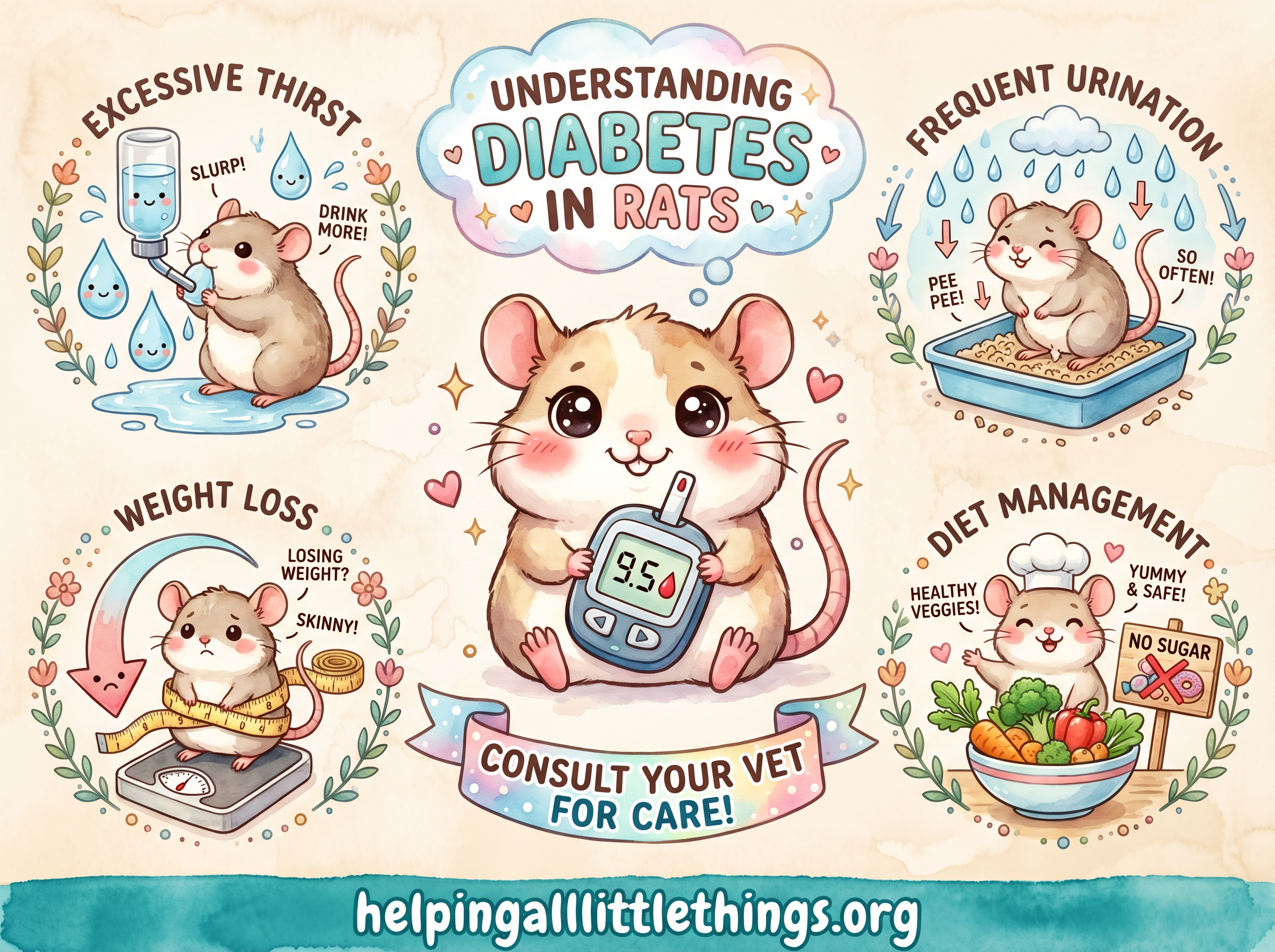

Diabetes Mellitus is a condition in which the body either fails to produce enough insulin or cannot use it effectively, resulting in persistently high blood sugar (hyperglycemia). While not common in pet rats, it does occur — particularly in older or overweight individuals — and requires prompt veterinary attention and a committed management plan. Understanding the signs, how diagnosis works, and what treatment looks like can make a significant difference for an affected rat [1][2].
Signs and Symptoms
The classic signs of diabetes in rats mirror those seen in other mammals:
| Sign | Description |
|---|---|
| Polydipsia | Excessive thirst — your rat drinks far more water than usual |
| Polyuria | Excessive urination — wet bedding, frequent urination |
| Weight loss | Despite normal or even increased appetite |
| Lethargy | Less activity, weakness, reduced interest in surroundings |
| Failure to grow | Particularly in younger rats |
| Fine, glossy coat | A paradoxical sign sometimes noted in diabetic rats |
If you notice any combination of these signs, a veterinary visit is essential. Early diagnosis gives the best chance of effective management.
Diagnosis
A veterinarian will diagnose diabetes by detecting:
- Glucosuria — sugar in the urine
- Hyperglycemia — persistently elevated blood glucose levels (normal range for rats is typically 89–165 mg/dL)
Blood glucose can be monitored using a glucometer with a small blood sample obtained from a tail nick or a clipped toenail. Your vet may also recommend periodic rechecks to track how well treatment is working [1].
Treatment and Management
Managing diabetes in a pet rat is challenging and requires close collaboration with your veterinarian. There is no one-size-fits-all approach — treatment is tailored to the individual rat.
Dietary Changes
Diet is a cornerstone of diabetes management:
- Avoid sugary treats, high-carbohydrate snacks, and processed human foods
- Provide a high-quality rat lab block as the dietary foundation
- Supplement with fresh, low-sugar vegetables
- If your rat is overweight, a carefully managed diet combined with increased exercise opportunities can significantly improve blood sugar regulation
Insulin Therapy
In cases where dietary changes alone are insufficient, your veterinarian may prescribe insulin injections. Recent case studies have shown some success with long-acting insulin such as glargine, with dosage carefully adjusted based on blood glucose monitoring. Your vet will provide detailed instructions on safe administration [1].
Other Medications
Oral medications such as glipizide and metformin have been used in some cases, but their effectiveness can be limited. Any medication plan must be developed and overseen by a veterinarian [1].
Potential Complications
Unmanaged diabetes can lead to serious secondary conditions:
- Kidney disease
- Nerve damage (radiculoneuropathy)
- Increased susceptibility to infections, including pneumonia
Early diagnosis and consistent management provide the best chance of a good quality of life for a diabetic rat.
A Lifelong Commitment
Caring for a diabetic rat is a significant commitment, but it is a manageable one. With close attention to diet, regular veterinary check-ups, and a consistent management plan, your rat can continue to live a happy and fulfilling life. Always work closely with your veterinarian to ensure your rat receives the best possible care.
References
[1] McCready, J. E., Kornya, M. R., Aymen, J., Dianis, A. E., & Barboza, T. (2023). Management of spontaneous diabetes mellitus in a companion rat (Rattus norvegicus). https://www.sciencedirect.com/science/article/abs/pii/S1557506323000630
[2] Ducommun, D. (1999). Diabetes — Rat Fan Club. http://www.ratfanclub.org/diabetes.html
[3] Merck Veterinary Manual. (2024). Diabetes Mellitus in Animals. https://www.merckvetmanual.com/endocrine-system/the-pancreas/diabetes-mellitus-in-animals