Dangerous Treats and Toys for Rabbits
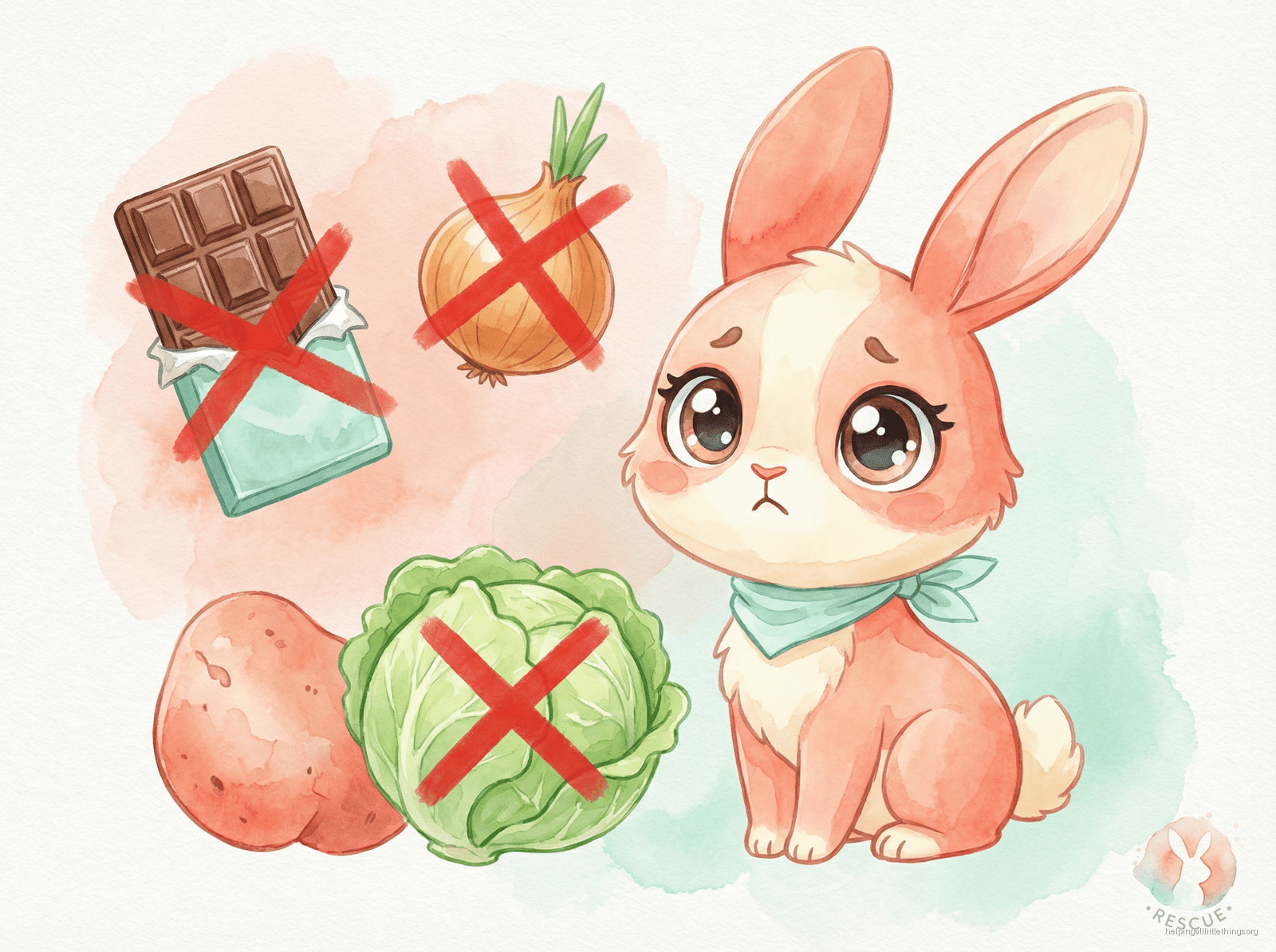

Rabbits have one of the most sensitive digestive systems of any common household pet. Their health is inextricably linked to a high-fiber diet, and any deviation can lead to a life-threatening emergency like Gastrointestinal (GI) Stasis. Furthermore, their delicate skeletal structure makes them vulnerable to injuries from improper toys and handling. Knowing what to avoid is paramount to their safety.
Dangerous Treats: A Recipe for GI Stasis
A rabbit's diet should be 80-90% grass hay. Any food high in sugar, starch, or fat can disrupt their delicate gut flora and cause their digestive system to shut down.
Absolutely to Avoid:
- Sugary Commercial Treats: This is the worst offender. Yogurt drops, seed sticks held together with honey, and colorful, processed treats are pure sugar. They are a direct cause of dysbiosis (an imbalance of gut bacteria) and can trigger GI stasis.
- Grains, Bread, Crackers, and Cereals: These are high in starch and carbohydrates, which ferment improperly in a rabbit's gut, leading to painful gas and bloat.
- Nuts and Seeds: These are very high in fat and protein and are not a natural part of a rabbit's diet. They can cause digestive upset and obesity.
- Most Fruits: While a very small piece of a safe fruit (like a slice of banana or a blueberry) is okay as a rare treat, fruit is high in sugar. Overfeeding fruit is a common cause of soft stools and an unbalanced gut.
- Iceberg Lettuce: This vegetable has very little nutritional value and is high in water, which can cause diarrhea.
- Dairy and Meat: As strict herbivores, rabbits cannot digest these items.
| Unsafe Treat Category | Why It's Dangerous |
|---|---|
| Sugary/Processed Treats | High sugar content; a primary cause of GI stasis. |
| Grains, Breads, Cereals | High starch; can cause painful gas and bloat. |
| Nuts & Seeds | Too high in fat and protein; unhealthy. |
| Fruit (in excess) | High in sugar; can disrupt gut balance. |
| Iceberg Lettuce | Low nutritional value; can cause diarrhea. |
Dangerous Toys and Accessories
Enrichment is important, but a rabbit's physical safety must be the top priority.
-
Exercise Wheels and Balls: These are extremely dangerous and can be fatal. A rabbit's spine is long and delicate and is not designed to bend backward as it would in a wheel. Using a wheel or ball can cause severe, permanent spinal injuries. The only safe exercise for a rabbit is running and hopping in a large, bunny-proofed space.
-
Leashes and Harnesses: A rabbit's skeleton is fragile. A sudden jump or pull against a harness can easily result in a broken back. They are also prey animals and find the restraint of a harness extremely stressful.
-
Cedar and Non-Kiln-Dried Pine: These woods contain toxic aromatic oils (phenols) that cause respiratory and liver damage and should never be used as chew toys or bedding.
-
Plastic Toys: While some hard, durable plastic toys (like baby keys) can be safe under supervision, rabbits can and do ingest plastic. Soft plastic toys should be avoided entirely, as they can be chewed apart and cause an intestinal blockage.
-
Mineral and Salt Licks: These are completely unnecessary for a rabbit on a balanced diet of hay and pellets. Over-consumption can lead to an excess of minerals, which can contribute to the formation of painful bladder stones.
What are safe toys and enrichment?
- Cardboard: Untreated cardboard boxes, tunnels, and tubes are a rabbit's favorite (and cheapest) toy.
- Safe Woods: Chew toys made from apple, willow, or aspen are excellent for dental health.
- Grass Mats: Woven mats made from safe materials like seagrass or timothy hay are great for chewing and digging.
- Stacking Cups: Hard plastic baby stacking cups are a popular and generally safe toy for rabbits to toss around.