Parasites in Rabbits
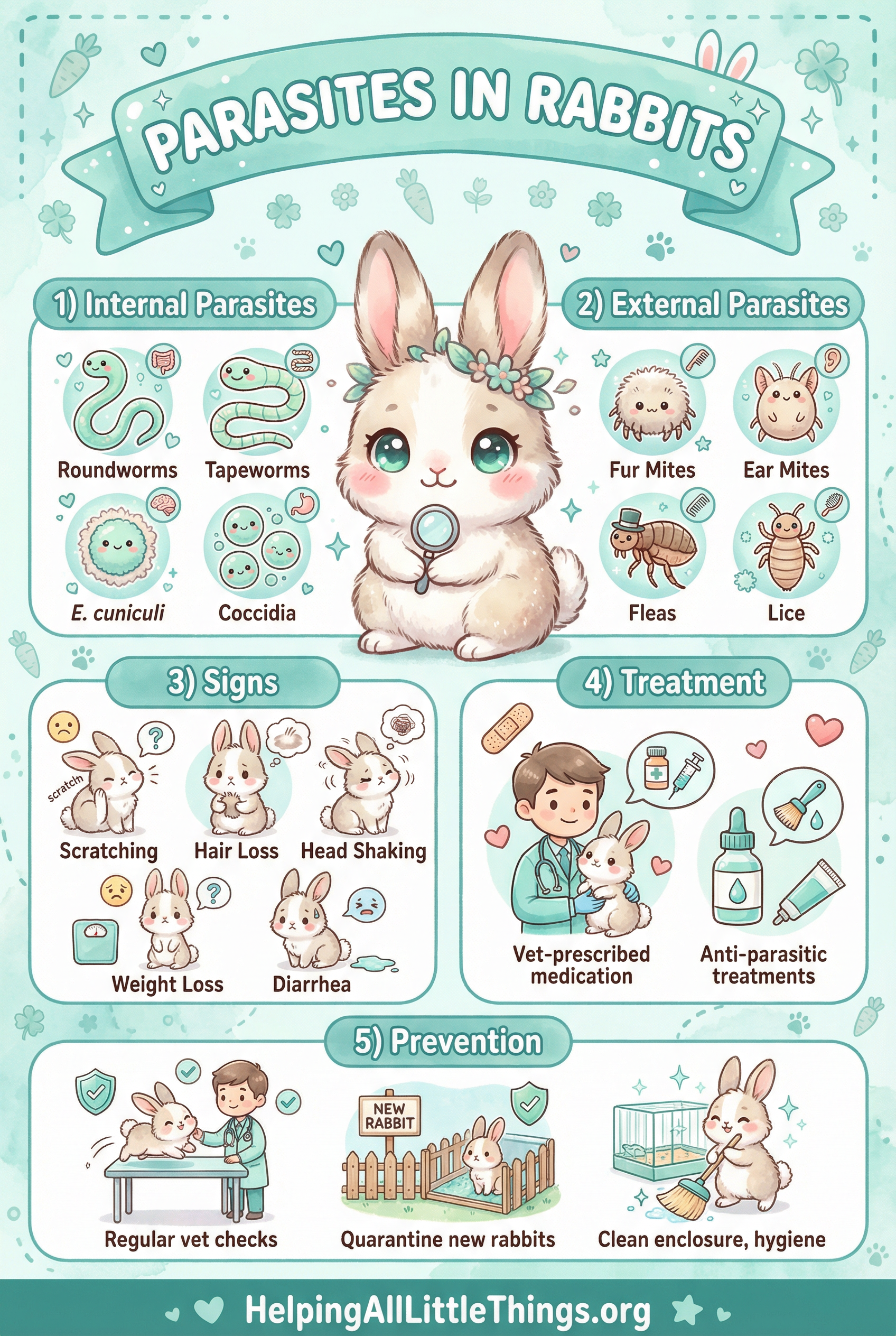

Parasites are a common concern for rabbit owners, ranging from external pests that cause skin irritation to internal organisms that can lead to severe systemic disease. Understanding the types of parasites that can affect your rabbit, along with the signs of an infestation, is key to prevention and effective treatment. This guide provides a general overview; for more detailed information, please see the linked articles.
External Parasites (Ectoparasites)
External parasites live on the skin or in the fur of a rabbit, often causing itching, hair loss, and skin inflammation.
Mites
- Ear Mites (Psoroptes cuniculi): These are a common cause of thick, crusty debris in the ear canals. Infestations are painful and can lead to secondary bacterial infections and head tilt if left untreated.
- Fur Mites (Cheyletiella parasitovorax): Often called "walking dandruff," these mites cause flaky skin and mild itching, primarily over the shoulders and back.
- Mange Mites (Sarcoptes scabiei and Notoedres cati): Less common but more severe, these mites burrow into the skin, causing intense itching, hair loss, and crusting, typically around the face, ears, and legs.
Fleas
The most common flea found on rabbits is the cat flea, Ctenocephalides felis. Fleas cause significant itching and can transmit diseases, including the myxomatosis virus. Heavy infestations can lead to anemia, especially in young or small rabbits.
Never use fipronil-based flea products (like Frontline®) on rabbits. These products are highly toxic to rabbits and can be fatal.
Ticks
Ticks are less common on indoor rabbits but can be picked up by those with outdoor access. They attach to the skin to feed on blood and can transmit bacterial diseases.
Fly Strike (Myiasis)
This is a veterinary emergency, not a parasite infestation in the traditional sense. Flies (especially blowflies) are attracted to damp, soiled fur and lay eggs. The hatching maggots then feed on the rabbit's flesh, releasing toxins that can cause shock and rapid death. Rabbits with mobility issues, obesity, or diarrhea are at high risk.
For more information, see our dedicated article on Fly Strike in Rabbits.
Internal Parasites (Endoparasites)
Internal parasites live within the rabbit's body, most often in the intestinal tract, but can also affect other organs like the brain and liver.
Protozoa
- Encephalitozoon cuniculi (E. cuniculi): A microscopic brain and kidney parasite, E. cuniculi is a leading cause of neurological disease in rabbits, including head tilt, paralysis, and seizures. It is estimated that over 50% of pet rabbits have been exposed. It is primarily spread through infected urine.
Learn more in our detailed guide to E. cuniculi in Rabbits.
- Coccidia (Eimeria spp.): These single-celled organisms infect the intestines or liver. Intestinal coccidiosis is common in young rabbits and can cause diarrhea, weight loss, and dehydration. Hepatic (liver) coccidiosis is less common but more severe.
See our article on Coccidia in Rabbits for more.
Worms (Helminths)
- Pinworms (Passalurus ambiguus): The most common intestinal worm in rabbits. They live in the cecum and large intestine. Most infections are asymptomatic, but heavy loads can cause poor growth or anal itching. Rabbit pinworms are not transmissible to humans.
- Tapeworms: Rabbits can be intermediate hosts for tapeworm species like Taenia pisiformis. The adult worms live in dogs and cats, and rabbits become infected by ingesting eggs from contaminated grass. The larval cysts form in the rabbit's liver or abdominal cavity.
- Stomach Worms (Obeliscoides cuniculi): These are more common in wild rabbits but can affect pet rabbits with outdoor access.
Diagnosis and Treatment
Diagnosis of parasites requires a veterinary examination. Methods may include:
- Skin scraping or tape tests for mites.
- Fecal flotation to identify worm eggs or coccidia oocysts.
- Blood tests (serology) for E. cuniculi antibodies.
Treatment is specific to the parasite and may include topical medications (selamectin), oral anti-parasitics (fenbendazole), or injectable drugs (ivermectin). A veterinarian will prescribe the correct medication and dosage.
Prevention
- Hygiene: Keep enclosures, litter boxes, and food/water dishes clean.
- Quarantine: Isolate new rabbits for at least 30 days before introducing them to resident pets.
- Flea Prevention: Use a rabbit-safe flea preventive (like Revolution® or Advantage®) as recommended by your vet, especially if your rabbit has outdoor access or lives with other pets.
- Regular Check-ups: Annual veterinary exams and fecal tests can help catch internal parasites early.
- Environmental Control: Source hay from reputable suppliers and prevent contact with wild rabbits.
References
[1] Quesenberry, K.E., Mans, C., & Orcutt, C.J. (2020). Ferrets, Rabbits, and Rodents: Clinical Medicine and Surgery (4th ed.). Elsevier.
[2] Varga, M. (2013). Textbook of Rabbit Medicine (2nd ed.). Butterworth-Heinemann.
[3] Harcourt-Brown, F. (2002). Textbook of Rabbit Medicine. Butterworth-Heinemann.
[4] Beck, W., & Pantchev, N. (2013). Practical Parasitology in Small Animals. Bayer Animal Health.