Neurologic Issues in Rabbits
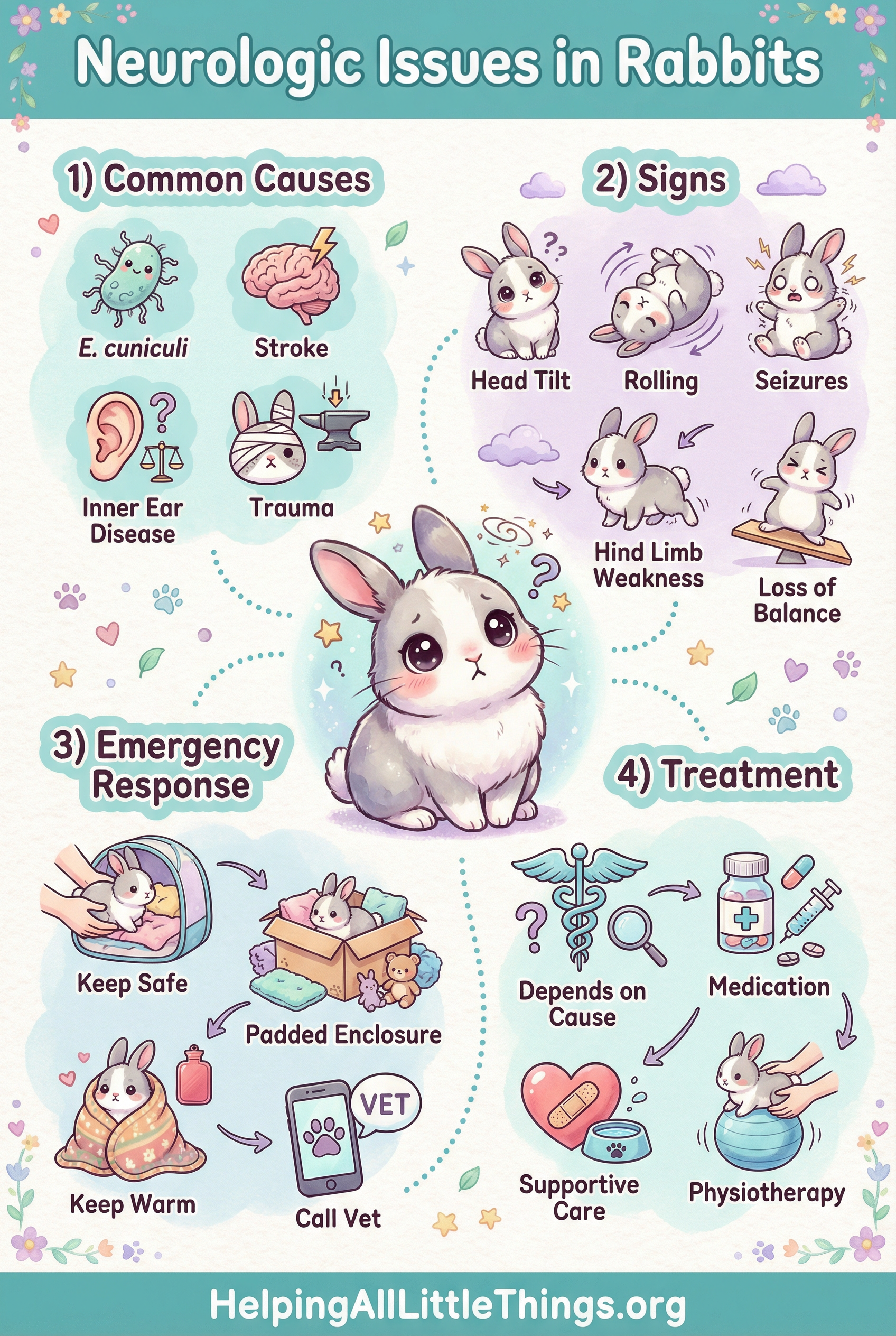

Neurological problems in rabbits can be alarming to witness and challenging to manage. Conditions affecting the brain, spinal cord, or peripheral nervous system may present suddenly or develop gradually, and they range from fully treatable to chronic and managed long-term. Understanding the most common causes and what to do when signs appear can make a significant difference in your rabbit's outcome.
Common Causes
Encephalitozoon cuniculi (E. cuniculi)
The most common cause of neurological signs in pet rabbits. This microscopic parasite infects the brain, kidneys, and eyes, and is estimated to have infected 52–80% of pet rabbits.[1] Many rabbits are asymptomatic carriers; clinical signs often emerge during periods of stress or immune suppression.
Inner and Middle Ear Infections
Bacterial infections of the middle or inner ear — most commonly caused by Pasteurella multocida — can spread to the brain and cause neurological signs. These infections are often secondary to upper respiratory tract disease.
Head Trauma
Rabbits are fragile animals and can sustain brain or spinal cord injuries from falls, rough handling, or being dropped. Even a fall from a relatively low height can cause serious neurological damage.
Stroke
Rabbits can experience cerebrovascular accidents (strokes), in which blood flow to part of the brain is interrupted. Strokes cause sudden-onset neurological signs and may be associated with underlying cardiovascular disease, arteriosclerosis, or hypertension.
Toxin Exposure
Certain toxins — including lead, some pesticides, and toxic plants — can damage the nervous system. Rabbits that have access to painted surfaces, treated wood, or garden plants are at risk.
Spinal Cord Injury (Spondylosis / Vertebral Fracture)
Degenerative spinal disease (spondylosis) is common in older rabbits and can compress the spinal cord. Sudden hind limb paralysis can also result from a fractured lumbar vertebra — often caused by a rabbit kicking out forcefully while being restrained.
Neoplasia (Tumours)
Brain or spinal cord tumours are relatively rare in rabbits but can cause progressive neurological signs. Uterine adenocarcinoma in unspayed females can metastasize to the spine.
Hepatic Encephalopathy
Severe liver disease can cause neurological signs due to the accumulation of toxins (such as ammonia) that the liver would normally process.
Signs and Symptoms
| Sign | Possible Cause |
|---|---|
| Head tilt (torticollis) | E. cuniculi, inner ear infection, stroke |
| Rolling / unable to right itself | Severe vestibular disease (E. cuniculi, inner ear) |
| Nystagmus (rapid eye movements) | Vestibular disease, E. cuniculi |
| Hind limb weakness or paralysis | Spinal injury, spondylosis, E. cuniculi |
| Seizures | E. cuniculi, toxins, hepatic encephalopathy |
| Sudden collapse | Stroke, severe E. cuniculi, trauma |
| Progressive incoordination | Spondylosis, tumour, E. cuniculi |
Any sudden neurological sign — head tilt, rolling, paralysis, or seizure — requires immediate veterinary attention. Many causes are treatable if addressed promptly.
Diagnosis
- Neurological examination — assessment of reflexes, posture, gait, and cranial nerve function
- Serology — E. cuniculi antibody titres (IgG and IgM)
- Skull and spinal radiographs — to assess for bony changes, fractures, or spondylosis
- MRI or CT scan — the gold standard for visualising brain and spinal cord lesions
- Blood chemistry panel — to assess liver and kidney function
- Ear examination and culture — to rule out otitis media/interna
- Urinalysis — to assess kidney involvement
Treatment
Treatment depends on the underlying cause:
| Cause | Treatment |
|---|---|
| E. cuniculi | Fenbendazole 20 mg/kg/day × 28 days; meloxicam for inflammation |
| Inner ear infection | Long-course systemic antibiotics (4–8 weeks); meloxicam |
| Spinal injury | Strict cage rest; meloxicam; corticosteroids in acute cases; physiotherapy |
| Toxin exposure | Supportive care; specific antidotes where available; remove source |
| Stroke | Supportive care; meloxicam; time — many rabbits improve significantly |
| Seizures | Diazepam for acute seizures; investigate and treat underlying cause |
Supportive Care for Neurological Rabbits
Rabbits with neurological signs often need significant supportive care:
- Padded enclosure — prevent injury from rolling or falling; use deep bedding and remove ramps or levels
- Assisted feeding — if the rabbit cannot eat independently, syringe-feed Critical Care or similar recovery food
- Fluid therapy — for dehydrated rabbits
- Physiotherapy — gentle range-of-motion exercises can help rabbits with hind limb weakness
- Positioning — rabbits with head tilt often benefit from being placed in a padded donut or rolled towel to help them rest comfortably
Prognosis
Prognosis varies widely by cause:
- E. cuniculi with head tilt — many rabbits improve substantially with treatment; some degree of tilt may persist permanently but does not prevent a good quality of life
- Inner ear infection — good prognosis with appropriate antibiotic treatment; some residual tilt possible
- Spinal injury — variable; depends on severity; some rabbits regain function with rest and time
- Stroke — variable; many rabbits improve over weeks with supportive care
- Spinal fracture with complete paralysis — poor prognosis; quality of life assessment required
References
[1] Keeble, E., & Shaw, D.J. (2006). Seroprevalence of antibodies to Encephalitozoon cuniculi in domestic rabbits in the United Kingdom. Veterinary Record, 158(16), 539–544.
[2] Harcourt-Brown, F. (2002). Textbook of Rabbit Medicine. Butterworth-Heinemann.
[3] Quesenberry, K.E., Mans, C., & Orcutt, C.J. (2020). Ferrets, Rabbits, and Rodents: Clinical Medicine and Surgery (4th ed.). Elsevier.
[4] Varga, M. (2013). Textbook of Rabbit Medicine (2nd ed.). Butterworth-Heinemann.