Fly Strike (Myiasis) in Rabbits: A Veterinary Emergency
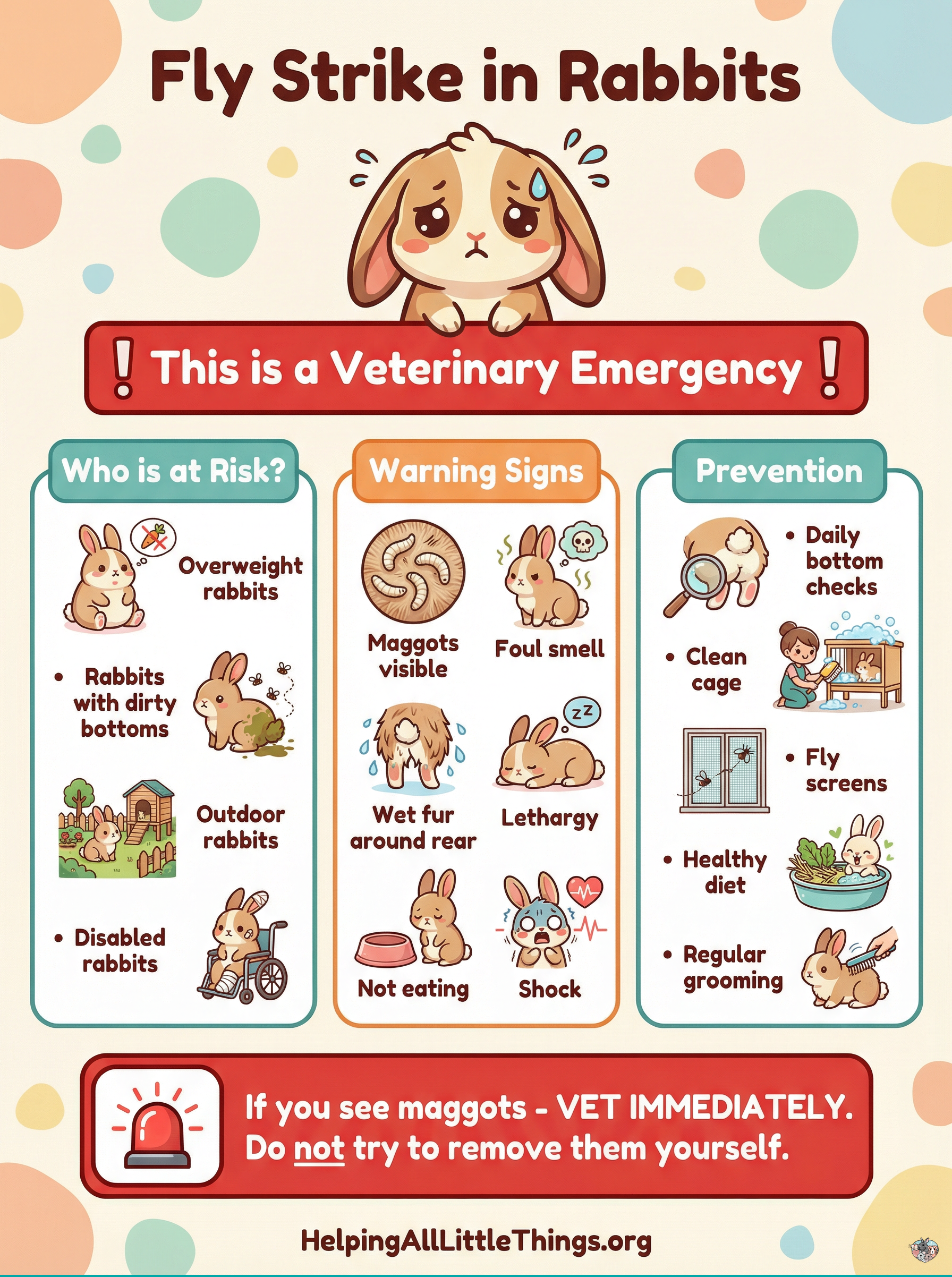

Fly strike, also known as myiasis, is a devastating and rapidly progressing condition that is a true veterinary emergency. It occurs when flies, typically blowflies, lay eggs on a rabbit. These eggs hatch into maggots, which then burrow into the rabbit's skin and feed on its flesh. This can lead to shock, severe infection, and death in as little as 24 hours [1].
If you see maggots on your rabbit, contact a veterinarian immediately.
Who is at Risk?
While any rabbit can get fly strike, some are at a higher risk. Flies are attracted to damp, soiled fur and open wounds. Risk factors include:
- Mobility Issues: Rabbits with arthritis, obesity, or other conditions that prevent them from grooming properly are at high risk [2].
- Dental Problems: Dental disease can make it painful for a rabbit to eat its cecotropes (a type of nutrient-rich dropping), which can then accumulate around the rear end.
- Urinary Issues: Urine scalding from incontinence or bladder problems creates a moist environment that attracts flies.
- Dirty Environment: A soiled cage or litter box is a breeding ground for flies.
- Open Wounds: Any cut or sore can attract flies.
However, it is crucial to remember that even clean, healthy rabbits can get fly strike [1].
Recognizing the Signs
Daily checks are essential, especially during warmer months.
- Visible Maggots: This is the most obvious sign. Check your rabbit's rear end, under their tail, and around any skin folds.
- Lethargy and Depression: A rabbit suffering from fly strike will quickly become quiet, withdrawn, and may lose its appetite.
- A Foul Odor: A strong, unpleasant smell is often associated with the tissue damage caused by maggots.
- Restlessness: The rabbit may seem agitated or uncomfortable.
What to Do
Fly strike is a life-threatening emergency.
- Call Your Veterinarian Immediately: Inform them that you suspect fly strike and are on your way.
- Do Not Attempt to Remove the Maggots Yourself: This can cause further distress and pain. Your vet will need to sedate or anesthetize the rabbit to safely remove the maggots, clean the wounds, and provide pain relief and antibiotics [1].
- Do Not Bathe Your Rabbit: This can make it harder for the vet to assess the extent of the damage and can cause the rabbit to go into shock.
Prevention is Key
- Check Your Rabbit Daily: Check your rabbit's entire body, especially their rear end, at least once a day. In warm weather, check twice a day [2].
- Keep the Environment Clean: Clean your rabbit's litter box daily and do a full cage clean at least once a week.
- Manage Diet: A proper high-fiber diet prevents obesity and soft stools, reducing the risk of a soiled rear end.
- Fly Control: Use fly screens on outdoor hutches and consider using rabbit-safe fly repellents as recommended by your vet.
- Regular Vet Checkups: Regular exams can help identify and manage underlying issues like dental disease or arthritis before they lead to fly strike.
References
[1] FLYSTRIKE IN RABBITS – AN OWNER'S GUIDE — Royal Veterinary College, Unknown
[2] Flystrike in Pets - Risk Factors & Prevention — RSPCA, Unknown
[3] Noninfectious Diseases of Rabbits — Merck Veterinary Manual, 2024