Ear Infections in Rabbits
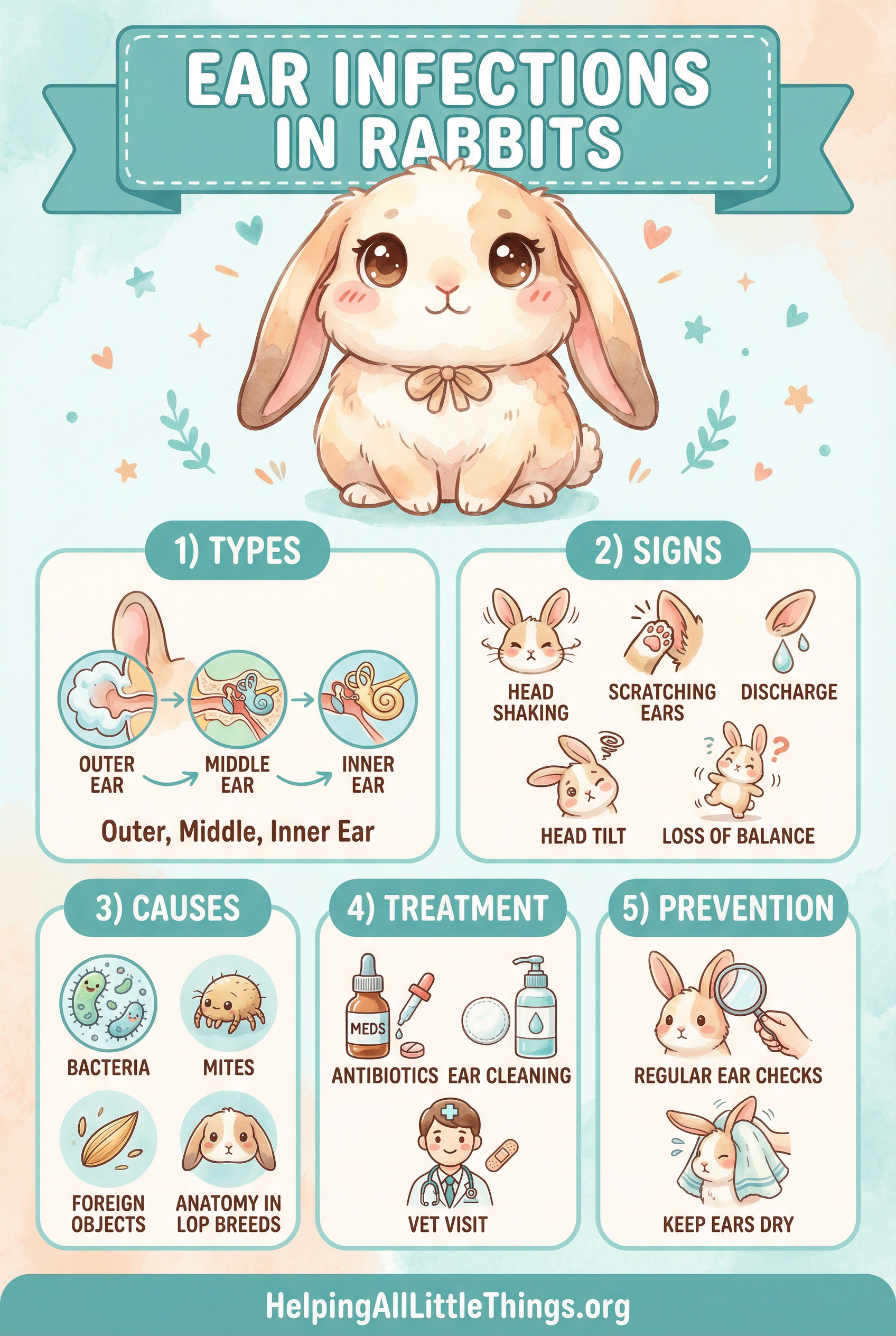

Ear infections are a relatively common health issue in rabbits and can cause significant discomfort if left untreated. Rabbits have delicate ear structures, and infections can affect the outer, middle, or inner ear — each with different causes and consequences. Early detection and treatment are essential to prevent the infection from spreading and causing permanent damage.
Types of Ear Infections
| Type | Location | Common Causes | Key Signs |
|---|---|---|---|
| Otitis externa | Outer ear canal | Ear mites, bacteria, yeast | Scratching, head shaking, discharge |
| Otitis media | Middle ear | Bacterial spread from outer ear or respiratory tract | Head tilt, balance issues |
| Otitis interna | Inner ear | Extension of middle ear infection | Severe head tilt, rolling, nystagmus |
Inner ear infections are the most serious and can cause permanent neurological damage if untreated.
Causes
- Bacterial infection — Pasteurella multocida is the most common bacterial cause of ear infections in rabbits, often spreading from the upper respiratory tract via the Eustachian tube[1]
- Ear mites (Psoroptes cuniculi) — these mites cause intense irritation and thick, crusty deposits in the ear canal, which can lead to secondary bacterial infection
- Foreign objects — hay, bedding, or debris lodged in the ear canal can cause irritation and infection
- Anatomy — lop-eared breeds are particularly predisposed because their folded ear canals trap wax and debris more easily
- Dental disease — the roots of upper cheek teeth are anatomically close to the ear canal; dental abscesses can spread to the ear
- Weakened immune system — immunocompromised rabbits are more susceptible to all infections
Signs and Symptoms
- Head shaking — persistent or frequent
- Scratching at the ears — particularly one ear
- Discharge — waxy, brown, or purulent (pus-like) discharge from the ear canal
- Odour — infected ears often have a noticeable smell
- Redness or swelling of the ear canal or pinna (ear flap)
- Head tilt — suggests middle or inner ear involvement
- Loss of balance or rolling — suggests inner ear involvement
- Nystagmus — rapid, involuntary eye movements
- Reduced appetite — pain and disorientation can suppress eating
A rabbit with a sudden head tilt, rolling, or inability to right itself requires urgent veterinary attention. Inner ear infections can rapidly worsen and are difficult to distinguish from neurological conditions like E. cuniculi without examination.
Diagnosis
A veterinarian will typically:
- Otoscopic examination — visualize the ear canal and eardrum
- Ear swab and culture — identify the causative organism and determine antibiotic sensitivity
- Skull radiographs or CT scan — to assess the middle ear (bulla) for fluid, thickening, or abscess formation
- Neurological assessment — if head tilt or balance issues are present
- Dental examination — to rule out dental disease as a contributing cause
Treatment
Treatment depends on the type and severity of infection:
- Topical ear drops — antibiotic and/or antifungal drops for outer ear infections; must be used as directed for the full course
- Systemic antibiotics — essential for middle and inner ear infections; commonly used antibiotics include enrofloxacin, trimethoprim-sulfamethoxazole, or penicillin (by injection only — oral penicillin is toxic to rabbits)[2]
- Ear mite treatment — ivermectin or selamectin (Revolution) applied topically; the environment must also be treated
- Pain management — meloxicam or other NSAIDs to reduce pain and inflammation
- Surgical intervention — severe or chronic middle ear infections may require bulla osteotomy (surgical drainage of the middle ear)
- Supportive care — assisted feeding, padded enclosure for rabbits with balance issues
Treatment courses for middle and inner ear infections are often prolonged (4–8 weeks or longer) and require regular monitoring.
Prevention
- Regular ear checks — examine your rabbit's ears weekly for wax buildup, discharge, or odour
- Keep ears dry — avoid getting water in the ears during grooming
- Treat ear mites promptly — if you notice dark, crusty deposits in the ear canal, consult a vet immediately
- Quarantine new rabbits before introducing them to resident rabbits
- Maintain dental health — regular dental checks help prevent dental abscesses that can spread to the ear
- Reduce stress — a healthy immune system is the best defence against infection
For more information on neurological signs that can accompany inner ear infections, see our article on Neurologic Issues in Rabbits.
References
[1] Harcourt-Brown, F. (2002). Textbook of Rabbit Medicine. Butterworth-Heinemann.
[2] Quesenberry, K.E., Mans, C., & Orcutt, C.J. (2020). Ferrets, Rabbits, and Rodents: Clinical Medicine and Surgery (4th ed.). Elsevier.
[3] Varga, M. (2013). Textbook of Rabbit Medicine (2nd ed.). Butterworth-Heinemann.
[4] Snyder, S.B., Fox, J.G., & Soave, O.A. (1973). Mortalities associated with otitis media/interna and encephalitozoonosis in a commercial rabbit breeding operation. Laboratory Animal Science, 23(4), 580–586.