E. cuniculi in Rabbits
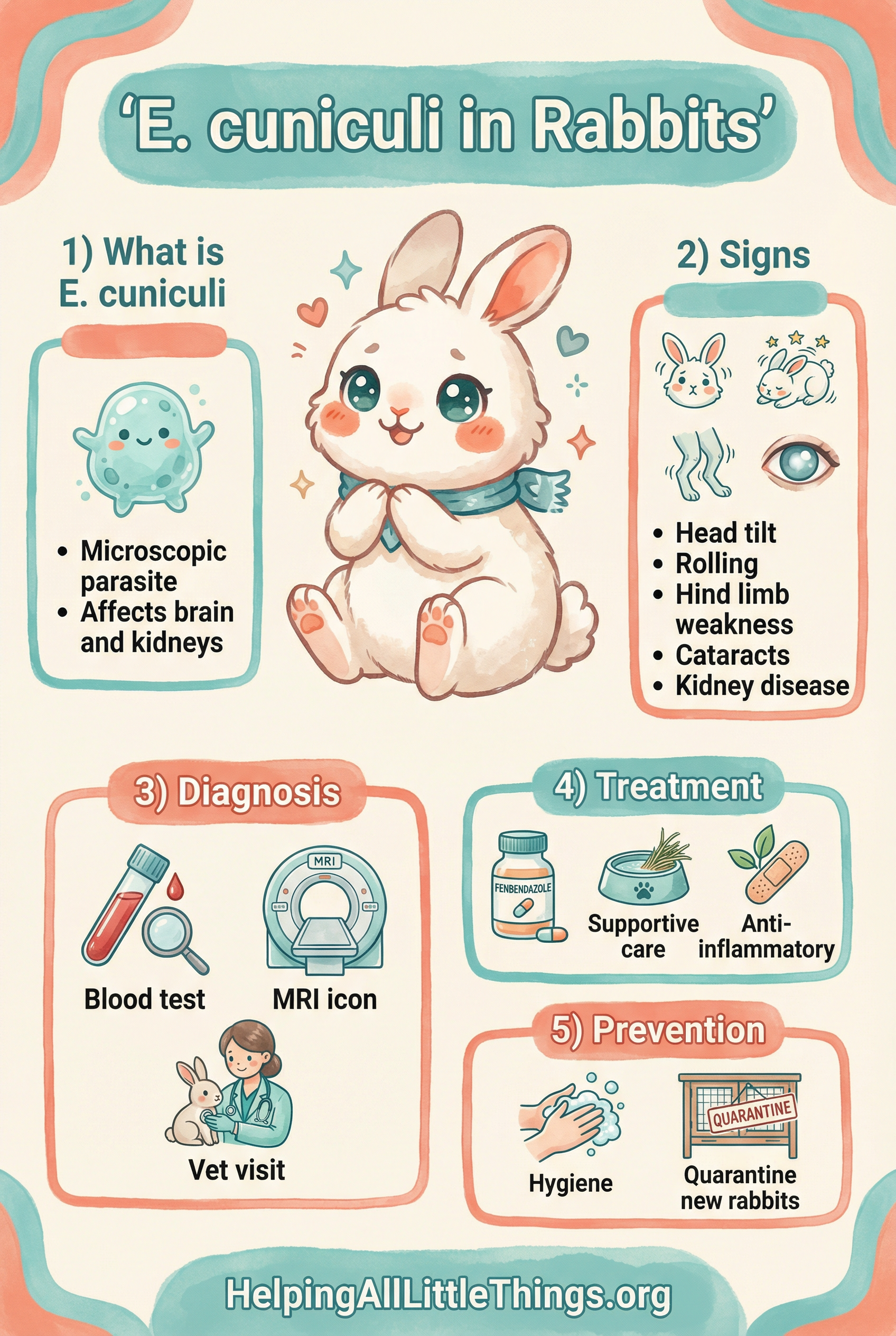

Encephalitozoon cuniculi (commonly abbreviated as E. cuniculi) is a microscopic obligate intracellular parasite that affects a significant proportion of pet rabbits worldwide. It is one of the most common causes of neurological signs in domestic rabbits and can also cause kidney disease and eye problems. Understanding E. cuniculi is essential for every rabbit owner.
What Is E. cuniculi?
E. cuniculi is a microsporidian parasite — a type of fungal-related organism — that infects cells in the brain, kidneys, and eyes. Studies suggest that 52–80% of pet rabbits have been exposed to E. cuniculi, though many remain asymptomatic carriers throughout their lives.[1] Clinical disease typically emerges when the immune system is compromised by stress, illness, or age.
Transmission
E. cuniculi is primarily transmitted through:
- Urine — infected rabbits shed spores in their urine; other rabbits become infected by ingesting or inhaling contaminated material
- Vertical transmission — from mother to offspring in utero
- Environmental contamination — spores can survive in the environment for weeks
The parasite can also infect other species including dogs, cats, and immunocompromised humans, though transmission from rabbits to healthy humans is considered low risk.[2]
Signs and Symptoms
Many infected rabbits never show clinical signs. When disease does occur, symptoms depend on which organs are affected:
Neurological signs (most common):
- Head tilt (torticollis) — often sudden onset; the head is held at an angle
- Rolling — the rabbit rolls uncontrollably, unable to right itself
- Loss of balance and coordination (ataxia)
- Hind limb weakness or paralysis
- Nystagmus — rapid, involuntary eye movements
- Seizures (less common)
Renal (kidney) signs:
- Increased thirst and urination
- Weight loss
- Lethargy
- Chronic kidney disease in older rabbits
Ocular (eye) signs:
- Cataracts — particularly in young rabbits; E. cuniculi is a leading cause of cataracts in rabbits under 3 years old
- Uveitis (inflammation inside the eye)
- Phacoclastic uveitis — rupture of the lens due to parasite-induced damage
A rabbit with sudden head tilt, rolling, or seizures should be seen by a veterinarian as an emergency. While E. cuniculi is a common cause, other serious conditions (inner ear infection, stroke) require urgent differentiation.
Diagnosis
Diagnosis can be challenging because many rabbits test positive without showing signs:
- Serology (blood test) — measures antibody levels against E. cuniculi (IgG and IgM); a positive result indicates exposure but not necessarily active disease
- Rising antibody titres — a significant rise in IgM titre suggests recent or active infection
- MRI or CT scan — can reveal brain lesions consistent with E. cuniculi infection
- Urinalysis — may show protein in the urine if kidneys are affected
- Ocular examination — slit-lamp examination can identify lens changes
A definitive diagnosis is difficult in living animals; many diagnoses are presumptive based on clinical signs and serology combined.
Treatment
There is no treatment that eliminates E. cuniculi entirely, but the following can manage the condition:
- Fenbendazole — an anti-parasitic drug that reduces spore replication; typically given at 20 mg/kg daily for 28 days[3]; some vets recommend ongoing lower-dose maintenance
- Meloxicam — a non-steroidal anti-inflammatory to reduce brain inflammation
- Corticosteroids (e.g., prednisolone) — used cautiously for severe neurological inflammation; must be balanced against immunosuppression risk
- Supportive care — padded enclosure to prevent injury during rolling episodes, assisted feeding if the rabbit cannot eat independently, physiotherapy
- Ophthalmic treatment — eye drops for uveitis; surgical lens removal may be recommended for phacoclastic uveitis
Many rabbits with head tilt improve significantly with treatment, though some degree of tilt may persist permanently.
Prevention
- Quarantine all new rabbits for a minimum of 4 weeks before introducing them to resident rabbits
- Test new rabbits for E. cuniculi antibodies before introduction if possible
- Minimize stress — a strong immune system helps keep subclinical infections from becoming clinical
- Maintain excellent hygiene — clean litter boxes daily; E. cuniculi spores are shed in urine
- Prophylactic fenbendazole — some vets recommend a 28-day course for newly acquired rabbits or after known exposure
References
[1] Keeble, E., & Shaw, D.J. (2006). Seroprevalence of antibodies to Encephalitozoon cuniculi in domestic rabbits in the United Kingdom. Veterinary Record, 158(16), 539–544.
[2] Harcourt-Brown, F., & Holloway, H. (2003). Encephalitozoon cuniculi in pet rabbits. Veterinary Record, 152(14), 427–431.
[3] Suter, C., Müller-Doblies, U.U., Hatt, J.M., & Deplazes, P. (2001). Prevention and treatment of Encephalitozoon cuniculi infection in rabbits with fenbendazole. Veterinary Record, 148(15), 478–480.
[4] Quesenberry, K.E., Mans, C., & Orcutt, C.J. (2020). Ferrets, Rabbits, and Rodents: Clinical Medicine and Surgery (4th ed.). Elsevier.