Coccidia in Rabbits
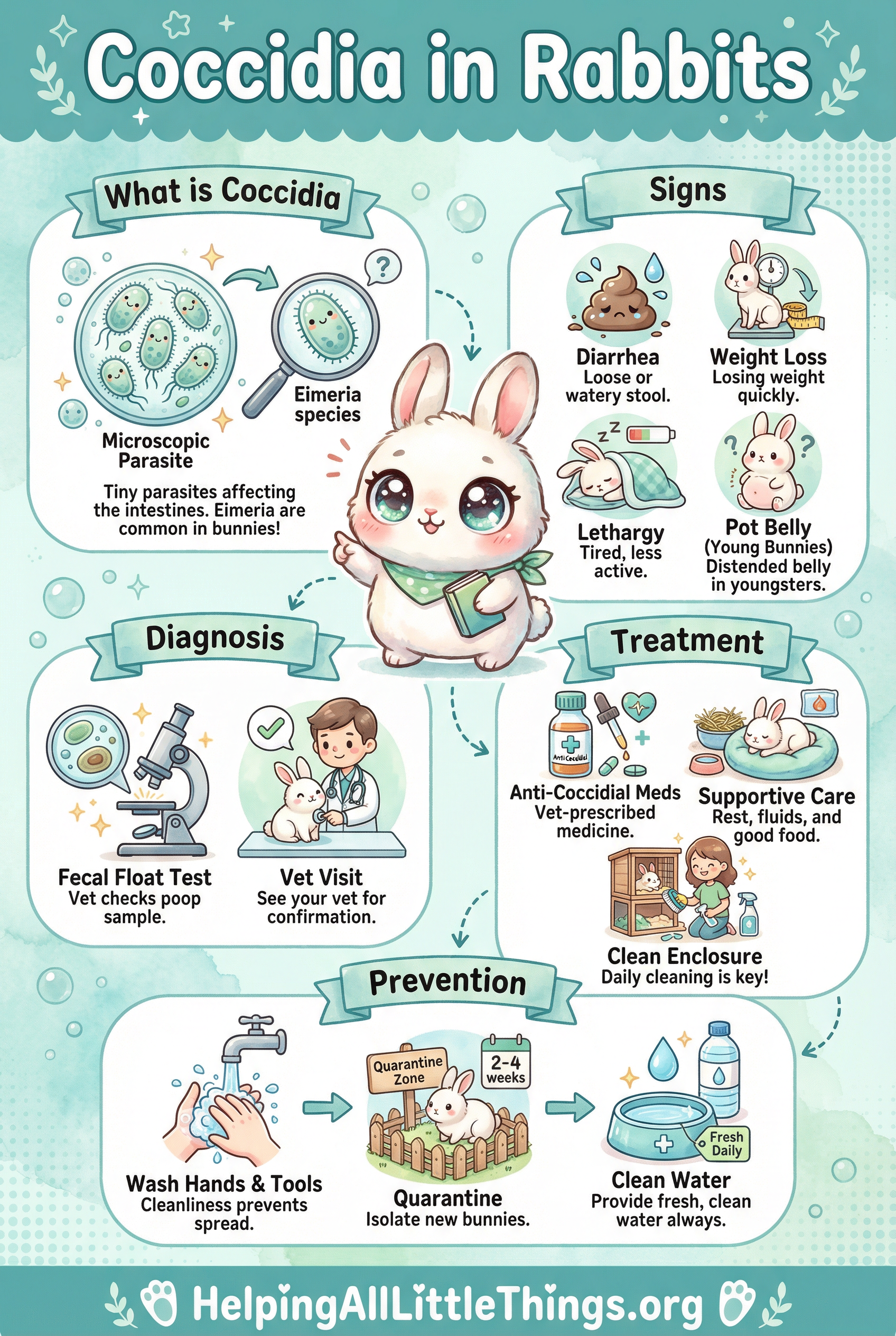

Coccidia are microscopic protozoan parasites that can infect rabbits, causing a condition known as coccidiosis. While often overlooked, coccidiosis can have serious consequences — particularly for young, stressed, or immunocompromised rabbits. Understanding the signs and how to prevent and treat the infection is essential for every rabbit owner.
What Are Coccidia?
Coccidia are single-celled parasites belonging to the genus Eimeria. Rabbits are susceptible to several species of Eimeria, with Eimeria stiedai (which infects the liver) and intestinal species (such as E. magna, E. perforans, and E. irresidua) being the most clinically significant.[1]
Infection occurs when a rabbit ingests oocysts (the infective stage of the parasite) from contaminated food, water, bedding, or surfaces. Oocysts are shed in the feces of infected rabbits and can survive in the environment for weeks to months.
Who Is Most at Risk?
- Young rabbits (under 6 months) — their immune systems are not yet fully developed
- Newly acquired rabbits — stress of rehoming weakens immunity
- Rabbits in overcrowded or unsanitary conditions
- Immunocompromised rabbits — those with other illnesses or on long-term corticosteroids
- Rabbits recently weaned — the transition from maternal milk removes passive immunity
Adult rabbits in good health often carry low levels of coccidia without showing clinical signs, acting as subclinical carriers.
Signs and Symptoms
Symptoms vary depending on the species of Eimeria involved and the severity of infection:
Intestinal coccidiosis:
- Diarrhea (ranging from soft cecotropes to watery or bloody stool)
- Weight loss
- Lethargy and reduced appetite
- Pot-bellied appearance (especially in young rabbits)
- Dehydration
- In severe cases, death
Hepatic coccidiosis (E. stiedai):
- Lethargy and anorexia
- Jaundice (yellowing of the skin and eyes)
- Enlarged abdomen
- Weight loss
- Liver failure in severe, untreated cases
Hepatic coccidiosis can be fatal if untreated. A rabbit showing jaundice, severe lethargy, or rapid weight loss should be seen by a veterinarian immediately.
Diagnosis
A veterinarian will typically diagnose coccidiosis through:
- Fecal flotation test — a stool sample is examined under a microscope to identify Eimeria oocysts
- Physical examination — assessing body condition, hydration, and abdominal palpation
- Blood chemistry panel — to assess liver function if hepatic coccidiosis is suspected
- Ultrasound or radiograph — may reveal liver enlargement in hepatic cases
Note that finding oocysts in a fecal sample does not always indicate clinical disease — low oocyst counts in healthy adult rabbits are common. Clinical signs alongside oocyst counts help determine whether treatment is warranted.
Treatment
Treatment should always be guided by a veterinarian:
- Sulfonamide antibiotics (e.g., sulfadimethoxine, trimethoprim-sulfamethoxazole) — the most commonly used anti-coccidial medications in rabbits[2]
- Toltrazuril — an effective anti-coccidial drug used in some countries; consult your vet for availability
- Supportive care — fluid therapy for dehydrated rabbits, nutritional support, and a warm, quiet recovery space
- Enclosure deep-clean — oocysts must be eliminated from the environment; steam cleaning and thorough disinfection are essential as most standard disinfectants do not kill coccidia oocysts
Treatment duration is typically 5–10 days depending on the medication used and severity of infection.
Prevention
- Maintain excellent hygiene — clean litter boxes and enclosures daily; remove soiled bedding promptly
- Prevent fecal contamination of food and water — use elevated food bowls and sipper-style water bottles
- Quarantine new rabbits for a minimum of 4 weeks before introducing them to resident rabbits
- Reduce stress — stress is a major trigger for clinical coccidiosis in subclinical carriers
- Avoid overcrowding — high rabbit density increases environmental oocyst load
- Regular fecal testing — annual fecal checks help identify subclinical infections before they become clinical
References
[1] Pakandl, M. (2009). Coccidia of rabbit: a review. Folia Parasitologica, 56(3), 153–166.
[2] Harcourt-Brown, F. (2002). Textbook of Rabbit Medicine. Butterworth-Heinemann.
[3] Quesenberry, K.E., Mans, C., & Orcutt, C.J. (2020). Ferrets, Rabbits, and Rodents: Clinical Medicine and Surgery (4th ed.). Elsevier.
[4] Varga, M. (2013). Textbook of Rabbit Medicine (2nd ed.). Butterworth-Heinemann.