Understanding Rabbit Behavior: A Guide for Owners
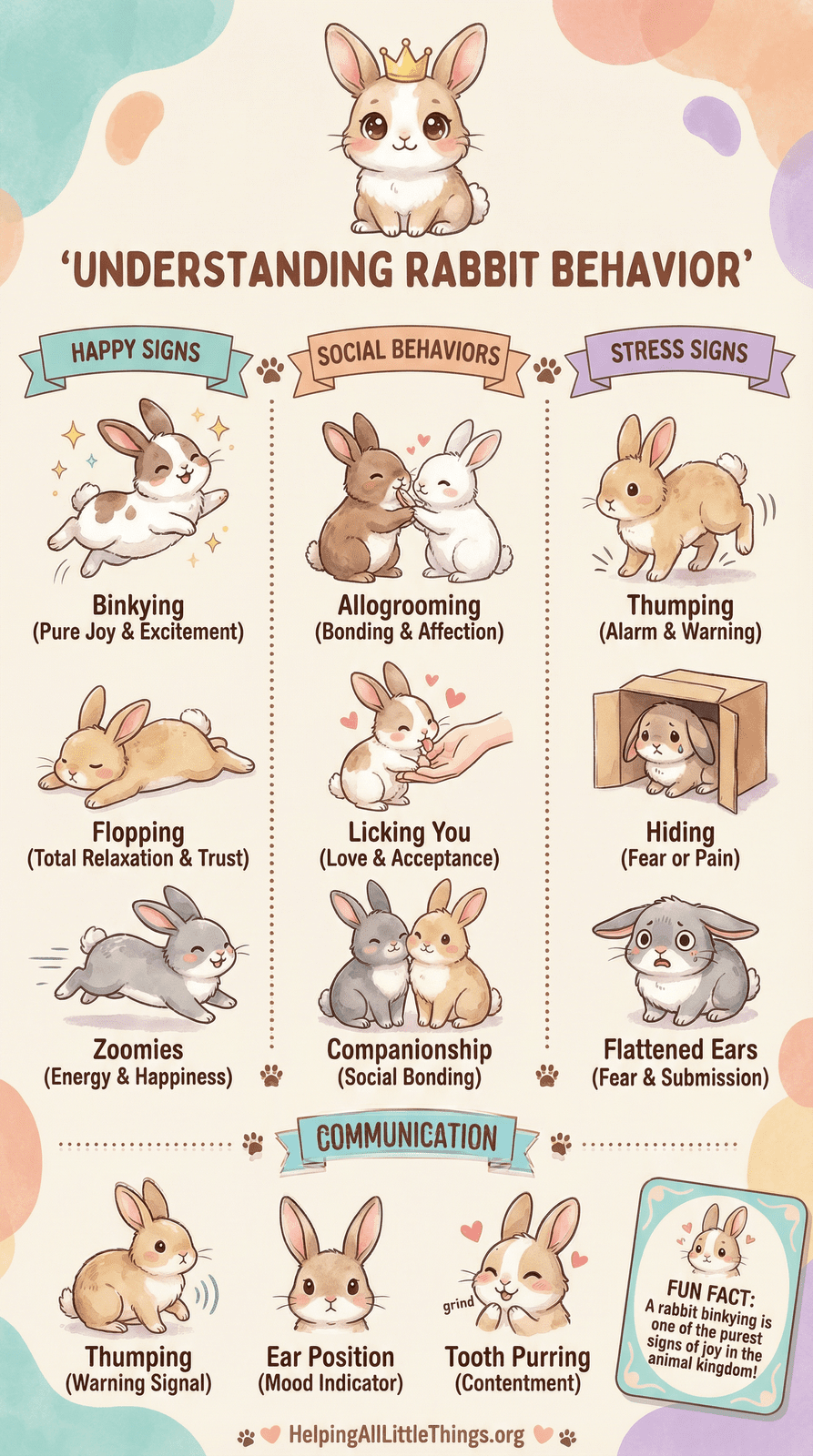

Rabbits are highly expressive animals whose body language is subtle but rich. Unlike dogs or cats, rabbits communicate primarily through posture, ear position, and movement — and their vocalizations are relatively quiet. Understanding what your rabbit is communicating is key to building a trusting relationship and catching health problems early.
Common Rabbit Body Language
| Behavior | Common Meaning(s) | Context & Interpretation |
|---|---|---|
| Binkying | Pure Joy & Happiness | A binky is a joyful leap into the air with a mid-air twist or kick. It is one of the clearest signs that a rabbit is happy and feels safe. [1] |
| Flopped on Side | Deep Relaxation | A rabbit flopped completely on their side, sometimes with eyes closed, is deeply relaxed and content. New owners often panic — but a healthy flop is a wonderful sign. [1] |
| Thumping | Alarm, Warning | Rabbits thump a hind foot on the ground to signal danger or express displeasure. It is a communication to both humans and other rabbits. [1] |
| Chinning | Territorial Marking | Rabbits have scent glands under their chin and will rub objects to mark them as "theirs." This is normal and harmless. [1] |
| Grooming You | Affection, High Trust | When a rabbit licks you, they are grooming you — a sign of deep affection and acceptance into their social group. [1] |
| Ears Flat Back | Fear, Aggression | Ears pinned tightly against the back of the head indicate fear or aggression. Combined with a tense body, this rabbit may bite. |
| Ears Upright & Forward | Alert, Curious | Upright ears scanning forward means the rabbit is alert and curious about something in their environment. |
| Nose Twitching Fast | Excited, Nervous | A rapidly twitching nose indicates heightened alertness — the rabbit is processing a lot of scent information. |
| Circling Your Feet | Affection, Hormonal Behavior | Circling is often a sign of affection, but can also be hormonally driven. Spaying or neutering typically reduces this behavior. |
Common Rabbit Vocalizations
Rabbits are generally quiet animals, but they do vocalize — and when they do, it is worth paying attention.
| Sound | Common Meaning(s) | Context & Interpretation |
|---|---|---|
| Purring (Tooth Grinding) | Contentment | A soft, gentle tooth grinding — sometimes called "tooth purring" — while being petted or resting signals deep contentment. [1] |
| Loud Tooth Grinding | Pain, Discomfort | Loud, persistent grinding is distinct from purring and signals pain or discomfort. This requires veterinary attention. [1] |
| Honking / Oinking | Excitement, Hormonal | A soft honking or oinking sound, often accompanied by circling, is typically a sign of excitement or hormonal behavior. |
| Growling | Warning, Aggression | A growl is a clear warning. The rabbit is telling you — or another animal — to back off. |
| Screaming | Extreme Pain or Terror | A rabbit scream is rare and alarming. It signals extreme pain or terror and requires immediate attention. |
Social Behavior and Bonding
Rabbits are social animals that do best in bonded pairs or groups. A bonded pair will groom each other, sleep together, and provide companionship that no human can fully replace. The bonding process requires patience and a neutral space — rabbits are territorial and introductions must be done carefully.
Signs of a well-bonded pair include mutual grooming, sleeping side by side or on top of each other, and eating together without tension.
Signs of a Happy and Healthy Rabbit
A happy rabbit is active during dawn and dusk (their natural peak activity times), curious about their environment, and eager for food and interaction. They will binky, explore, and seek out their bonded partner for grooming. Their eyes should be bright and clear, their coat smooth, and their droppings plentiful and well-formed.
Signs of Stress, Fear, or Pain
Rabbits are prey animals and hide illness instinctively. Warning signs include:
- GI stasis — a sudden reduction or stop in eating and droppings is a medical emergency
- Hunched posture, reluctance to move
- Grinding teeth loudly
- Sitting in a hunched "loaf" position with eyes half-closed
- Excessive hiding or sudden aggression
- Head tilt (can indicate ear infection or neurological issue)
GI stasis in particular can be fatal within hours. If your rabbit stops eating, contact a rabbit-savvy vet immediately.
References
[1] House Rabbit Society. (2023). Reading Your Rabbit's Behavior. Retrieved from https://rabbit.org/behavior/reading-your-rabbits-behavior/