The Importance of Vaccinating Your Rabbit Against RVHD2
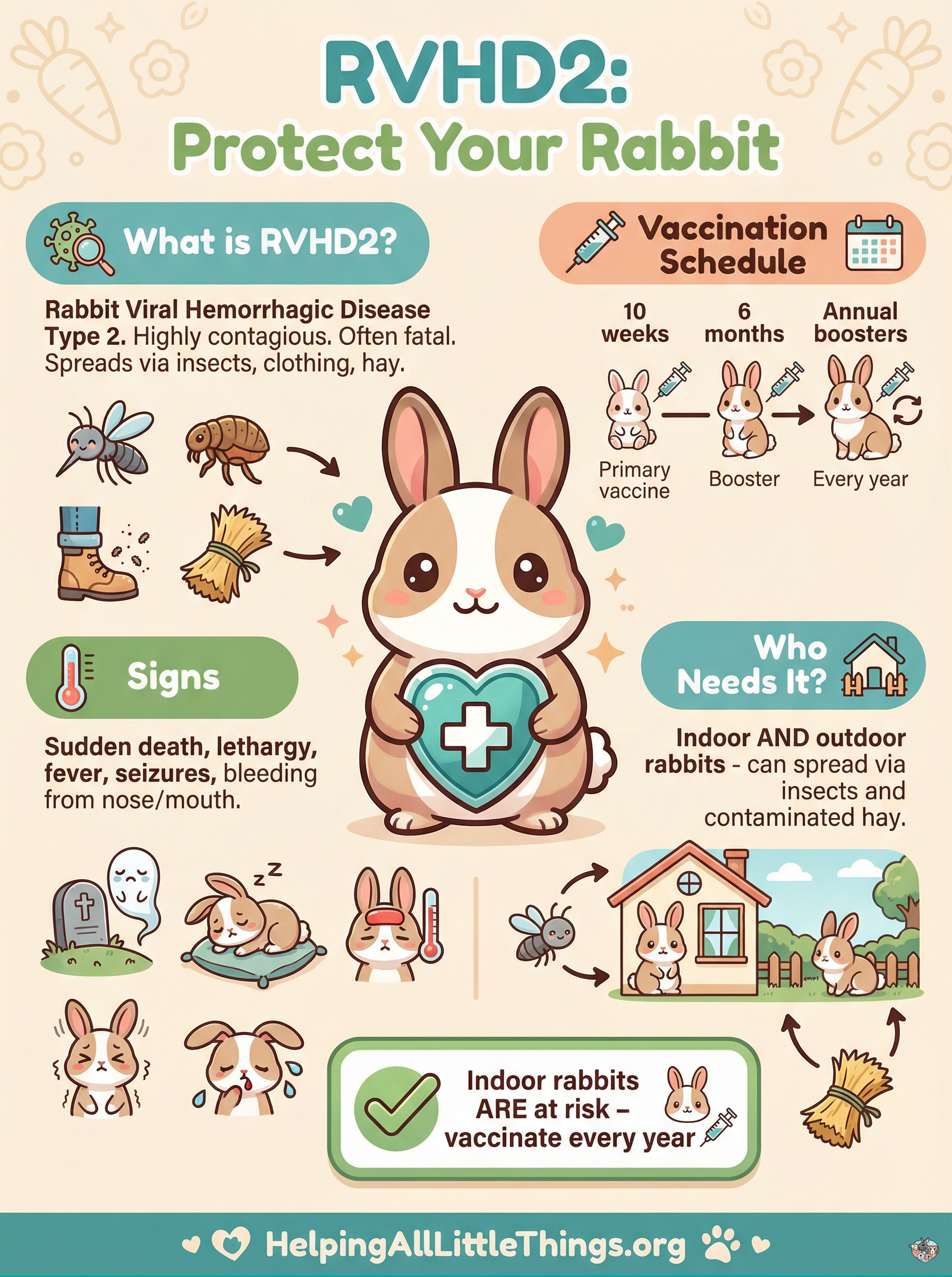

As a responsible rabbit owner, safeguarding your companion from preventable diseases is a top priority. One of the most serious threats to domestic rabbits today is Rabbit Hemorrhagic Disease Virus 2 (RHDV2), a highly contagious and often fatal virus. Understanding this disease and the critical importance of vaccination is essential for every rabbit owner.
What is RHDV2?
RHDV2 is a calicivirus that causes a deadly disease in both wild and domestic rabbits. Unlike the original strain (RHDV1), which primarily affected adult rabbits, RHDV2 can sicken and kill rabbits of any age [1]. The virus has a high mortality rate, with some studies showing it can be fatal in 5% to over 90% of cases [2].
One of the most frightening aspects of RHDV2 is its sudden onset. Many infected rabbits die suddenly without showing any prior signs of illness [2].
Symptoms and Transmission
The incubation period for RHDV2 is typically three to nine days [2]. When symptoms do appear, they can be vague and progress rapidly. They include:
- Sudden death
- Lethargy and loss of appetite
- Neurological signs (e.g., seizures, paralysis)
- Respiratory issues
- Hemorrhage (bleeding from the nose or mouth) [2]
RHDV2 is incredibly resilient and spreads easily through various means:
- Direct Contact: Between infected and healthy rabbits.
- Contaminated Objects: The virus can survive for long periods on surfaces like hay, food bowls, bedding, and cages [3].
- Humans and Other Animals: People can carry the virus on their clothes, shoes, and hands. Other pets can also act as carriers.
- Insects: Flies and other insects can transport the virus from an infected animal to a healthy one [3].
Because the virus is so hardy and can travel in so many ways, even indoor-only rabbits are at significant risk.
Why Vaccination is Your Rabbit's Best Defense
There is no specific antiviral treatment or cure for RHDV2 [3]. While supportive care can be attempted, the disease progresses so quickly that it is rarely successful. Vaccination is the single most effective tool you have to protect your rabbit from this devastating disease [4].
Vaccines stimulate the rabbit's immune system to produce antibodies against the virus, providing a strong defense if they are ever exposed. Talk to your rabbit-savvy veterinarian about the appropriate vaccination schedule for your bunny.
Quick biosecurity checklist: Keep your rabbit's vaccination up to date annually. Quarantine any new rabbit for at least 14 days. Avoid bringing in hay or greens from areas where wild rabbits have been present. Wash hands before and after handling rabbits from different households.
Beyond Vaccination: Biosecurity Measures
While vaccination is the cornerstone of prevention, good biosecurity practices can further reduce the risk of exposure:
- Quarantine: Always quarantine new rabbits for at least 14 days before introducing them to your existing pets.
- Pest Control: Use fly screens and take measures to control insects around your rabbit's living area.
- Disinfection: Clean and disinfect enclosures, bowls, and toys regularly. A 10% bleach solution (1 part bleach to 9 parts water) is an effective disinfectant against RHDV2 [3].
- Avoid Foraging: Do not feed your rabbit grass or plants from areas where wild rabbits may have been present.
By combining vaccination with smart biosecurity, you can provide your beloved rabbit with the best possible protection against RHDV2.
References
[1] Rabbit Hemorrhagic Disease — USDA APHIS, Unknown
[2] Rabbit hemorrhagic disease — AVMA, Unknown
[3] Rabbit Hemorrhagic Disease Virus (RHDV/RHDV2) — Shelter Medicine, University of Wisconsin-Madison, 2023
[4] Rabbit Hemorrhagic Disease Virus | Cornell Wildlife Health Lab — Cornell Wildlife Health Lab, Unknown