Gastrointestinal (GI) Health in Rabbits
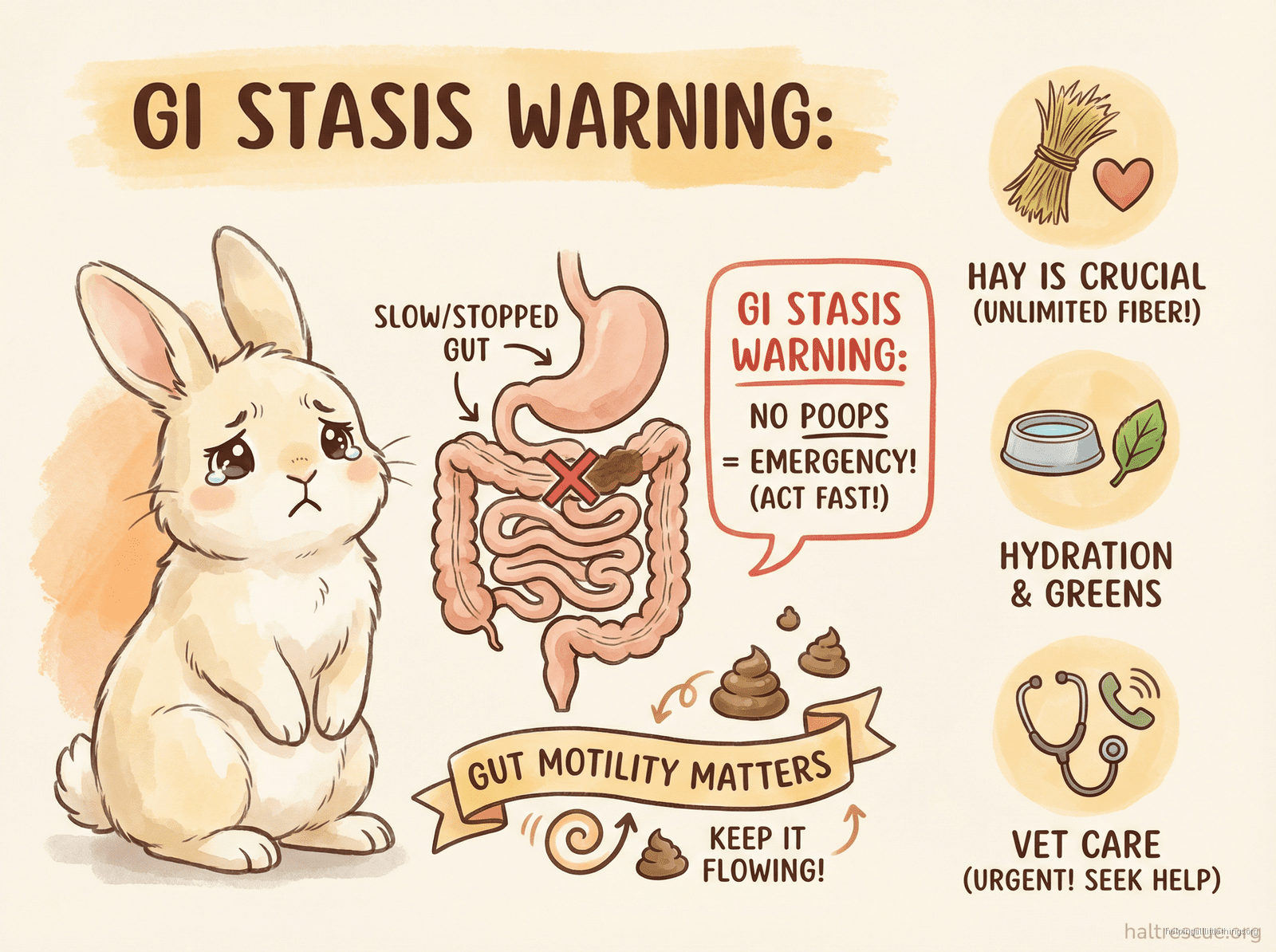

The gastrointestinal (GI) tract is the center of a rabbit's universe. Their health and well-being are inextricably linked to the proper functioning of their incredibly complex and sensitive digestive system. GI problems, particularly GI stasis, are the most common reason pet rabbits require emergency veterinary care. A deep understanding of their digestive needs is not optional for a rabbit owner—it is essential.
The Rabbit Gut: A High-Fiber Engine
Rabbits are hindgut fermenters. They are designed to thrive on a diet of high-fiber, low-nutrient vegetation. The key to this system is the cecum, a large pouch where beneficial bacteria break down indigestible fiber into vital nutrients. This system has two crucial requirements:
- Constant Motility: The gut must always be moving. This movement, called peristalsis, is stimulated by the intake of long-strand fiber from hay.
- A Balanced Microbiome: The cecum's bacterial population is finely tuned. The wrong foods (especially those high in sugar or starch) can disrupt this balance, allowing harmful bacteria to overgrow.
Emergency 1: GI Stasis
GI stasis is a condition where the normal muscular contractions of the intestines slow down or stop completely. It is a functional shutdown of the gut, not a physical blockage. A rabbit that has not eaten or pooped in 12 hours is a medical emergency.
-
Causes:
- Low-Fiber Diet: This is the number one cause. Insufficient hay intake fails to stimulate the gut.
- Pain: Pain from any other condition (dental disease, arthritis, a bladder stone) is a powerful trigger for stasis.
- Stress: Fear, a change in environment, or the loss of a bonded partner can cause the gut to shut down.
- Dehydration.
-
Signs:
- Loss of Appetite: Refusing to eat, especially their favorite greens or treats, is a major red flag.
- Changes in Fecal Pellets: The first sign is often small, misshapen, or dark fecal pellets. This progresses to a complete absence of pellets.
- Lethargy and Hiding: The rabbit will be quiet, hunched, and unwilling to move.
- Pain: A hunched posture and loud tooth grinding (bruxism) are clear signs of severe pain.
-
Action: This is a critical emergency requiring immediate veterinary care. Treatment is intensive and includes pain medication, fluid therapy (IV or subcutaneous), drugs to stimulate gut motility, and supportive syringe-feeding with a critical care formula.
Emergency 2: Bloat
Bloat is an acute, painful, and rapidly fatal condition where the stomach fills with gas and fluid. The distended stomach can twist on itself (torsion), cutting off blood supply and leading to shock and death in a matter of hours.
-
Causes: The exact cause is not always known, but it is often linked to a blockage or a sudden change in the gut environment.
-
Signs: The onset is sudden and dramatic.
- A visibly distended, hard abdomen.
- Extreme pain, often causing the rabbit to press its stomach to the floor or be unable to get comfortable.
- Severe lethargy and collapse.
- Rapid, shallow breathing.
-
Action: This is one of the most dire emergencies a rabbit can face. Go to an emergency vet immediately. The prognosis is extremely poor, and even with emergency surgery to decompress the stomach, many rabbits do not survive.
Prevention: It's All About the Hay
Almost all GI disease in rabbits is preventable through diet.
- Unlimited Grass Hay: A rabbit's diet must be 80-90% high-quality grass hay (timothy, orchard, meadow, etc.). This provides the fiber that keeps the gut moving and the teeth worn down.
- Limited, High-Fiber Pellets: Feed a small, measured amount of a timothy-hay-based pellet.
- Fresh Leafy Greens: A cup of appropriate greens provides hydration and nutrients.
- No High-Carbohydrate/High-Sugar Treats: Items like bread, crackers, seeds, and most commercial yogurt drops are dangerous and can disrupt the gut.
- Constant Access to Fresh Water: Hydration is key to gut motility.
Daily monitoring of your rabbit's appetite and fecal output is the most powerful tool you have to catch GI problems at their earliest, most treatable stage.