Dental Health in Rabbits
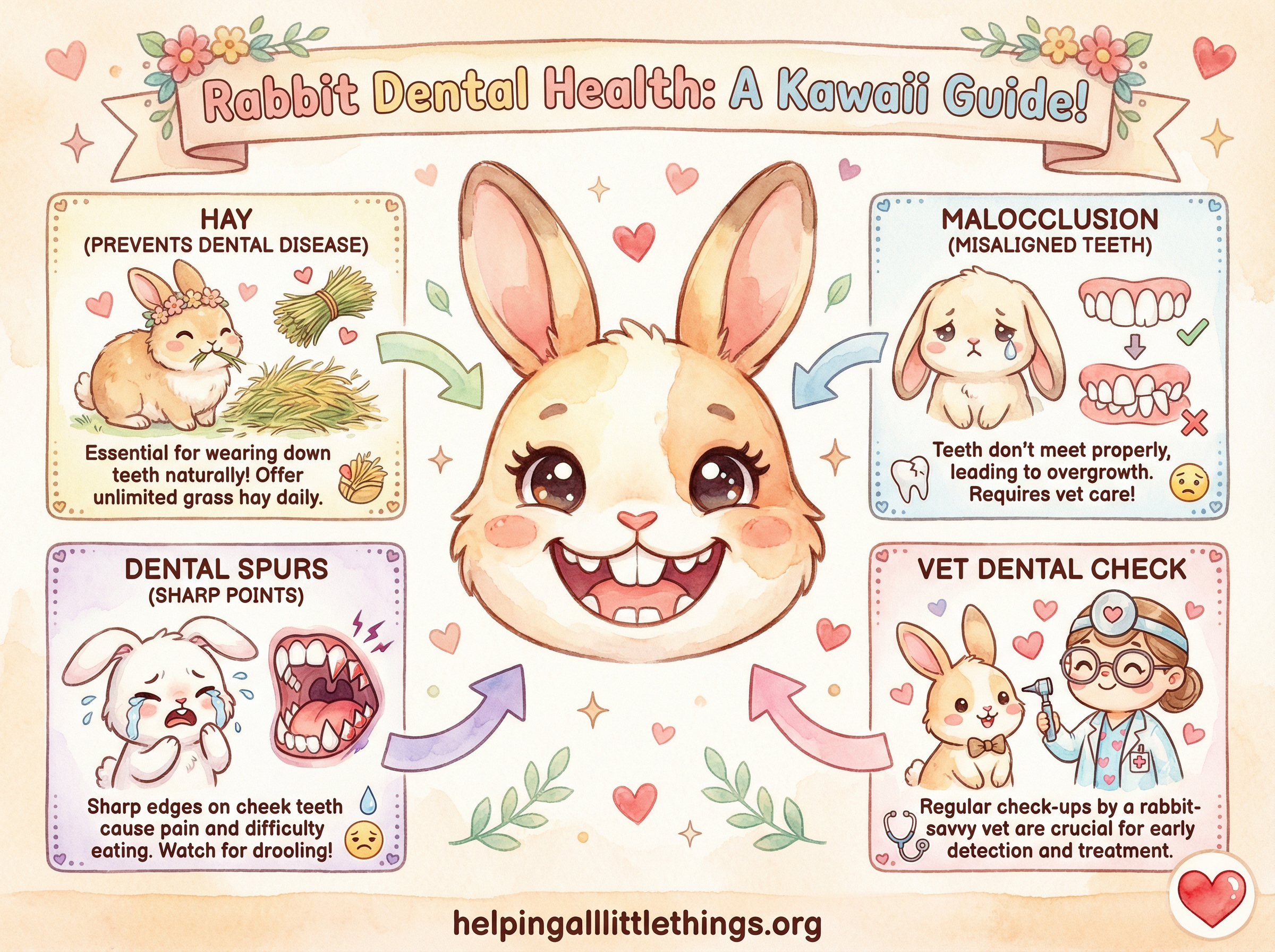

Dental disease is arguably the most common and preventable health problem seen in pet rabbits. It is a painful and progressive condition that significantly impacts a rabbit's quality of life. A thorough understanding of their unique dental anatomy and dietary needs is essential for every rabbit owner.
Built for Grinding: Rabbit Dental Anatomy
Rabbits have elodont dentition, meaning their teeth grow continuously throughout their lives—at a rate of up to 3-4 millimeters per week! This includes their 6 incisors (front teeth) and 22 molars (cheek teeth).
In the wild, this constant growth is managed by the abrasive nature of their diet, which consists of tough grasses and other vegetation. The side-to-side grinding motion required to chew these foods wears down the teeth at a rate that matches their growth. In pet rabbits, this same mechanism must be replicated with a diet based on grass hay.
The Cascade of Dental Disease (Malocclusion)
Malocclusion occurs when the teeth are not worn down properly and begin to overgrow. This creates a cascade of painful problems:
- Molar Spurs: The crowns of the molars develop sharp points (spurs). The lower molars develop spurs that dig into the tongue, while the upper molars develop spurs that cut into the cheeks.
- Root Elongation: As the crowns are unable to wear down, the pressure of growth is directed backwards, causing the roots of the teeth to elongate into the jawbone and skull. This is often the most severe and painful aspect of the disease.
- Incisor Overgrowth: Problems with the molars prevent the incisors from meeting correctly, causing them to overgrow, sometimes curling back into the mouth or out between the lips.
- Abscesses: Elongated tooth roots can lead to the formation of large, painful abscesses along the jawline.
- Tear Duct Blockage: The roots of the upper incisors and molars can grow into and block the tear ducts, causing persistent watery eyes (epiphora).
Causes of Dental Disease
- Improper Diet: This is the cause in over 90% of cases. A diet low in hay and high in pellets or treats does not provide the necessary fiber or chewing action to wear the teeth down.
- Genetics: Certain breeds, particularly those with shortened faces (dwarf and lop breeds), are genetically predisposed to misalignment.
- Trauma: An injury to the jaw can disrupt the alignment of the teeth.
Recognizing the Signs of Dental Pain
Rabbits are prey animals and will hide pain until it becomes unbearable. The signs are often subtle:
- Changes in Eating Habits: Becoming picky, refusing hay, or preferring softer foods.
- Weight Loss: A key indicator of a problem.
- Drooling ("Slobbers"): Wet fur on the chin or front paws (from wiping the mouth).
- Weepy Eyes: A sign of tear duct blockage.
- Reduced Fecal Output: Smaller or fewer fecal pellets due to decreased food intake.
- Grinding Teeth (Bruxism): A loud, crunchy grinding sound is a sign of severe pain.
- Facial Swelling: Indicates a possible abscess.
Diagnosis and Lifelong Management
If you suspect dental problems, see an experienced rabbit veterinarian immediately.
- Diagnosis: A conscious oral exam can see the incisors, but evaluating the molars and roots requires sedation and skull x-rays. X-rays are essential to understand the full extent of the disease.
- Management: Dental disease is a chronic condition requiring lifelong management.
- Dental Trims/Planing: Under anesthesia, a vet will use a specialized burr to file down molar spurs. This may need to be repeated every 1-6 months.
- Incisor Trimming: Overgrown incisors will also be trimmed. Never let anyone trim incisors with nail clippers, as this can shatter the tooth.
- Tooth Extraction: In severe cases, extraction of problematic teeth may be necessary.
- Pain Management: Ongoing pain medication is crucial for quality of life.
Prevention: The Power of Hay
The only way to prevent diet-related dental disease is to feed a proper diet.
- Unlimited Grass Hay: A rabbit's diet should be at least 80-90% grass hay (timothy, orchard, meadow, etc.). It should be available 24/7.
- Limited Pellets: A small, measured amount of a high-fiber, timothy-based pellet (approx. 1/4 cup per 5 lbs of body weight).
- Fresh Greens: A small portion of leafy greens daily.
- No Sugary Treats: Avoid commercial treats, seeds, nuts, and high-sugar fruits. These discourage hay consumption.
By providing a diet that mimics a rabbit's natural grazing behavior, you are providing the best possible care for their dental and overall health.