Know Your Rabbit Breeds
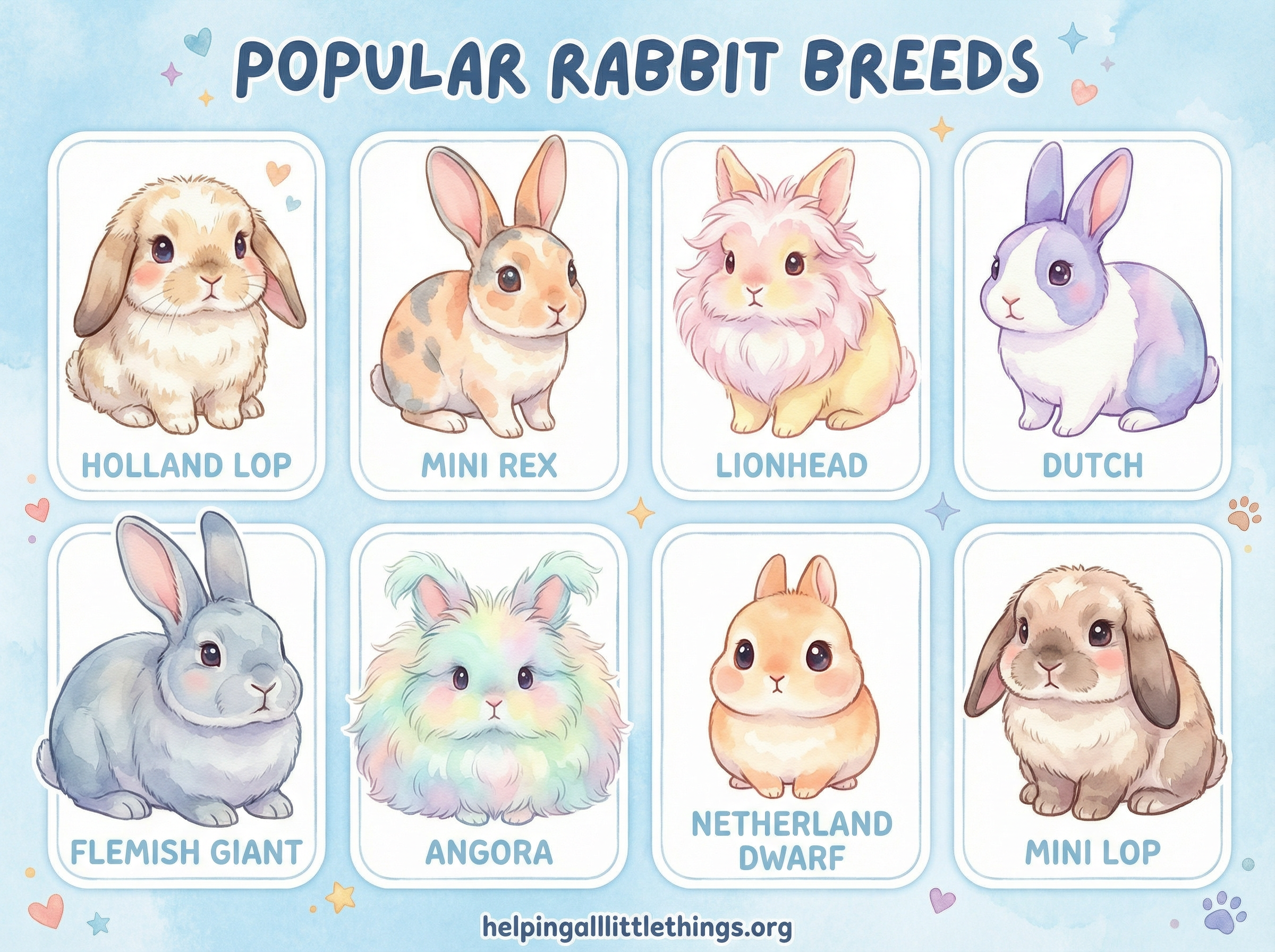

The American Rabbit Breeders Association (ARBA) officially recognizes 50 rabbit breeds, ranging from tiny 2-pound Netherland Dwarfs to massive 20-pound Flemish Giants. Each breed has distinct physical traits, temperament tendencies, and care requirements. Understanding breed differences helps you choose the right rabbit for your household and anticipate their specific needs.
Popular Pet Breeds at a Glance
| Breed | Weight | Coat | Temperament | Best For |
|---|---|---|---|---|
| Holland Lop | 2–4 lbs | Short, dense | Calm, affectionate | Families, beginners |
| Mini Rex | 3–4.5 lbs | Short, velvety | Curious, gentle | Families, children |
| Lionhead | 2.5–3.5 lbs | Short body + mane | Playful, social | Experienced owners |
| Dutch | 3.5–5.5 lbs | Short, smooth | Calm, easy-going | Beginners, families |
| Flemish Giant | 13–20+ lbs | Short, dense | Gentle, docile | Adults, spacious homes |
| Angora (English) | 5–7.5 lbs | Very long, silky | Calm, gentle | Experienced owners |
| Netherland Dwarf | 1.1–2.5 lbs | Short, soft | Active, can be shy | Adults, experienced |
| Mini Lop | 4.5–6.5 lbs | Short, dense | Playful, affectionate | Families |
| Rex | 7.5–10.5 lbs | Short, plush | Calm, motherly | Families, children |
| New Zealand White | 9–12 lbs | Short, dense | Calm, tolerant | Families, beginners |
Breed Profiles
Holland Lop
One of the most popular pet rabbit breeds, the Holland Lop is known for its distinctive lopped ears that hang close to the head and its compact, rounded body. They are generally calm and affectionate, making them excellent companions for families with children. Holland Lops require regular grooming of their dense coat and benefit greatly from daily socialization.
Mini Rex
The Mini Rex is prized for its uniquely soft, velvety coat caused by a recessive rex gene that shortens and thickens the guard hairs. They are curious, gentle rabbits that tend to enjoy human interaction. Their short coat requires minimal grooming, making them a practical choice for first-time rabbit owners.
Lionhead
The Lionhead is distinguished by a wool mane encircling the head, a result of a genetic mutation. They are playful and social but their mane requires regular brushing to prevent matting. Lionheads can be prone to wool block if they ingest too much fur, so monitoring their diet and providing ample hay is essential.
Dutch
One of the oldest recognized rabbit breeds, the Dutch is easily identified by its distinctive two-tone coloring — white forequarters with a colored rear. They are calm, easy-going rabbits that adapt well to family life. Their short coat is low-maintenance.
Flemish Giant
The Flemish Giant is one of the largest rabbit breeds in the world. Despite their imposing size, they are known as "gentle giants" — docile, patient, and tolerant of handling. They require significantly more space, food, and veterinary resources than smaller breeds, and their large size makes them unsuitable for small living spaces.
English Angora
Angora rabbits produce the finest wool of any rabbit breed. Their coat requires daily brushing to prevent severe matting and wool block, making them suitable only for committed, experienced owners. They are gentle and calm but their grooming needs are substantial.
Netherland Dwarf
The smallest ARBA-recognized breed, the Netherland Dwarf has a compact, rounded body and very short upright ears. Despite their tiny size, they are energetic and can be skittish or nippy if not handled regularly from a young age. They are better suited to adults or experienced rabbit owners than young children.
Mini Lop
Not to be confused with the Holland Lop, the Mini Lop is larger and has a more muscular build. They are playful, affectionate, and tend to enjoy being held. Their dense coat benefits from weekly brushing.
Coat Types & Grooming Requirements
| Coat Type | Examples | Grooming Frequency |
|---|---|---|
| Short/smooth | Dutch, Mini Rex, New Zealand | Weekly brushing |
| Dense/plush | Holland Lop, Mini Lop, Rex | Weekly brushing; more during shedding |
| Long/wool | Angora, Jersey Wooly | Daily brushing; professional trimming recommended |
| Mane | Lionhead | Daily mane brushing; body weekly |
Choosing the Right Breed
When selecting a rabbit breed, consider:
- Space available — Giant breeds need large enclosures and exercise areas
- Time for grooming — Long-coated breeds require significant daily commitment
- Household composition — Some breeds (Netherland Dwarf) are better suited to adults; others (Dutch, Mini Rex) are more tolerant of children
- Experience level — Beginners do best with calm, short-coated breeds like Dutch or Mini Rex