Diabetes in Pet Mice
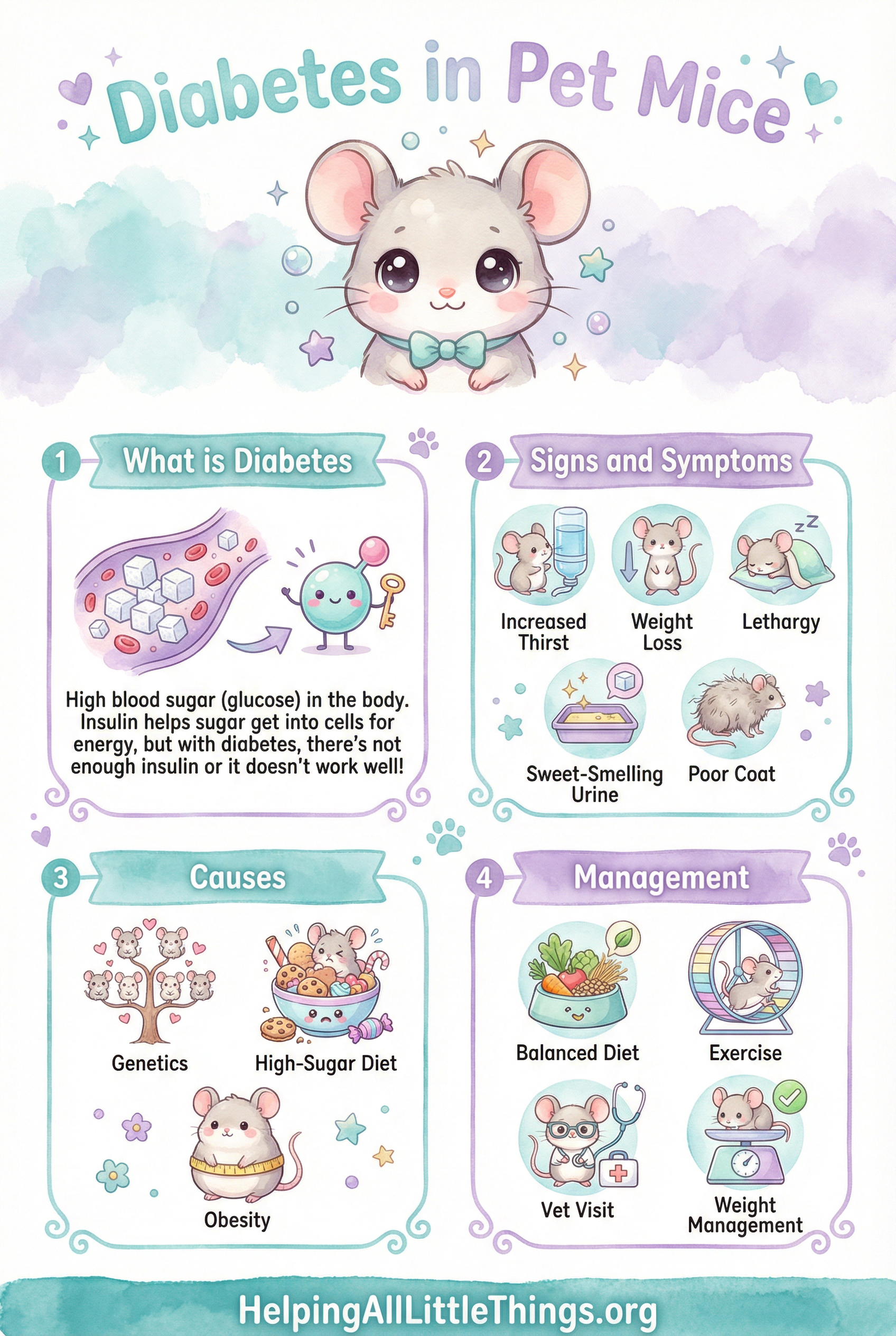

Diabetes is a chronic metabolic condition that can affect pet mice, though it is less commonly diagnosed than in some other small animals. Because mice are small and adept at hiding signs of illness, diabetes can go undetected until it has progressed significantly. Understanding the signs and risk factors helps owners seek veterinary care early and manage the condition effectively.
What Is Diabetes in Mice?
Diabetes mellitus is a metabolic disorder in which the body cannot properly regulate blood glucose (sugar) levels. Insulin, produced by the pancreas, normally allows cells to absorb glucose for energy. In diabetes, either insufficient insulin is produced or the body's cells fail to respond to it, causing glucose to accumulate in the bloodstream.
Certain strains of mice are well known in research for their genetic predisposition to diabetes — including the AKR and C57BL/6J strains — but pet mice of any background can develop the condition, particularly when diet and lifestyle factors are unfavorable.[1]
Causes and Risk Factors
Diabetes in pet mice is typically multifactorial:
- Genetics — some mice have a hereditary predisposition to impaired insulin function
- Diet — a high-sugar, high-fat diet significantly increases risk; commercial seed mixes with dried fruit, sweet treats, or excessive carbohydrates are common culprits
- Obesity — excess body fat promotes insulin resistance
- Age — older mice (18+ months) are at higher risk
- Inactivity — mice without adequate exercise opportunities are more prone to obesity and metabolic disorders
- Stress — chronic stress can disrupt blood glucose regulation
Signs and Symptoms
Because mice are prey animals that instinctively hide illness, diabetes can be difficult to detect early. Watch for:
- Increased thirst — drinking noticeably more water than usual; water bottle emptying faster
- Increased urination — wet, heavily soiled bedding; frequent urination
- Weight loss despite normal or increased appetite
- Increased appetite — eating more as cells are starved of energy
- Lethargy — less active, sleeping more, reduced interest in play and exploration
- Sweet or fruity-smelling urine — elevated glucose in urine
- Poor coat condition — dull, rough, or unkempt fur
- Slow wound healing
Unlike hamsters, mice do not commonly develop cataracts as a sign of diabetes. The most reliable early indicators are increased thirst, increased urination, and unexplained weight loss.
Diagnosis
If you suspect your mouse has diabetes, consult a veterinarian experienced with small animals. Diagnostic steps include:
- Urine glucose test — a dipstick test on a urine sample; a non-invasive first screen
- Blood glucose measurement — a small blood sample (from the tail vein) to measure glucose directly
- Physical examination — assessing body condition, hydration, and overall health
- Blood chemistry panel — to assess kidney and liver function and rule out other conditions
A proper veterinary diagnosis is essential, as diabetes symptoms overlap with other conditions including kidney disease and infections.
Management
There is no cure for diabetes in mice, but the condition can be managed to improve quality of life:
Dietary Adjustments
- Remove all sugary foods — no dried fruit, sweet treats, honey, or high-carbohydrate additions
- Feed a balanced, nutritionally complete diet — high-quality commercial mouse pellets or lab blocks provide the best nutritional balance
- Offer fresh vegetables in small amounts — leafy greens, cucumber, broccoli (avoid sweet vegetables like corn and carrots)
- High-protein treats in moderation — small pieces of cooked egg or plain cooked chicken
- Provide constant access to fresh water
Exercise and Enrichment
- Ensure your mouse has a solid-surface wheel (6–8 inches) for nightly exercise
- Provide tunnels, hides, and foraging opportunities to encourage activity
- Allow supervised free-roaming time in a safe area
Weight Management
- Weigh your mouse weekly using a small kitchen scale; track trends over time
- Adjust food portions if your mouse is overweight
Veterinary Monitoring
- Regular check-ups every 3–6 months
- Periodic urine or blood glucose monitoring
- Assessment for complications (kidney disease, infections)
Medical Treatment
- Insulin therapy is rarely used in mice due to the extreme difficulty of administration at such small doses
- A veterinarian may recommend supportive care for complications
Prognosis
With dietary management and regular monitoring, diabetic mice can maintain a reasonable quality of life. However, because mice have short lifespans (2–3 years), diabetes is often a late-life condition and may progress relatively quickly. Early detection and consistent management give the best outcomes.
References
[1] Leiter, E.H. (1989). The genetics of diabetes susceptibility in mice. FASEB Journal, 3(11), 2231–2241.
[2] Quesenberry, K.E., Mans, C., & Orcutt, C.J. (2020). Ferrets, Rabbits, and Rodents: Clinical Medicine and Surgery (4th ed.). Elsevier.
[3] Carpenter, J.W. (2018). Exotic Animal Formulary (5th ed.). Elsevier.
[4] Harkness, J.E., Turner, P.V., VandeWoude, S., & Wheler, C.L. (2010). Harkness and Wagner's Biology and Medicine of Rabbits and Rodents (5th ed.). Wiley-Blackwell.