Understanding Mouse Behavior: A Guide for Owners
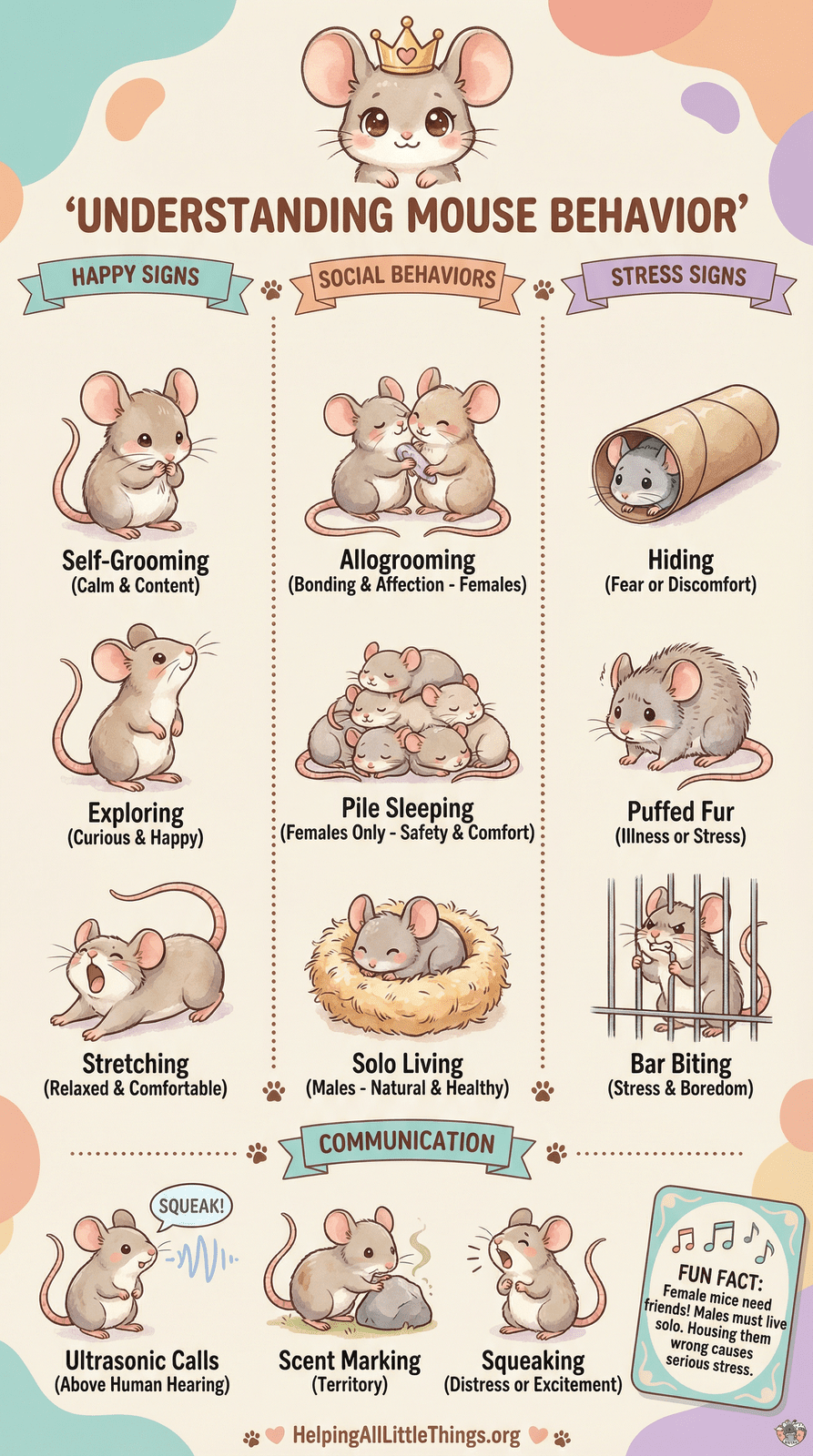

Mice are intelligent, curious, and surprisingly complex little animals. While often quiet, they have a rich system of communication based on body language, scent, and ultrasonic sounds mostly beyond our range of hearing. Learning to read their physical cues is the best way to understand their needs and build a strong bond.
Common Mouse Body Language
| Behavior | Common Meaning(s) | Context & Interpretation |
|---|---|---|
| Vigorous Grooming | Comfort, Stress | Mice are fastidious groomers. While normal grooming is a sign of a healthy mouse, excessive, frantic grooming can be a displacement behavior for stress or nervousness. [1] |
| Bruxing (Teeth Grinding) | Contentment, Teeth Maintenance | A relaxed, happy mouse will often grind its teeth, which also helps keep their ever-growing incisors in check. This is often accompanied by "boggling" (eyes vibrating in their sockets). [1] |
| Tail Wagging / Rattling | Annoyance, Aggression | Unlike a dog, a mouse wagging or rattling its tail against a surface is showing signs of irritation or aggression, often as a warning to another mouse. [1] |
| Ears Forward | Curiosity, Alertness | Ears perked up and forward indicate a mouse is curious and actively paying attention to something in its environment. [1] |
| Ears Pinned Back | Fear, Aggression | Ears laid back and flat against the head are a defensive posture, signaling fear or aggression. This mouse is saying "back off." [1] |
| Standing on Hind Legs | Curiosity, Social Interaction | A mouse will stand up to get a better view or sniff the air. In a group, it can also be a sign of social hierarchy, either as a challenge or a submissive gesture. [1] |
| Barbering | Dominance, Stress | A mouse may excessively groom a cage mate, sometimes chewing their fur down to the skin. This is a sign of social dominance, but can also be caused by stress or boredom. |
Common Mouse Vocalizations
Most mouse communication happens in the ultrasonic range, but there are a few sounds we can hear.
| Sound | Common Meaning(s) | Context & Interpretation |
|---|---|---|
| Squeaking | Pain, Fear, Protest | Audible squeaks are most often heard during squabbles between mice or when they are handled improperly. A sudden, sharp squeak can be a cry of pain. |
| Chirping / Singing | Courtship, Social Calls | Male mice produce complex ultrasonic vocalizations (USVs), or "songs," to attract mates. Both sexes also use USVs for social communication. |
| Teeth Chattering | Contentment, Warning | A soft chattering can be a sign of a relaxed mouse, similar to bruxing. A louder, more aggressive chatter can be a warning. |
Signs of a Happy and Healthy Mouse
A happy mouse is a busy mouse. They should be active and curious, especially at night, exploring their habitat, burrowing in their substrate, and running on their wheel. They will groom themselves, build nests, and interact with their cage mates (if female). Bright eyes, a clean coat, and a healthy appetite are all good signs.
Signs of Stress, Fear, or Pain
As prey animals, mice are experts at hiding illness. Subtle changes in behavior are often the first and only sign that something is wrong.
- Hiding excessively or being unusually still
- A hunched posture with ruffled or unkempt fur
- Loss of appetite or decreased activity
- Over-grooming to the point of hair loss
- Aggression in a normally peaceful mouse
- Porphyrin (red discharge) around the eyes or nose, which looks like blood but is a sign of stress or illness
If you notice any of these signs, it is important to consult with a veterinarian who has experience with small mammals.
References
[1] Chewy. (2026, January 20). 11 Common Mouse Behaviors Explained. Chewy Education. Retrieved from https://www.chewy.com/education/small-pet/rat-and-mouse/11-common-mouse-behaviors-explained