Proper Handling of Pet Mice
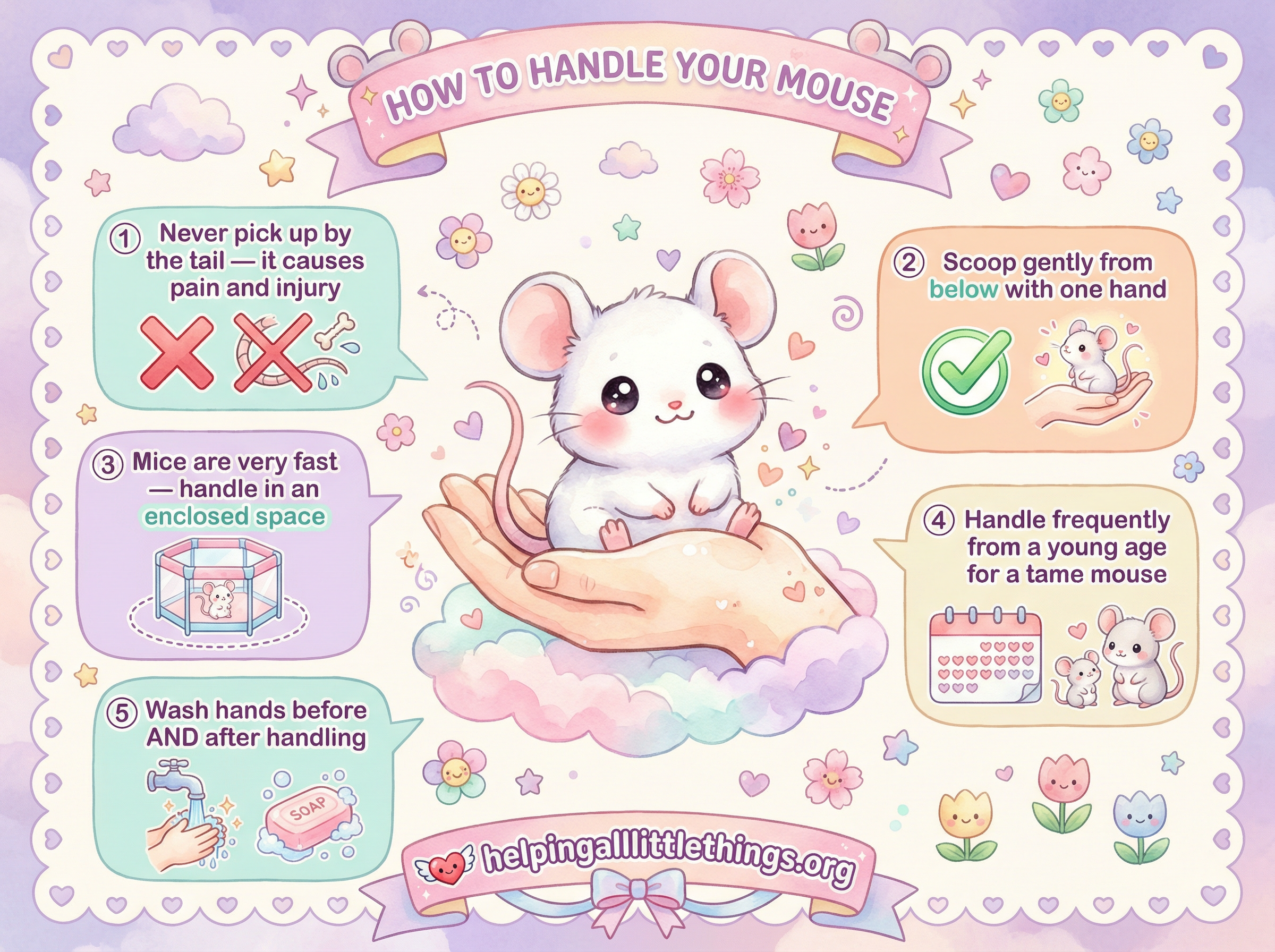

Earning the trust of a pet mouse is a rewarding experience that transforms them from a timid creature into a confident and interactive companion. Proper handling is built on a foundation of patience, consistency, and understanding a mouse's natural instincts as a prey animal. [1]
This guide outlines the best practices for handling your mice to ensure they feel safe and comfortable in your presence.
Building Trust: The First Step
Before you can handle your mice, they must learn to associate you with safety and positive experiences. This process cannot be rushed.
- Let Them Settle In: Give new mice a few days to acclimate to their new home before initiating handling. [2]
- Scent Socialization: Let them get used to your smell by placing your hand in their cage without trying to touch them. You can also offer treats from your open palm. [3]
- Positive Reinforcement: Always associate your presence with good things, like their favorite seeds or a dab of yogurt on your fingertip.
How to Pick Up a Mouse
The golden rule of handling a mouse is to let them come to you. Chasing them or grabbing them from above will trigger their prey instincts and damage their trust in you. [4]
- The Scoop Method: This is the ideal way to pick up a tame mouse. Place your hand in the cage, palm up, and allow the mouse to crawl onto it. Gently cup your other hand over them to make them feel secure as you lift. [5]
- The Tube Taxi: For mice that are still shy or not yet hand-tamed, using a “taxi” is a stress-free method for moving them. Place an empty cardboard tube in the cage and wait for the mouse to walk inside. You can then gently lift the tube with the mouse inside. [6]
Crucial Safety Note: Never pick up a mouse by the tail. This can cause a serious and painful injury called “degloving,” where the skin separates from the tail bone.
Holding and Interaction
When holding your mouse, keep them in your cupped hands close to your body to help them feel secure. Speak to them in a soft, calm voice. Start with short handling sessions of just a minute or two, and gradually increase the duration as your mouse becomes more comfortable. Always end the session on a positive note, returning them to their cage before they become anxious to get down.
With consistent, gentle handling, your mice will learn that you are a friend and will start to actively seek out interaction, creating a wonderful bond for you both.
References
[1] RSPCA. (n.d.). Mouse Health & Welfare Tips. https://www.rspca.org.uk/adviceandwelfare/pets/rodents/mice/health
[2] Fancy Mice Breeders Forum. (2011). An Idiot's Guide to Bonding with Mice. https://www.fancymicebreeders.com/threads/an-idiots-guide-to-bonding-with-mice.8664/
[3] Animal Humane Society. (n.d.). Mouse care. https://www.animalhumanesociety.org/resource/mouse-care
[4] Quora Community. (2018). What is the best way to tame mice to be comfortable being picked up and held?. https://www.quora.com/What-is-the-best-way-to-tame-mice-to-be-comfortable-being-picked-up-and-held
[5] Woodgreen Pets Charity. (n.d.). How to handle your mice. https://woodgreen.org.uk/pet-advice/mice/how-to-handle-your-mice/
[6] Reddit Community. (2023). How do you guys pick up a mouse that doesn't want to be touched?. https://www.reddit.com/r/PetMice/comments/1164fpp/how_do_you_guys_pick_up_a_mouse_that_doesnt_want/