Mouse Nutrition
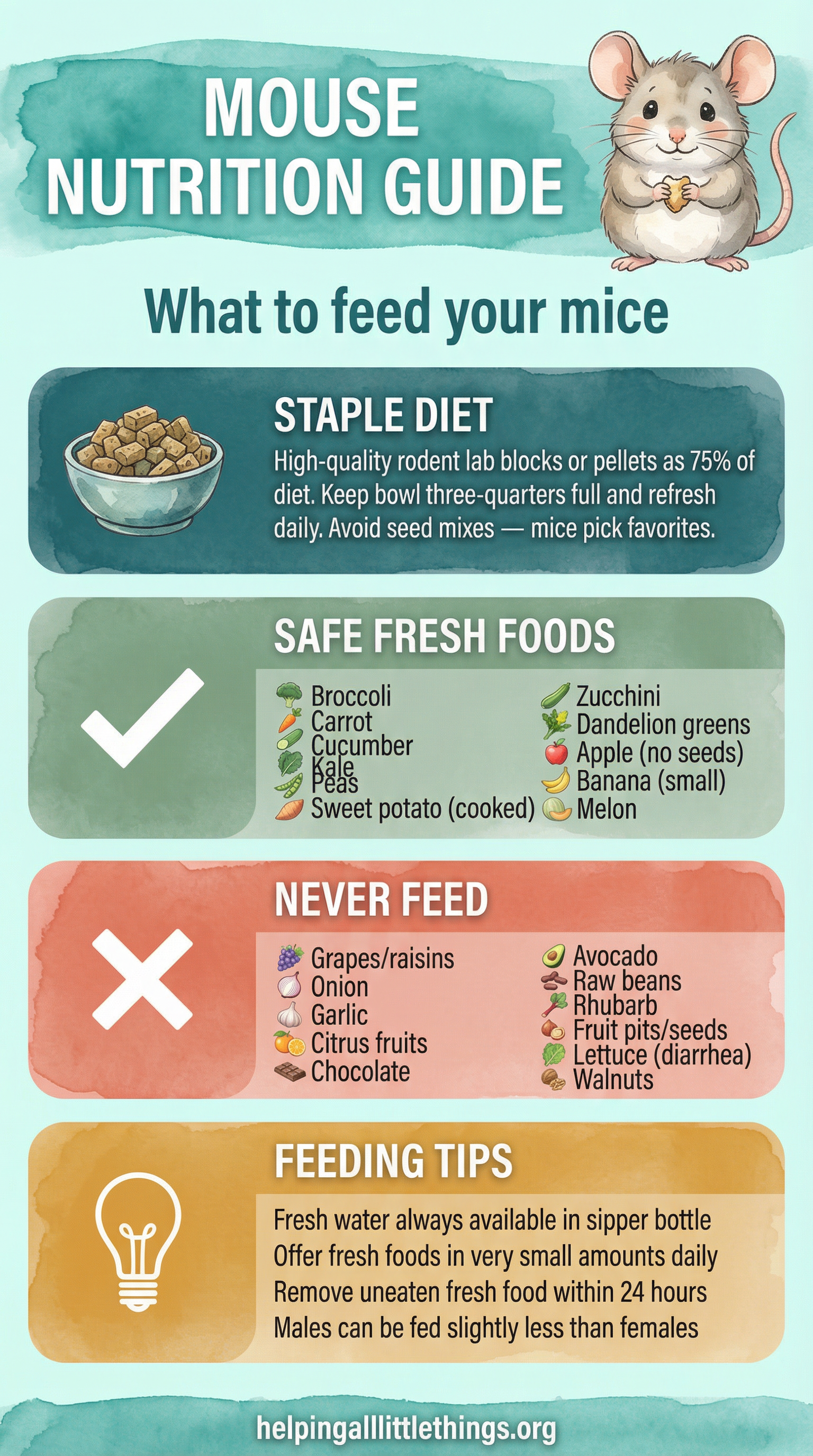
Share this infographic:

A proper diet is crucial for the health and well-being of pet mice. As omnivores, they require a balanced mix of grains, seeds, and protein. Providing the right food will help prevent obesity and ensure they get all the necessary nutrients.
Share this infographic:

Staple Diet: Lab Blocks are Key
The best foundation for a mouse's diet is a high-quality commercial lab block or pellet.
- Recommended: Lab blocks (like Mazuri Rat & Mouse or Oxbow Essentials Mouse & Young Rat) are the ideal choice. They are nutritionally complete and prevent selective feeding, ensuring your mouse gets a balanced diet in every bite.
- Acceptable: A high-quality seed mix can be used, but you must ensure your mice are eating all of it, not just the fatty seeds. Supplementing a seed mix with lab blocks is a good strategy.
Because of their high metabolism, mice should have access to their staple food at all times.
Safe Fresh Foods
Offer a small, pea-sized amount of fresh food 2-3 times per week to supplement their diet.
| Category | Safe Foods (in small amounts) |
|---|---|
| Vegetables | Broccoli, Carrot, Kale, Peas, Cucumber, Bell Pepper |
| Fruits | Apple (no seeds), Banana, Pear, Berries |
| Protein | Cooked plain chicken or beef, scrambled egg, mealworms |
| Grains | Cooked pasta or rice, oats |
Foods to Avoid
Many foods are harmful to mice. Never feed them:
- Grapes or Raisins
- Onion or Garlic
- Citrus Fruits
- Chocolate or Caffeine
- Avocado
- Walnuts
- Rhubarb
- Any junk food, sugary, or salty snacks
Water
Fresh, clean water must always be available from a sipper bottle. Check the bottle daily to ensure it is full and not clogged.