Mouse Habitat
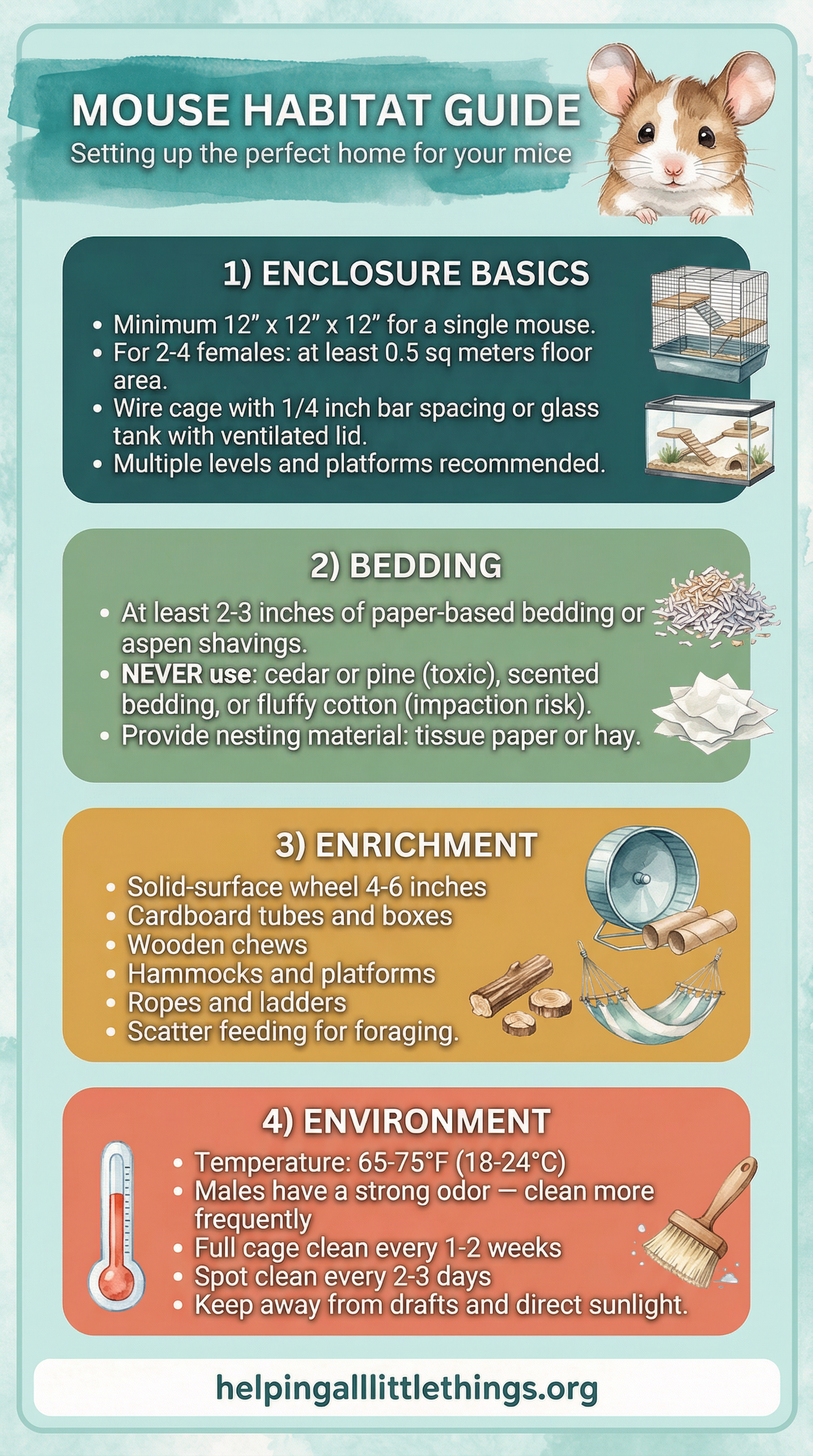

Mice are active, curious, and love to climb and explore. Their habitat should be designed to accommodate these natural behaviors, providing plenty of space and enrichment to keep them happy and healthy.

Enclosure: A Space to Thrive
When it comes to mouse housing, bigger is always better. A spacious and properly configured enclosure is the foundation of their well-being.
-
For Female Groups: As highly social animals, female mice should be housed in pairs or small groups. A 20-gallon long tank is a good starting point for 2-3 females, but a 40-gallon breeder tank or a large DIY bin cage (over 600 sq. inches) is highly recommended for groups of 3-5. [1] This allows ample space for individual territories and reduces the likelihood of squabbles.
-
For Solitary Males: Male mice must be housed alone to prevent aggressive, territorial fighting. [2] A 20-gallon long tank is a suitable size for a single male, providing enough space for deep bedding, a large wheel, and plenty of enrichment to keep him mentally stimulated.
-
Enclosure Types:
- Glass Tanks: Excellent for providing deep bedding for burrowing and preventing escapes. Requires a secure wire mesh lid for adequate ventilation.
- Wire Cages: Can be a good option, but bar spacing must be 1/4 inch or less to prevent escapes. Look for cages with a deep plastic base to allow for at least 4-6 inches of bedding.
Bedding: The Foundation of Fun
Mice are natural burrowers and will create intricate tunnel systems given the opportunity.
- Depth: Provide at least 4-6 inches of bedding, though 8-10 inches is even better. This depth allows them to engage in natural burrowing behaviors, which is crucial for their mental and physical health.
- Safe Bedding Types:
- Paper-based bedding (Kaytee Clean & Cozy, Carefresh)
- Aspen shavings
- Kiln-dried pine shavings (note: regular pine is toxic)
- Nesting Material: Provide soft materials like tissue paper, paper towels, or hay for them to build cozy nests within their burrows.
- Unsafe Bedding: NEVER use cedar shavings (toxic oils), scented bedding, or fluffy cotton/kapok material (can cause impactions and limb entanglement).
Enrichment: Keep Their Minds Busy
A bored mouse is a stressed mouse. A stimulating environment is essential.
- Wheel: A solid-surface wheel is a must. A 8-10 inch wheel is a good size for most mice, allowing them to run with a straight back.
- Clutter: Mice feel safest in a cluttered environment with lots of places to hide and explore. Provide ropes, ladders, branches, cardboard tubes, small boxes, and wooden houses.
- Chews: A variety of chews is essential for dental health. Offer cardboard, apple wood sticks, and other safe wood chews.
- Foraging: Scatter their food around the cage instead of using a bowl to encourage natural foraging behaviors. You can also hide treats inside cardboard toys.
Environment
- Temperature: Keep the room at a stable temperature between 65-75°F (18-24°C).
- Location: Place the cage in a relatively quiet area, away from direct sunlight, drafts, and other pets.
- Odor: Male mice have a stronger odor than females. More frequent spot-cleaning and a good quality, deep bedding can help manage the scent.
References
[1] Wood Green. (n.d.). Keeping mice: How many should live together? Retrieved from https://woodgreen.org.uk/pet-advice/mice/how-many-mice-should-you-keep/
[2] RSPCA. (n.d.). Keeping Mice Together. Retrieved from https://www.rspca.org.uk/adviceandwelfare/pets/rodents/mice/company