Is a Mouse Right for Me and My Family?
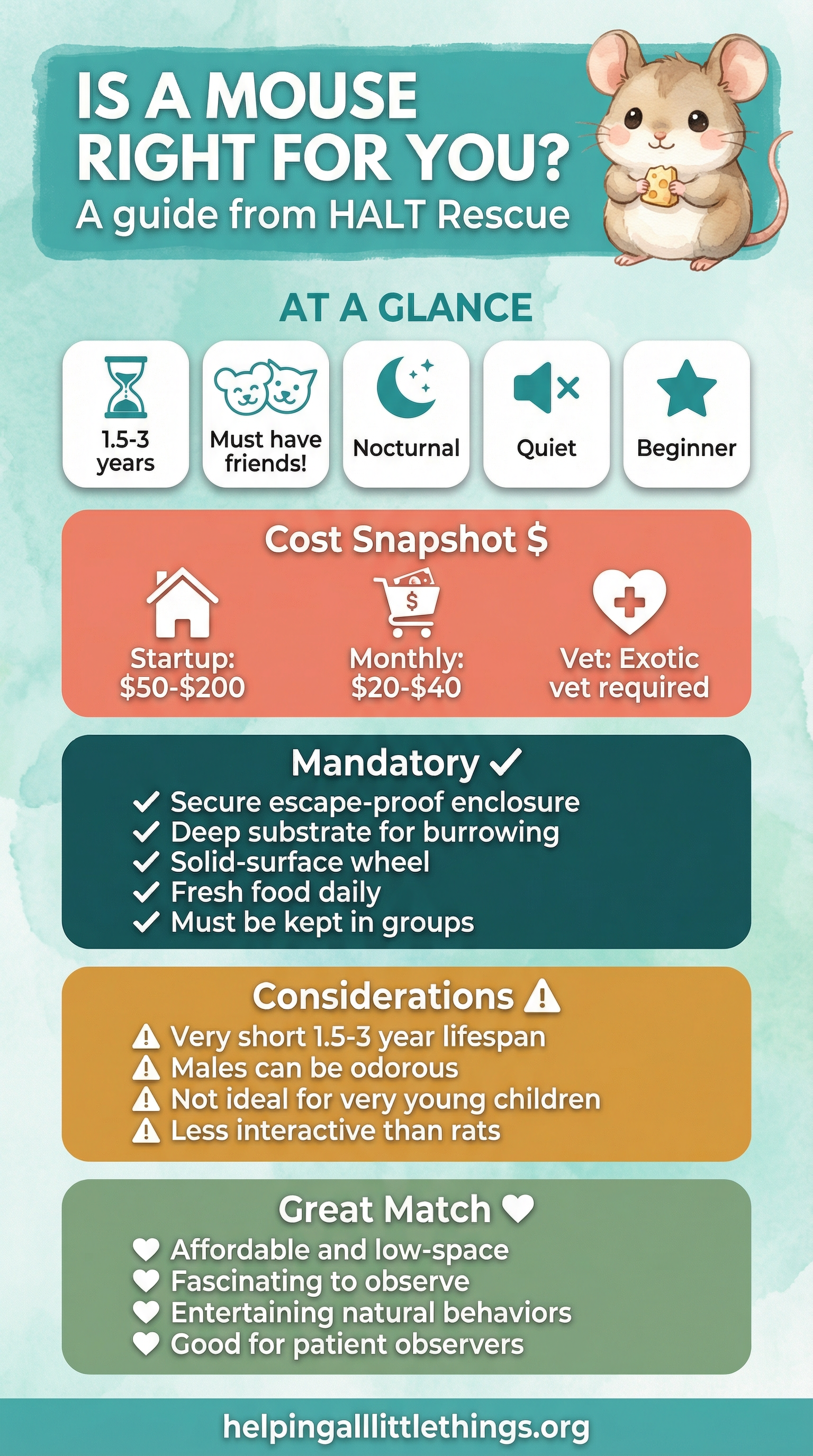

Mice are often overlooked as pets, but they are endlessly entertaining, relatively affordable, and surprisingly personable. They are best suited to older children, teenagers, and adults who enjoy watching natural animal behavior rather than expecting a cuddly lap pet — though some mice do enjoy being handled once they are well-socialized.
Social Needs: A Tale of Two Genders
The most critical factor in mouse happiness is their social environment, which is strictly determined by their sex.
Female mice (does) are highly social and thrive in the company of others. They should always be housed in pairs or small groups (three or more is ideal). [1] Depriving a female mouse of companionship can cause significant stress and behavioral issues. They form complex social bonds, groom each other, and sleep in piles for warmth and comfort.
Male mice (bucks), on the other hand, are territorially aggressive once they reach sexual maturity. Housing two or more unneutered males together will almost invariably lead to intense, often fatal, fighting. [2] For this reason, male mice must be housed alone. While this may seem lonely to humans, it is the safest and most humane housing solution for them. A lone male will require more enrichment and human interaction to compensate for the lack of a cage mate.
Because of these social differences and the fact that males have a notably stronger musky odor, most families keeping mice as pets choose to keep a group of females.
The Basics
Mice have a short lifespan of 18 to 24 months on average, though some live to 3 years with excellent care. This is one of the shortest lifespans of any common pet, and it's important to be emotionally prepared for that reality — especially if children are involved.
What They Need Every Day
- A secure, escape-proof enclosure — mice are excellent escape artists and can squeeze through surprisingly small gaps
- Deep substrate for burrowing (at least 4–6 inches)
- A solid-surface wheel (6–8 inches) — mesh wheels cause foot and tail injuries
- Fresh food daily alongside a quality seed mix or lab block base
- Enrichment — tunnels, hides, nesting material, and foraging opportunities
- Spot cleaning weekly and a full cage clean every 2 weeks (more frequently for males due to odor)
Mice are primarily nocturnal and most active in the evening and overnight. Like hamsters, they should not be woken during the day.
The Cost of Mouse Ownership
| Category | Estimated Cost |
|---|---|
| Startup (enclosure, wheel, substrate, supplies, adoption fee) | $50–$200 |
| Monthly ongoing (food, bedding, substrate) | $20–$40/month |
| Veterinary care | Exotic vet required; tumors are very common in older mice |
Mice are one of the most affordable small pets to keep, which makes them accessible for families on a budget. However, they do require an exotic vet — and tumors, particularly mammary tumors in females, are extremely common as mice age.
Think Twice If...
- The very short lifespan will be hard on your family. Losing a mouse after 18 months is common, and if you keep a group, you may experience multiple losses in a short period.
- You are sensitive to odor. Male mice in particular have a strong musky scent that can permeate a room. Even females have some odor, and regular cleaning is essential.
- Your children are very young. Mice are small, fast, and fragile. They can be easily injured by rough handling or a fall, and they are difficult for small hands to hold safely.
- You want a highly interactive, cuddly pet. Mice are more "observer" pets than "handler" pets for most people, though individual personalities vary widely.
Great Match If...
- You enjoy watching active, curious animals go about their natural behaviors — burrowing, foraging, and socializing
- You want an affordable, low-space pet that is genuinely interesting to observe
- You are comfortable with the short lifespan and can approach it with openness
- You are a teenager or adult who appreciates a pet that doesn't demand constant attention but rewards patient observation
A Note on Mice and Children
Mice can be wonderful pets for older children (8+) who are gentle and patient. They are less ideal for very young children, not because mice are unfriendly, but because they are fast, delicate, and easily stressed by loud noises and sudden movements. With calm handling and proper introduction, many mice become quite tame and will explore their owner's hands and arms with curiosity.
References
[1] Wood Green. (n.d.). Keeping mice: How many should live together? Retrieved from https://woodgreen.org.uk/pet-advice/mice/how-many-mice-should-you-keep/
[2] RSPCA. (n.d.). Keeping Mice Together. Retrieved from https://www.rspca.org.uk/adviceandwelfare/pets/rodents/mice/company
Questions about whether mice are right for your family? Get in touch with us — we're happy to help.