Sexing Your Pet Mouse
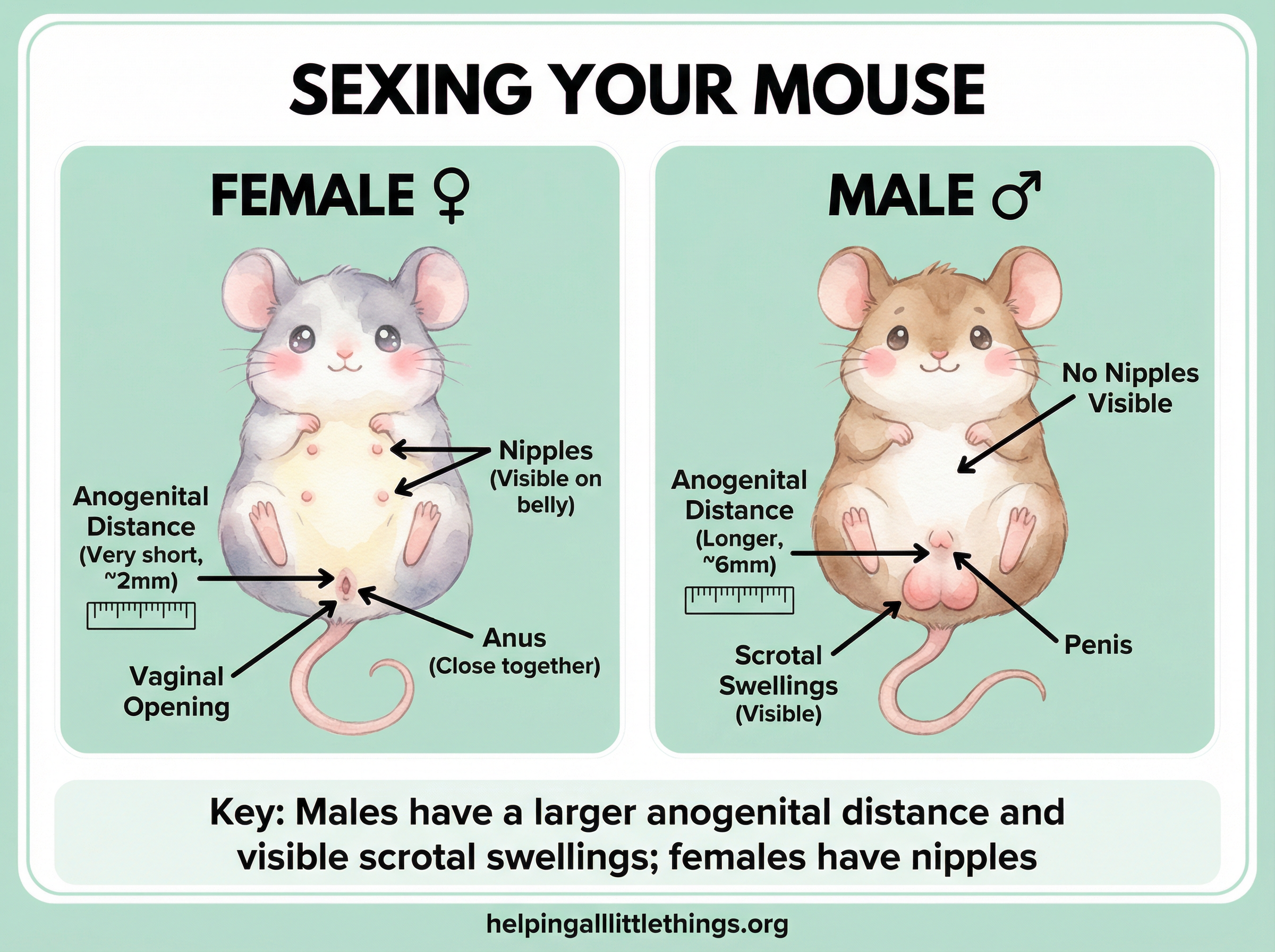

Accurately determining the sex of your mice is crucial for preventing unwanted litters and managing social groups appropriately. While it can seem daunting at first, especially with young mice, learning to identify key anatomical differences makes the process straightforward.
The primary method for sexing mice is to compare the anogenital distance—the space between the anus and the genital opening. [1]
How to Sex Adult Mice
In adult mice, the differences between males and females are quite distinct.
- Males (Bucks): Have a significantly longer anogenital distance. The testicles are usually visible as a pronounced bulge at the base of the tail, although they can be retracted. You will not see any nipples on a male mouse. [2]
- Females (Does): Have a shorter anogenital distance, with the genital opening (urethra) and anus being very close together. Females have visible nipples, though they can be difficult to see through their fur. [3]
| Feature | Male (Buck) | Female (Doe) |
|---|---|---|
| Anogenital Distance | Longer | Shorter |
| Testicles | Present and usually visible | Absent |
| Nipples | Absent | Present (5 pairs) |
How to Sex Baby Mice (Pups)
Sexing mice is easiest from about one to three weeks of age, but it can be done from the day they are born. [4] With pups, the testicles will not be visible, so the anogenital distance is the most reliable indicator.
- Handle Gently: Pups are delicate. Hold them securely in a warm hand or place them on a soft, warm cloth.
- Observe the Distance: Gently lift the base of the tail to view the area. The male pup will have a noticeably greater distance between the anus and the genital papilla (the small bump that will become the penis) compared to the female. [1]
- Look for Nipples: In female pups, you can often see the faint outline of nipples (milk spots) on their belly from about one week of age. These are absent in males. [2]
When in doubt, it is always best to compare multiple pups from the same litter side-by-side. The difference in the anogenital distance will be much more apparent when viewed in comparison.
If you are ever unsure, it is wise to seek a second opinion from an experienced breeder or a veterinarian to avoid accidental breeding.
References
[1] On Our Toes (OOT) Paul M. Inc. (2024). How to Tell if a Mouse is Male or Female. https://www.ootpmicrosanctuary.org/articles/sexing-mice
[2] American Fancy Rat & Mouse Association. (n.d.). Sexing 101. https://www.afrma.org/sexing101.htm
[3] wikiHow. (n.d.). How to Tell if a Mouse Is Male or Female. https://www.wikihow.com/Tell-if-a-Mouse-Is-Male-or-Female
[4] Zen Mousery. (n.d.). Sexing baby mice. https://zenmousery.com.au/sexing-baby-mice/