Diabetes in Hedgehogs


Diabetes mellitus is a metabolic condition that can affect pet hedgehogs, particularly as they age or when fed an inappropriate diet. While not as extensively studied in hedgehogs as in some other small animals, diabetes is a recognized health concern that requires prompt veterinary attention and careful long-term management.
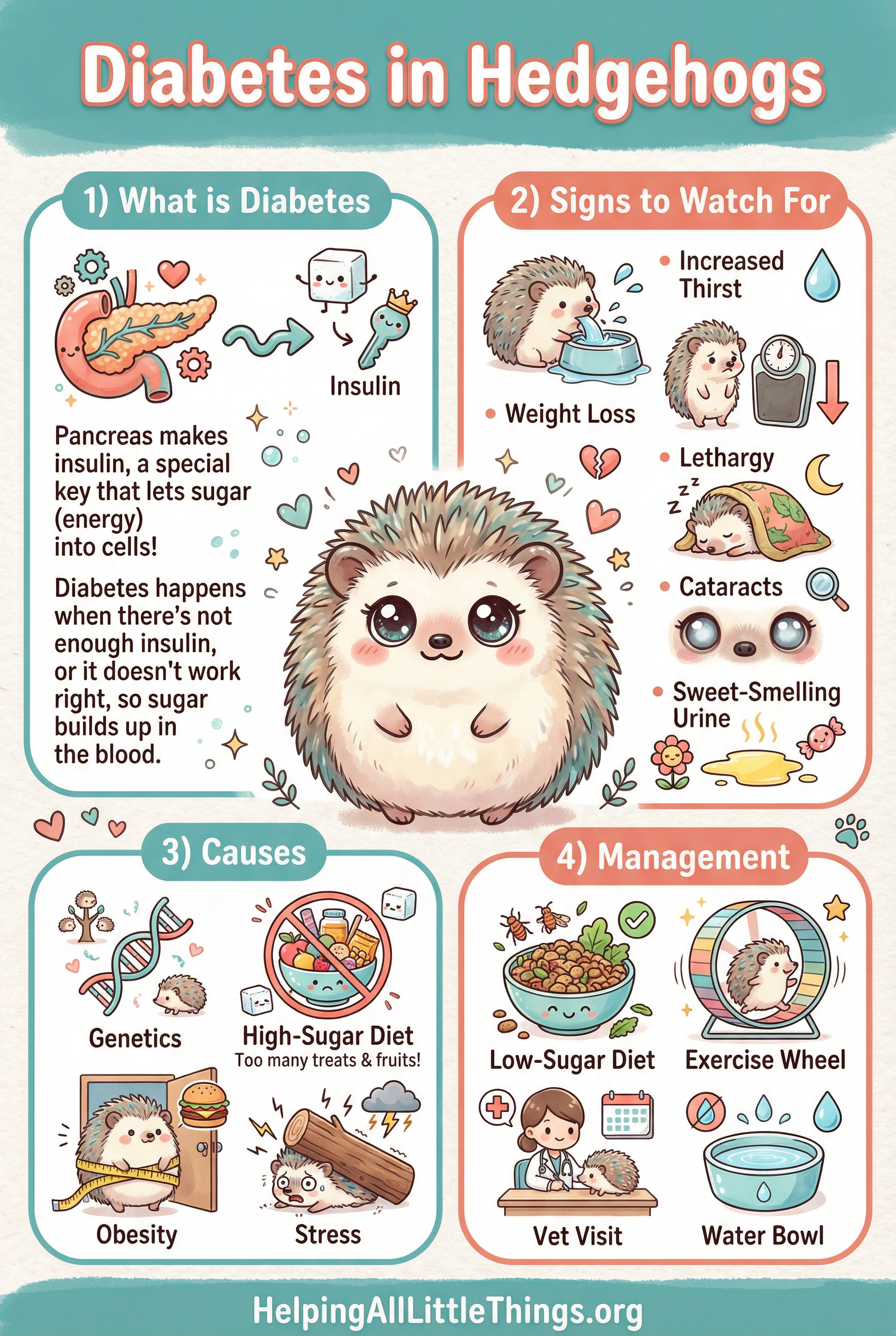

What Is Diabetes?
Diabetes mellitus occurs when the body cannot properly regulate blood glucose (sugar) levels. The pancreas produces insulin, a hormone that acts as a "key" allowing glucose to enter cells for energy. In diabetes, either:
- The pancreas does not produce enough insulin (Type 1-like), or
- The body's cells do not respond properly to insulin (Type 2-like / insulin resistance)
As a result, glucose accumulates in the bloodstream, causing hyperglycemia (high blood sugar) and a range of health complications.
Causes and Risk Factors
Several factors can contribute to diabetes in hedgehogs:
- Diet — a high-sugar, high-fat diet is a major risk factor. Commercial hedgehog foods that contain fruit, dried insects with added sugars, or sweet treats can contribute to blood sugar dysregulation
- Obesity — overweight hedgehogs are at significantly higher risk; excess fat tissue promotes insulin resistance
- Genetics — some hedgehogs may have a hereditary predisposition
- Age — older hedgehogs (3+ years) are more susceptible
- Stress — chronic stress can affect blood glucose regulation
- Inactivity — hedgehogs that do not have adequate exercise opportunities are at higher risk
Signs and Symptoms
Diabetes symptoms in hedgehogs can be subtle, especially early in the disease. Key signs include:
- Increased thirst — drinking noticeably more water than usual
- Increased urination — wet, soaked bedding; frequent urination
- Weight loss despite normal or increased appetite
- Increased appetite — eating more than usual as cells are starved of energy
- Lethargy — less active, sleeping more, reduced interest in exploration
- Cataracts — cloudy, opaque eyes; diabetic cataracts can develop rapidly in hedgehogs[1]
- Sweet or fruity-smelling urine — high glucose in urine
- Poor coat condition — dull, rough, or sparse quills
- Slow wound healing
Cataracts in a hedgehog — especially when combined with increased thirst and weight loss — are a strong indicator of diabetes. Have your hedgehog examined by a vet experienced with exotic animals promptly.
Diagnosis
If you suspect your hedgehog has diabetes, consult a veterinarian familiar with exotic pets. Diagnostic steps typically include:
- Urine glucose test — a dipstick test on a urine sample; a simple, non-invasive first screen
- Blood glucose measurement — a small blood sample to measure glucose directly; the most reliable method
- Physical examination — assessing body condition score, eye health, hydration, and overall condition
- Blood chemistry panel — to assess kidney function and rule out other conditions
Because diabetes symptoms overlap with other conditions (kidney disease, liver disease, infections), a thorough diagnostic workup is important.
Normal blood glucose in hedgehogs: approximately 80–130 mg/dL; values consistently above 200 mg/dL are suggestive of diabetes.[2]
Management
There is no cure for diabetes in hedgehogs, but the condition can be managed to improve quality of life and slow disease progression.
Dietary Changes
Diet is the most important management tool:
- Remove all sugary foods — no fruit, honey, sweet treats, or high-carbohydrate foods
- Feed a high-protein, low-fat, low-carbohydrate diet — high-quality cat food (35–40% protein, 10–15% fat) is often recommended as the dietary base for hedgehogs
- Avoid commercial hedgehog mixes that contain fruit or dried sweet ingredients
- Offer appropriate treats — plain cooked chicken, mealworms (in moderation), plain cooked egg
- Provide constant access to fresh water
Exercise
- Ensure your hedgehog has a large, solid-surface wheel (11–12 inches) for nightly exercise
- Allow supervised free-roaming time in a safe area
- Provide enrichment to encourage activity
Veterinary Monitoring
- Regular check-ups every 3–6 months
- Periodic blood or urine glucose monitoring
- Weight checks to track trends
Medical Treatment
In some cases, a veterinarian may recommend:
- Insulin therapy — rarely used in hedgehogs due to the difficulty of administration, but may be considered in severe cases
- Supportive care for complications such as cataracts, kidney disease, or infections
Prognosis
With dietary management and regular veterinary care, diabetic hedgehogs can maintain a reasonable quality of life. However, diabetes is a progressive condition in hedgehogs, and complications — particularly cataracts, kidney disease, and infections — are common over time. Early diagnosis and consistent management give the best outcomes.
References
[1] Johnson-Delaney, C.A. (2009). African pygmy hedgehog (Atelerix albiventris). In Exotic Animal Medicine for the Veterinary Technician (2nd ed.). Wiley-Blackwell.
[2] Quesenberry, K.E., Mans, C., & Orcutt, C.J. (2020). Ferrets, Rabbits, and Rodents: Clinical Medicine and Surgery (4th ed.). Elsevier.
[3] Carpenter, J.W. (2018). Exotic Animal Formulary (5th ed.). Elsevier.
[4] Hoefer, H.L. (2009). Hedgehogs. In Kirk's Current Veterinary Therapy XIV. Saunders Elsevier.