Understanding Hedgehog Behavior: A Guide for Owners
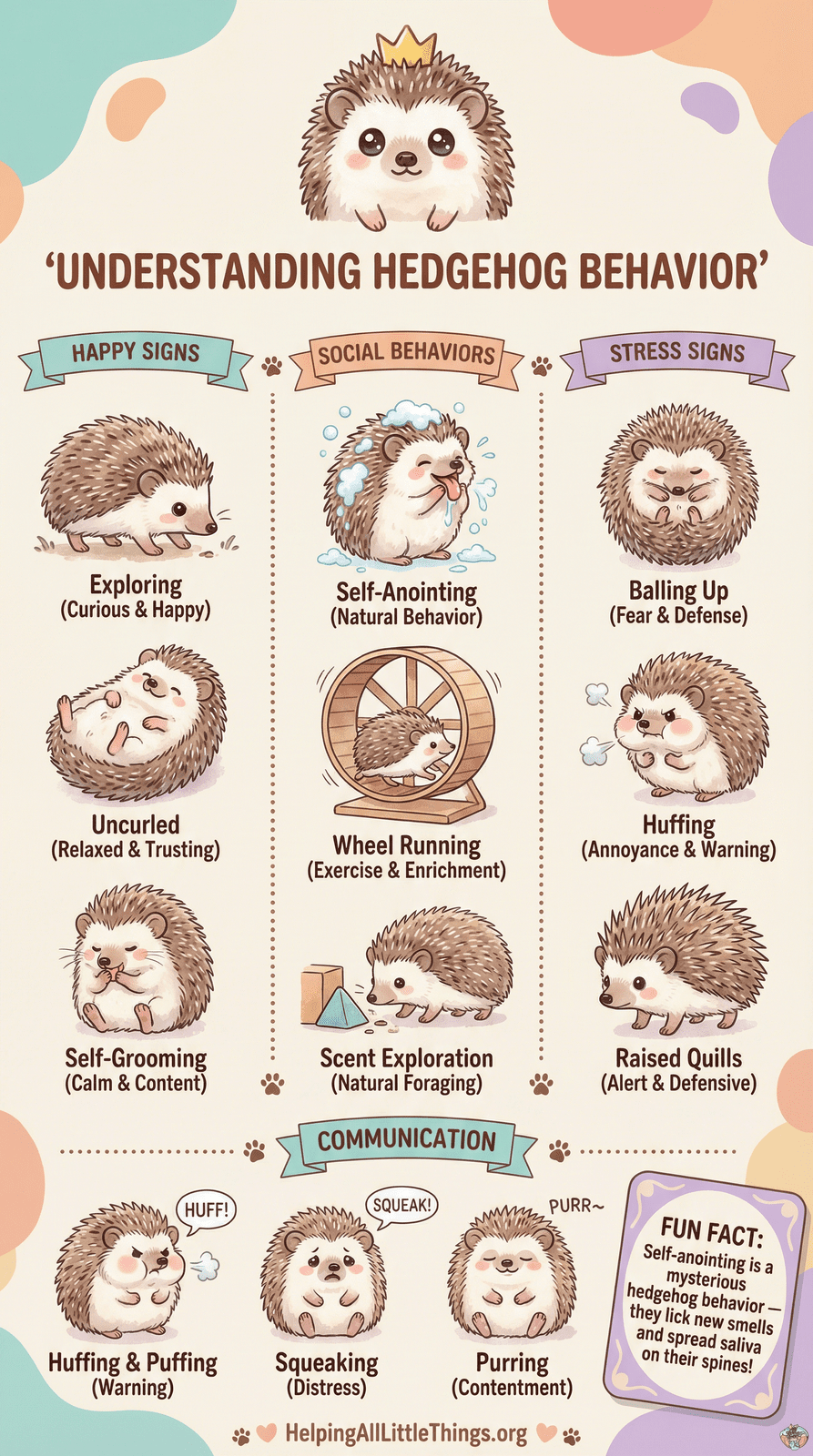

Hedgehogs are unique and fascinating creatures with a set of behaviors all their own. As solitary and nocturnal animals, their communication is often quiet and defensive. Understanding their body language and sounds is key to providing a safe, enriching environment and building a bond with your spiky friend.
Common Hedgehog Body Language
| Behavior | Common Meaning(s) | Context & Interpretation |
|---|---|---|
| Balling Up | Fear, Defense | This is the hedgehog's primary defense mechanism. A tightly curled ball with erect quills means the hedgehog is frightened or feels threatened. [1] |
| Self-Anointing | Exploration, Scent Marking | When encountering a new or interesting smell, a hedgehog will lick the object until it creates a frothy saliva, which it then spreads onto its quills. The exact reason is unknown, but it's a normal, fascinating behavior. [1] |
| Quills Flat | Calm, Relaxed | When a hedgehog's quills are lying flat, it indicates they are comfortable and relaxed in their environment. |
| Quills Erect (Head Only) | Caution, Uncertainty | If only the quills on the forehead and crest are raised, the hedgehog is wary and uncertain, but not fully terrified. |
| Hissing / Puffing | Annoyance, Warning | A hedgehog will often take sharp, quick breaths that sound like hisses or puffs when it is annoyed or wants to be left alone. This often accompanies balling up. |
| Twitching / Wiggling Nose | Exploration, Sniffing | A constantly twitching nose is a sign of a healthy, curious hedgehog actively sniffing and exploring its surroundings. |
Common Hedgehog Vocalizations
Hedgehogs are generally quiet, but they make a variety of sounds to express themselves.
| Sound | Common Meaning(s) | Context & Interpretation |
|---|---|---|
| Snuffling / Grunting | Foraging, Exploration | These are the most common sounds you'll hear. A hedgehog makes soft grunts and snuffles as it explores and forages for food. |
| Chirping / Whistling | Contentment, Safety | Soft chirps and whistles, almost like a bird, are often signs of a happy and content hedgehog. [1] |
| Hissing / Clicking | Fear, Aggravation | A clear sign that the hedgehog is frightened or annoyed. This is a warning to back away. [1] |
| Screaming | Extreme Fear, Pain | A loud, high-pitched scream is a sign of terror or severe pain. This is a serious distress call that requires immediate investigation. |
| Purring | Contentment | A low, rumbling purr, similar to a cat's, is a sign of a very happy and relaxed hedgehog. [1] |
| Coughing / Sneezing | Irritation, Illness | Occasional sneezes are normal, but persistent coughing or sneezing could indicate a respiratory infection or an allergy to their bedding. |
Signs of a Happy and Healthy Hedgehog
A happy hedgehog will be active and curious during the night, eagerly exploring its cage and running on its wheel. They will have a good appetite and show interest in new smells. When you handle them, they may be cautious at first, but will eventually uncurl and relax, allowing you to pet their quills.
Signs of Stress, Fear, or Pain
Because they are prey animals, hedgehogs are skilled at hiding signs of illness.
- Remaining balled up for long periods
- Loss of appetite or refusal to drink
- Lethargy or wobbling when walking (Wobbly Hedgehog Syndrome is a serious neurological disease)
- Green or slimy droppings
- Lack of self-anointing or other normal behaviors
- Excessive scratching (could indicate mites)
If you notice any of these signs, especially wobbling or a change in droppings, it is crucial to consult an exotic pet veterinarian immediately.
References
[1] PetPlace Veterinarians. (2014, December 10). Understanding Your Hedgehog. PetPlace. Retrieved from https://www.petplace.com/article/small-mammals/general/understanding-your-hedgehog